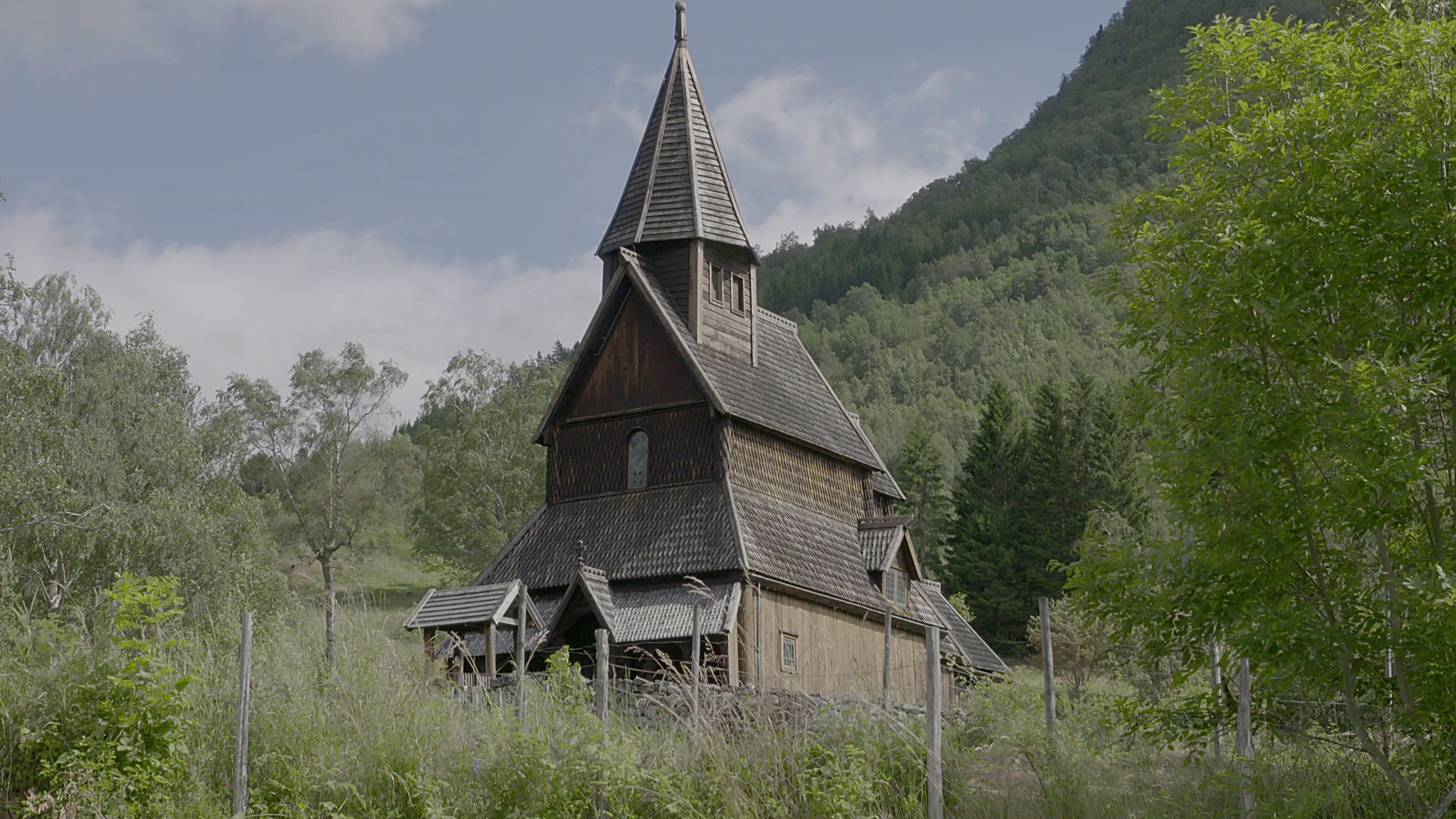
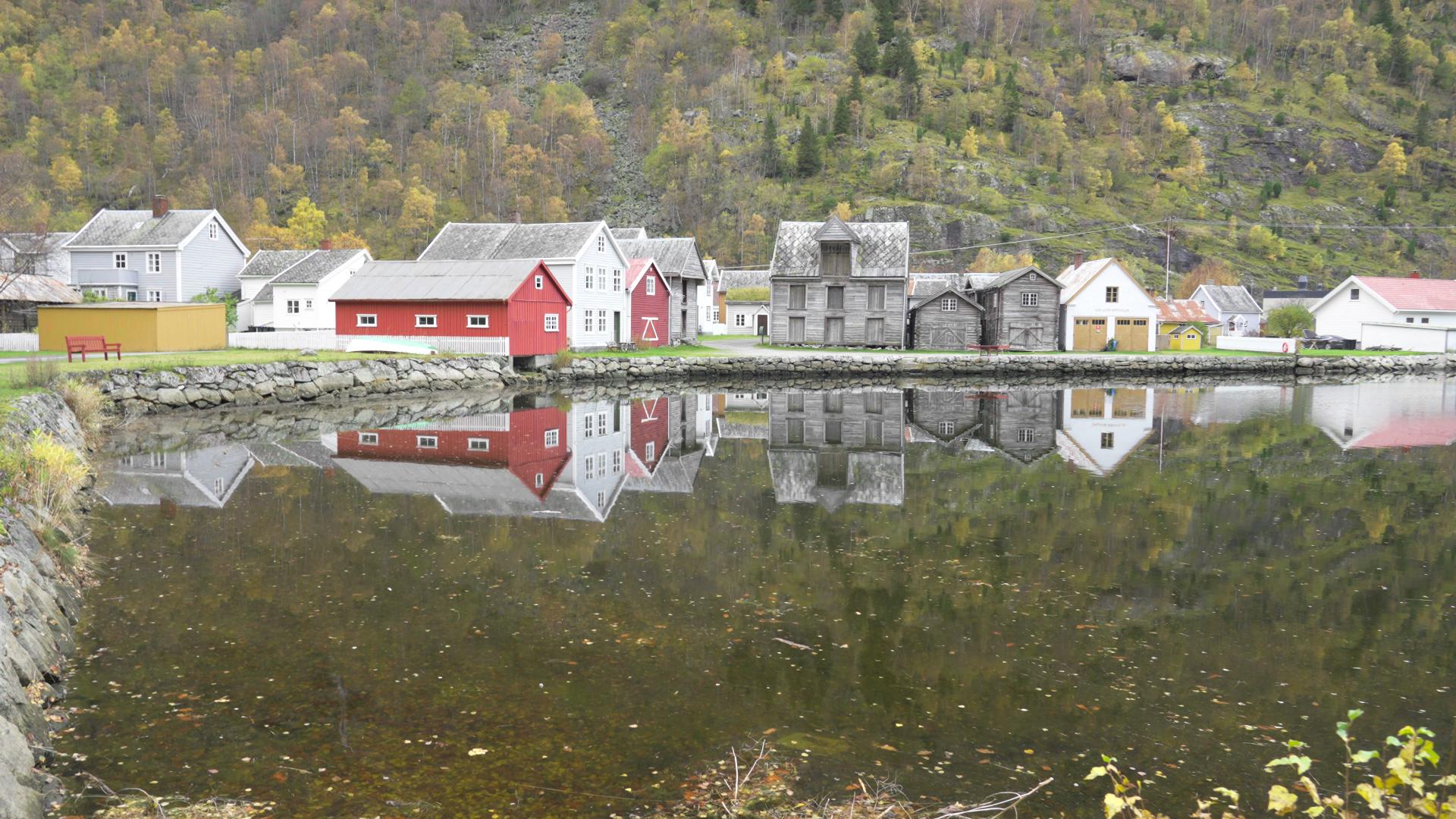
The road between Årdalstangen and Øvre Årdal runs along Årdalsvatnet, and it is a striking drive. The lake is fed by the Utla river carrying glacier meltwater from Jotunheimen, giving it an intense emerald green colour. It sits at just 2 metres above sea level, yet it is 182 metres deep.
This road did not exist until the Germans built it during World War II. Before that, there was only a pack trail and boats. The first steamboat on the lake, simply called Årdal, started running in 1898. When the Germans took over Norway in 1940 and started building the aluminium factory, they needed proper road access. They put 500 men on the job, blasting through avalanche-prone rock faces and tunnels. The 800-metre Steggjetunnelen alone took 150 workers. They had few machines, little fuel, and much of the work was done by hand. A provisional road opened in early 1942, but work continued until 1944.
You might wonder why they did not just build a lock at Årdalstangen so ships could sail straight through to the factory. They actually considered exactly that. Plans for a canal up Hæreidselvi, the short river connecting the fjord to the lake, go back to the 1860s. A basic boat channel was dug in 1868. By the 1880s, there were proper plans for a steamship canal, 7 to 10 metres wide. Øvre Årdal pushed for it, but Årdalstangen protested. They had no interest in ships bypassing their village. The economic downturn after World War I killed the project for good, and by the time the Germans arrived, they just built a road instead.
This road did not exist until the Germans built it during World War II. Before that, there was only a pack trail and boats. The first steamboat on the lake, simply called Årdal, started running in 1898. When the Germans took over Norway in 1940 and started building the aluminium factory, they needed proper road access. They put 500 men on the job, blasting through avalanche-prone rock faces and tunnels. The 800-metre Steggjetunnelen alone took 150 workers. They had few machines, little fuel, and much of the work was done by hand. A provisional road opened in early 1942, but work continued until 1944.
You might wonder why they did not just build a lock at Årdalstangen so ships could sail straight through to the factory. They actually considered exactly that. Plans for a canal up Hæreidselvi, the short river connecting the fjord to the lake, go back to the 1860s. A basic boat channel was dug in 1868. By the 1880s, there were proper plans for a steamship canal, 7 to 10 metres wide. Øvre Årdal pushed for it, but Årdalstangen protested. They had no interest in ships bypassing their village. The economic downturn after World War I killed the project for good, and by the time the Germans arrived, they just built a road instead.