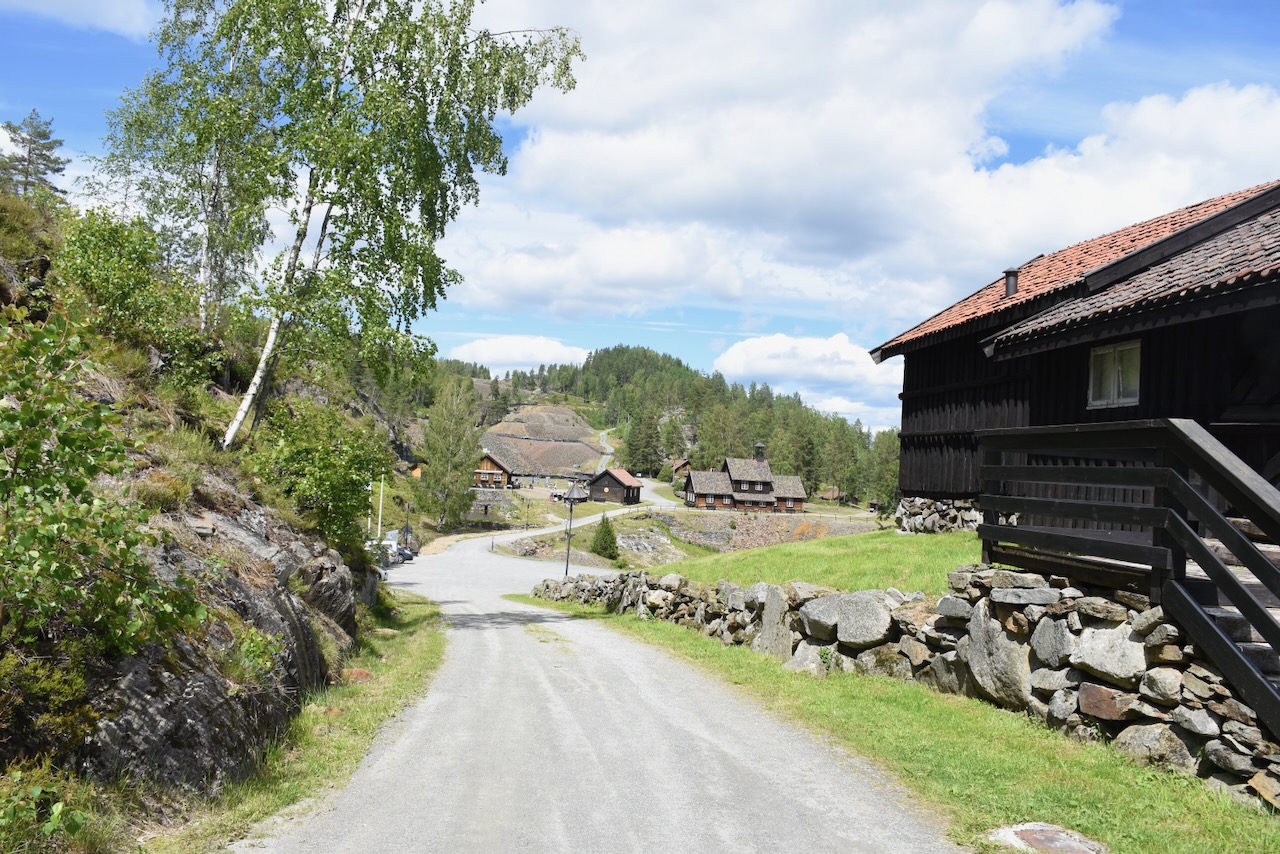
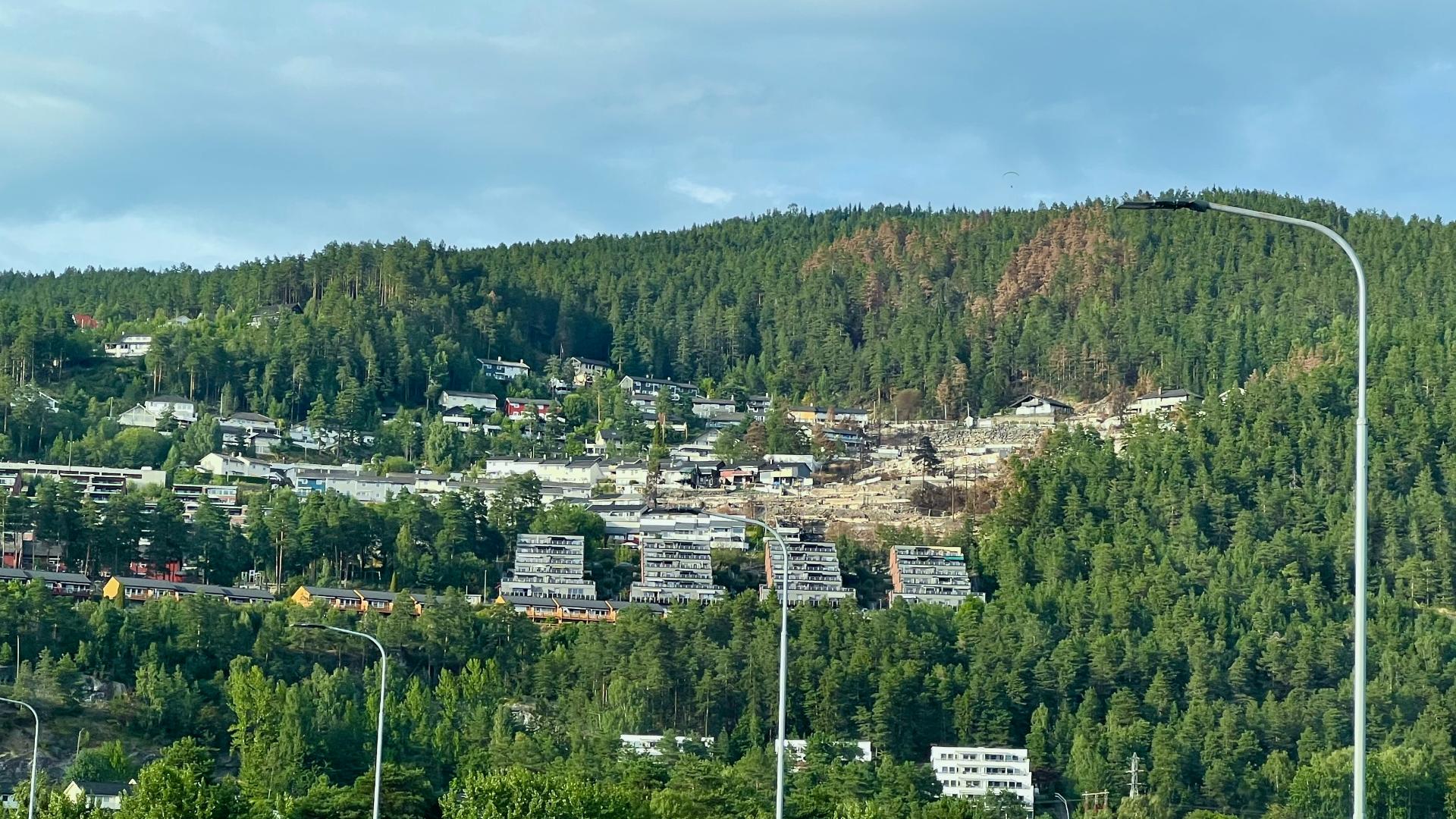
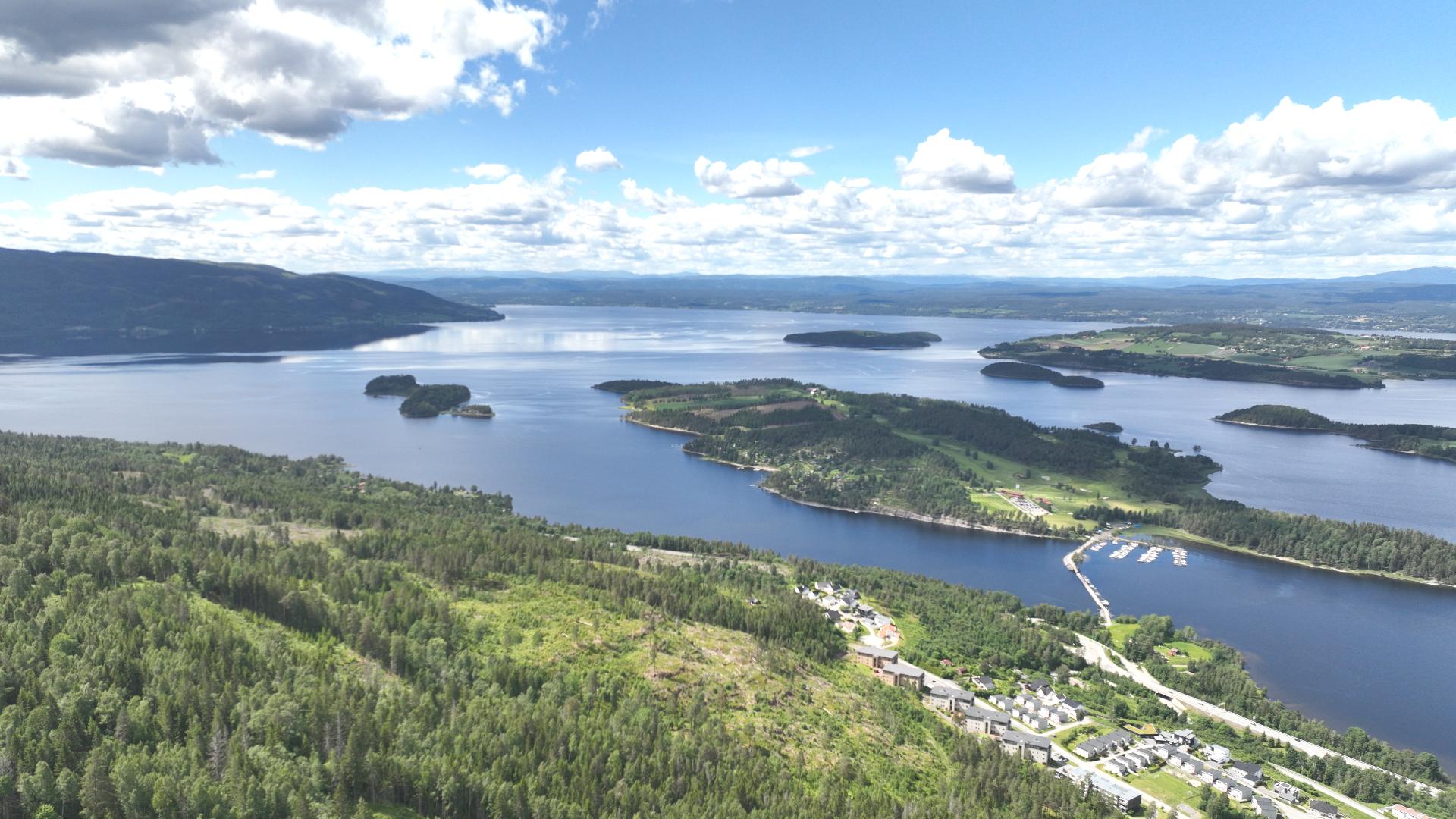
Åmot is an industrial village in Modum where the rivers Simoa and Drammenselva meet. The area has been important for centuries due to the waterfalls that provided power for various industries.
The village grew up around Hassel Jernverk, one of Norway's oldest ironworks, which received its royal privilege in 1649 and operated until the 1870s. The iron ore came from mines in nearby Hasselåsen, while the smelting works with its blast furnace sat along the Bingselva river. Hassel produced everything from cooking pots to cannons, but is best known for its decorative cast iron stoves, which can still be found in manors and museums across Scandinavia.
Åmot station opened in 1866 when the Randsfjordbanen was completed from Drammen to Vikersund. The Swiss-style station building was designed by Georg Andreas Bull. Passenger services stopped in 2004, though trains still pass through on the Bergensbanen.
A curiosity near Åmot is the Korketrekkeren - not the famous sledding run in Oslo, but a 1923 road structure where the road loops in a complete 360-degree spiral over a bridge that crosses both itself and the railway line. It was originally called Veiknuten, meaning "road knot." The structure was proposed for protection under Norway's heritage plan in 2002.
Five minutes up the road towards Sigdal lies Modum Blaafarveværk, one of Norway's most visited attractions, which has its own entry.
For those interested in traditional crafts, Kongsfoss Kunstnersenter has a working glass studio where Geir Olsen has been blowing glass since 2002.
Nearby Simostranda is where biathlon legend Ole Einar Bjørndalen grew up. With 13 Olympic medals and 95 World Cup victories, he's considered the greatest biathlete of all time. A three-metre bronze statue was erected in his honour in 2008.