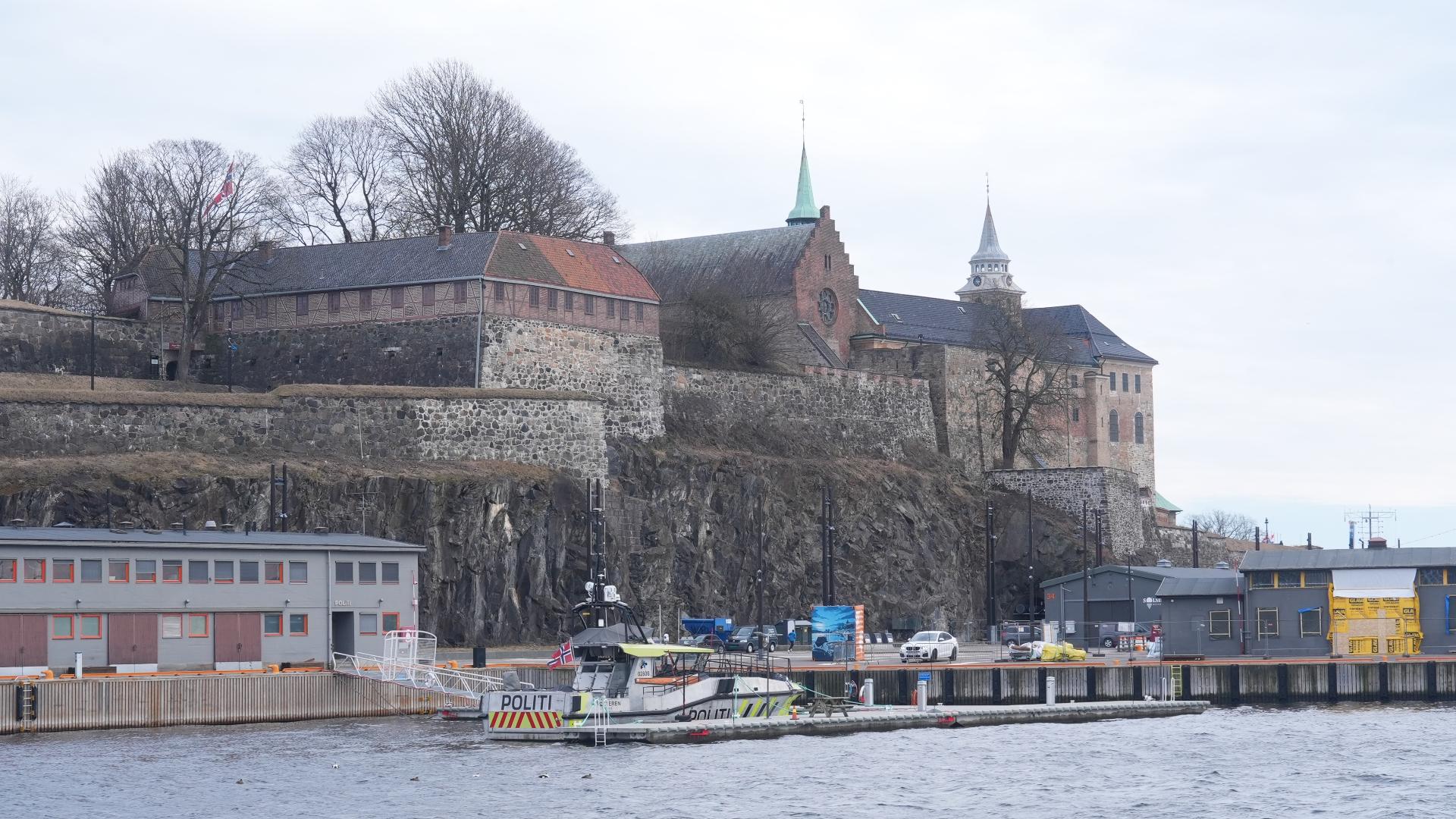
On the shore of the Oslofjord, right in the heart of Oslo, stands Akershus Festning, a fortress that has guarded the city for over seven hundred years. King Håkon V Magnusson ordered its construction around 1299, after a Norwegian earl named Alv Erlingsson attacked Oslo. The king needed a stronghold that could protect the city from the sea, and the rocky promontory jutting into the fjord was the perfect location. By 1300 the castle was already in use, and Håkon gradually made it his primary residence, preferring it over the older Kongsgård estate nearby.
Over the following centuries, Akershus proved its worth. It was first besieged in 1308 by the Swedish duke Erik Magnusson, but a local Norwegian force broke the siege. In fact, the fortress was never conquered in battle. It withstood every attack thrown at it, including repeated Swedish assaults and King Karl XII's famous attempt in 1716. Whoever controlled Akershus effectively controlled Norway, and no enemy ever managed to take it by force.
In the early 1600s, King Christian IV transformed the medieval castle into a Renaissance palace. He added elegant halls, ornate chambers, new towers and ramparts. This was the same king who rebuilt Oslo as Christiania after the great fire of 1624, laying out the grid streets of Kvadraturen right next to the fortress walls. The castle became both a symbol of royal power and a functioning military installation, a dual role it kept for centuries.
The fortress's darkest chapter came during the Second World War. German forces occupied Akershus from 1940 to 1945 and used it as a prison. Norwegian resistance fighters were held and executed within its walls. When the Germans surrendered the fortress on 11 May 1945, it marked one of the most symbolic moments of Norway's liberation. After the war, collaborators were tried here, including Vidkun Quisling, whose name became synonymous with treason worldwide.
Today the fortress grounds are open to the public and free to enter. Walking along the old walls offers wonderful views across the fjord and the harbour, though the view can be somewhat spoiled when a massive cruise ship is docked right in front. Inside the fortress you will find two museums: the Norwegian Armed Forces Museum, covering Norway's military history from Viking times to the present, and the Resistance Museum, which tells the story of the Norwegian resistance during the German occupation. Parts of the castle interior, including the royal chapel and banquet halls, can be visited on certain days during summer. Check the fortress website for current opening hours.
Over the following centuries, Akershus proved its worth. It was first besieged in 1308 by the Swedish duke Erik Magnusson, but a local Norwegian force broke the siege. In fact, the fortress was never conquered in battle. It withstood every attack thrown at it, including repeated Swedish assaults and King Karl XII's famous attempt in 1716. Whoever controlled Akershus effectively controlled Norway, and no enemy ever managed to take it by force.
In the early 1600s, King Christian IV transformed the medieval castle into a Renaissance palace. He added elegant halls, ornate chambers, new towers and ramparts. This was the same king who rebuilt Oslo as Christiania after the great fire of 1624, laying out the grid streets of Kvadraturen right next to the fortress walls. The castle became both a symbol of royal power and a functioning military installation, a dual role it kept for centuries.
The fortress's darkest chapter came during the Second World War. German forces occupied Akershus from 1940 to 1945 and used it as a prison. Norwegian resistance fighters were held and executed within its walls. When the Germans surrendered the fortress on 11 May 1945, it marked one of the most symbolic moments of Norway's liberation. After the war, collaborators were tried here, including Vidkun Quisling, whose name became synonymous with treason worldwide.
Today the fortress grounds are open to the public and free to enter. Walking along the old walls offers wonderful views across the fjord and the harbour, though the view can be somewhat spoiled when a massive cruise ship is docked right in front. Inside the fortress you will find two museums: the Norwegian Armed Forces Museum, covering Norway's military history from Viking times to the present, and the Resistance Museum, which tells the story of the Norwegian resistance during the German occupation. Parts of the castle interior, including the royal chapel and banquet halls, can be visited on certain days during summer. Check the fortress website for current opening hours.