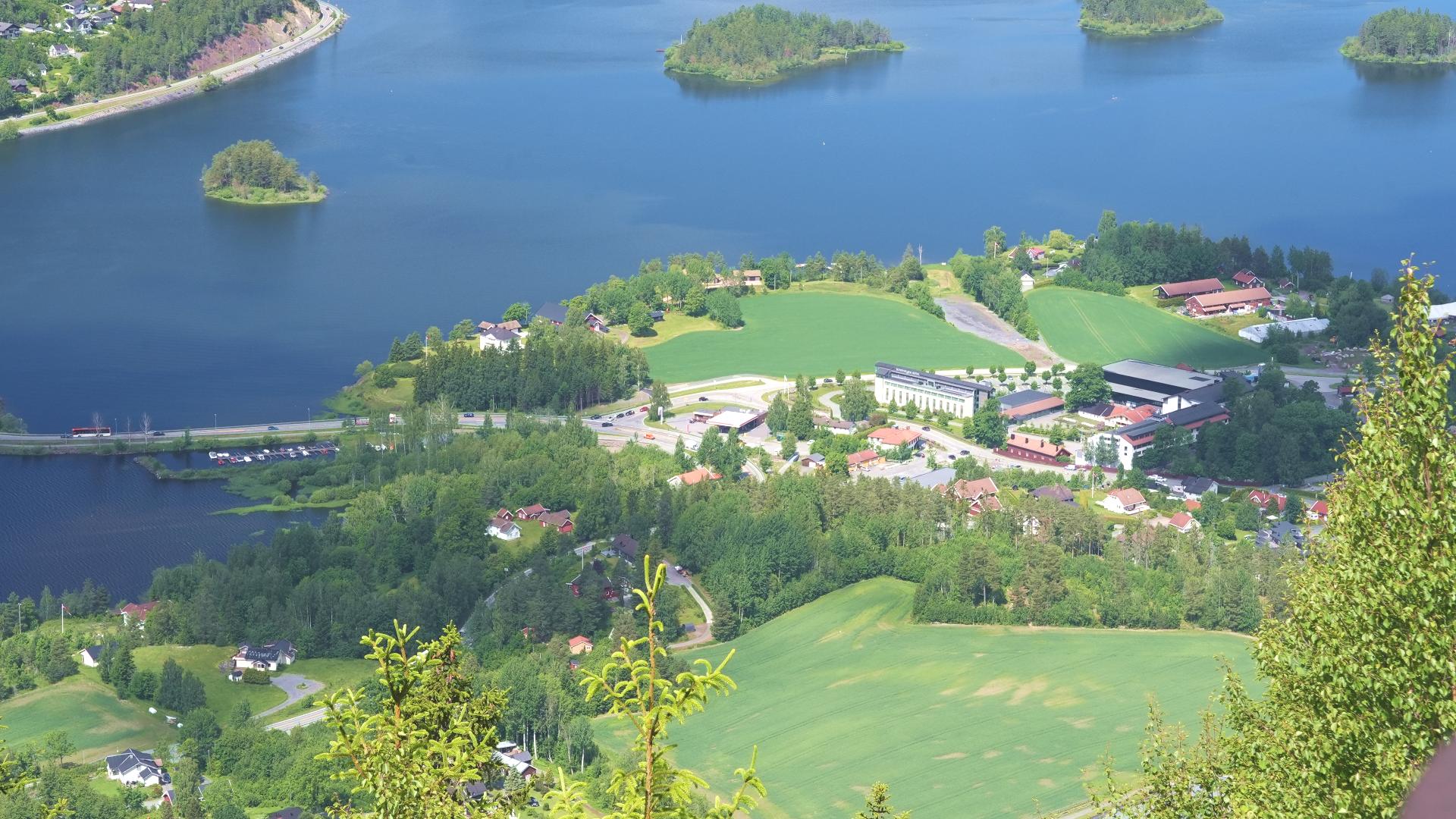
Veien Cultural Heritage Park is one of Northern Europe's largest burial grounds from the Early Iron Age. Just north of Hønefoss, an hour's drive from Oslo, over 100 burial mounds dot a landscape that was sacred for 1,500 years.
What makes Veien special is its age. In Norway, people tend to associate burial mounds and longhouses with the Viking Age, but Veien was already a central and important place a thousand years before the Vikings. Most mounds date from the Roman period around 0-400 CE, with some from the Migration period around 400 CE. For over 60 generations, this was a communal cemetery where priestesses worshipped ancient gods and kings ruled from great halls.
Excavations uncovered traces of four longhouses. One has been reconstructed on the original site, a 47-metre long and 8-metre wide hall that opened in 2005. Step inside and imagine the crackling fires and communal gatherings of Iron Age life. The museum, opened in 2009, displays jewellery, weapons, tools, glass mosaic beads and gold rings. Many finds were imported from across Europe, showing that international trade networks existed long before the Viking Age.
The Ringerike region has deep roots in Norwegian royal history. According to the sagas, Halvdan Svarte (Halfdan the Black), father of Harald Hårfagre who first unified Norway, ruled from this area. Around 860 he drowned when his horse and sleigh broke through the ice on nearby Randsfjorden. He was so beloved that the districts fought over his body and agreed to divide it. His head was supposedly buried at Stein farm in Ringerike. The mound Halvdanshaugen still exists. St. Olav, Norway's patron saint, also grew up in the Ringerike region before going "viking" as a young man.
The region later gave its name to the Ringerike style, one of the six major Viking Age art styles dating from around 990-1050 CE. The local reddish sandstone was carved into memorial stones with distinctive animal and plant motifs. This style spread across the Viking world and examples have been found as far away as London.
The burial grounds are open year-round without a ticket. The museum is open in summer and by arrangement for groups in winter.