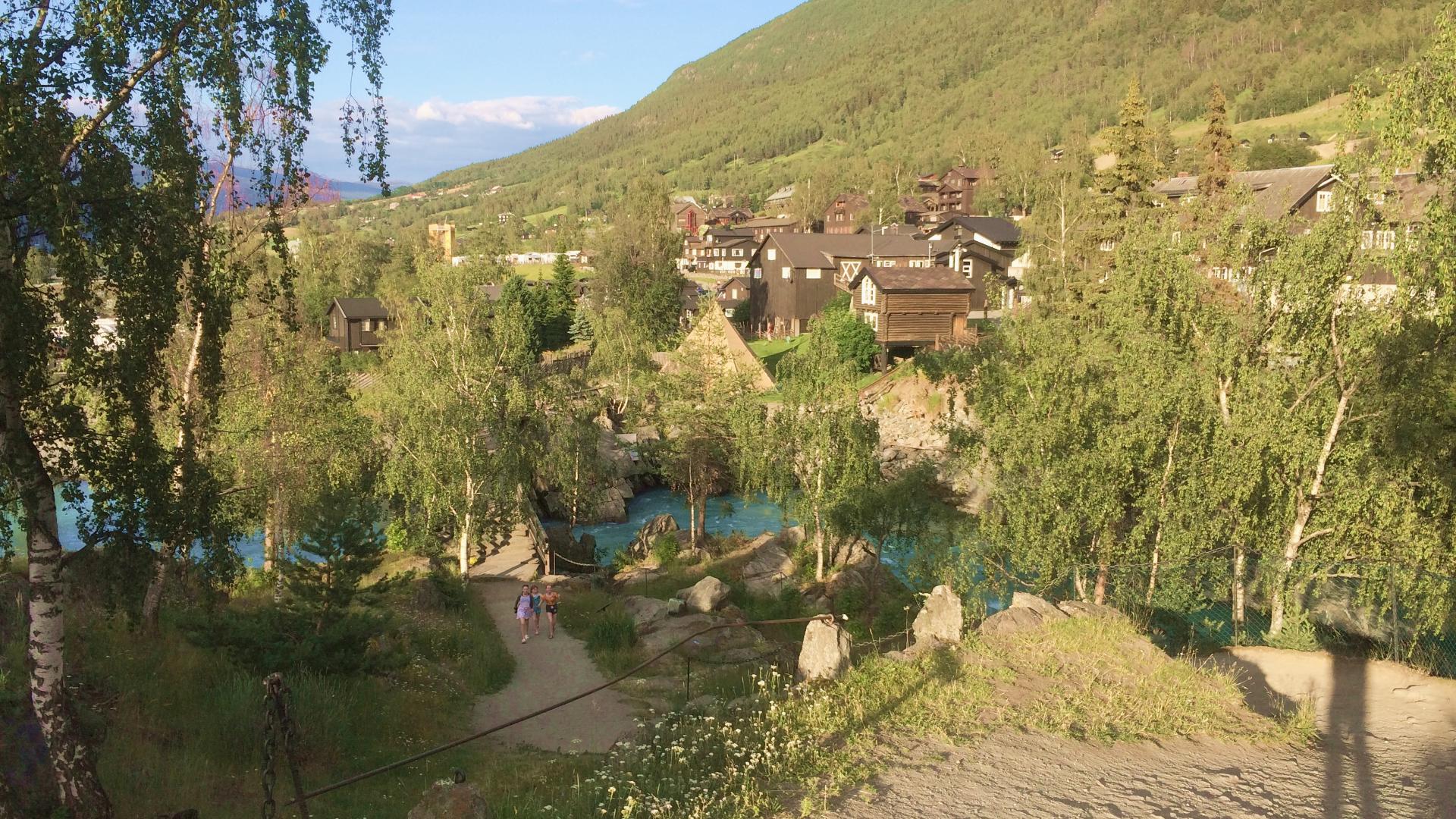
Vågåmo is a small village of about 1,500 people on the northern shore of Vågåvatnet. It's the administrative centre of Vågå municipality - one of the driest areas in Norway despite being surrounded by mountains.
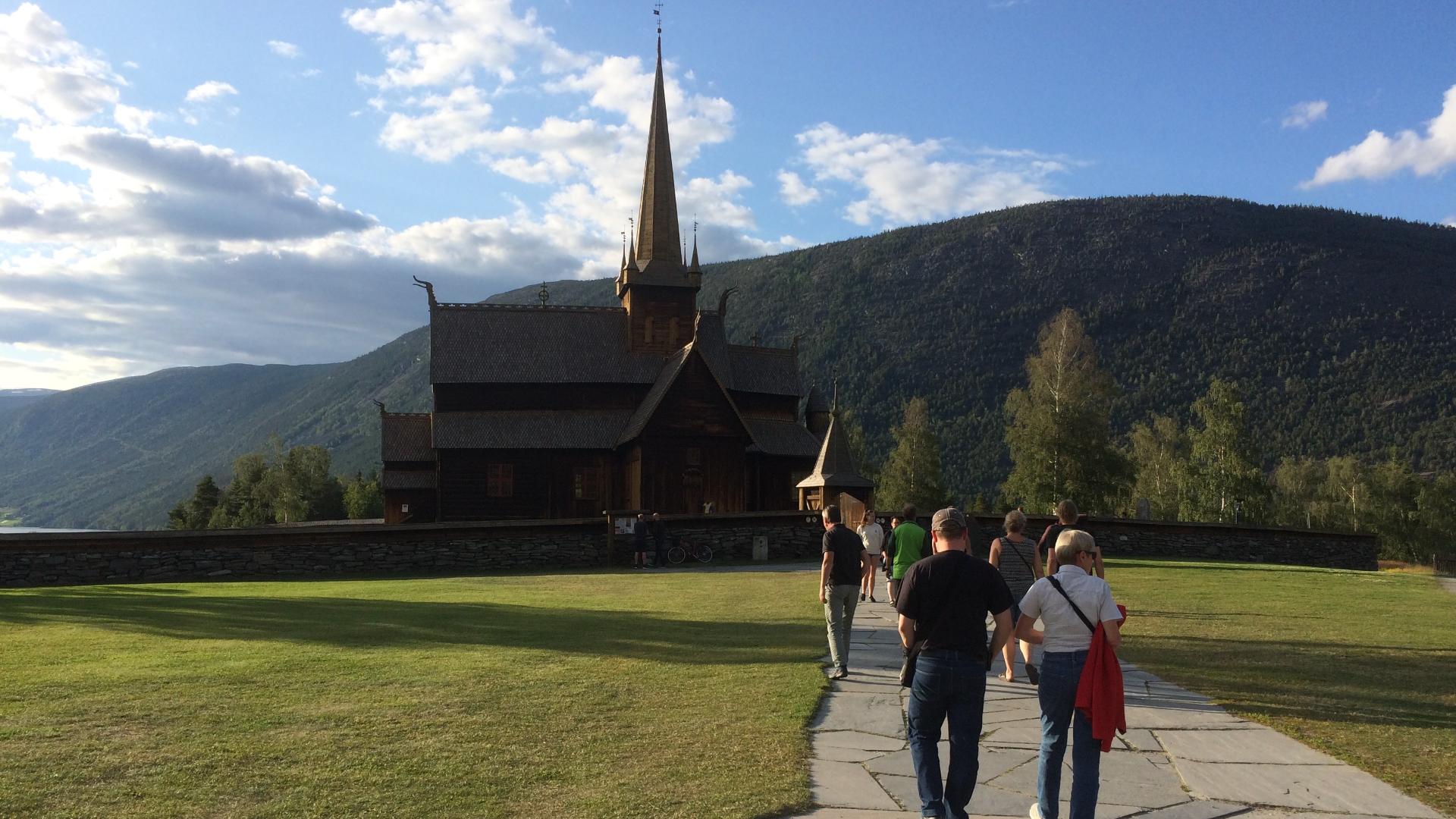
The church is the main reason to stop. Vågå kirke looks like a stave church from the outside - tarred black timber, octagonal tower - but it's actually a 1620s rebuilding. The original 1100s stave church was dismantled, and much of the material was reused in the new structure. You can still see carved wall planks from the medieval church at the main entrance, with dragon ornaments in the old Norse style. Inside, the soapstone baptismal font dates from the late 1100s, and there's a crucifix from the 1200s. The wall paintings in the choir were done by the parish priest Henning Munch in the 1690s.
That name - Munch - matters here. Edvard Munch's father's family lived in Vågå for generations. His great-great-grandfather Johan Storm was parish priest at Ullinsvin, the old vicarage, for 31 years. Edvard himself visited several times between 1895 and 1939, drawn by stories his father had told him about the family's origins. In 1924 he wrote: "I am in Vågå, did you know my family is from there? At the cemetery I found two graves, both a Munch and a Bjølstad. It is the struggle between these two families that becomes paintings in me."
Ullinsvin, the old vicarage just above the village centre, is now a gallery and cultural centre. Thirteen buildings, most of them protected. In the old rectory garden you can see the herb garden that Munch's great-grandmother Christine Storm Munch planted. There's a bust of Edvard Munch and a short walking trail through the village following his footsteps.
Above the village is Jutulheimen, a small open-air museum with buildings from the 1600s to 1800s arranged as a traditional farmyard.