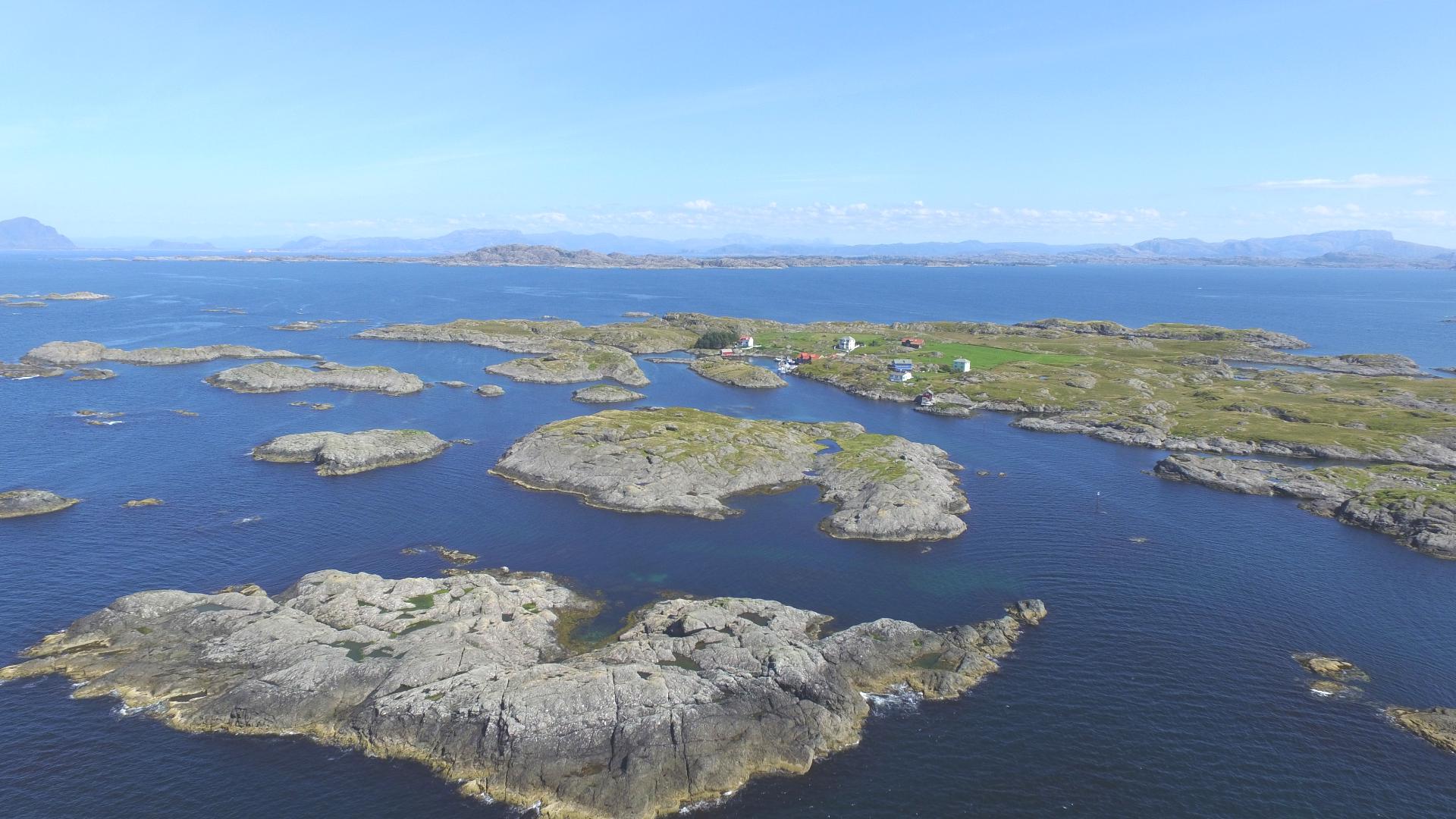
Utvær is the westernmost island group in Norway, a cluster of small, treeless islands where the Norwegian coastline ends and the North Sea begins. The lighthouse was built in 1900, and if it looks familiar, that is because it appeared on the old Norwegian 50-krone banknote.
The history here goes back much further than the lighthouse. In 1066, Harald Hardråde supposedly gathered his fleet at Utvær before sailing to England, where he lost both the Battle of Stamford Bridge and his life. During World War II, British planes bombed the islands because German forces had established a presence here.
Today Utvær is uninhabited, but the lighthouse and surrounding buildings have been protected since 1999. You can visit by boat from Hardbakke, which runs as a lighthouse safari on Saturdays in summer. The trip takes about 50 minutes each way, with a few hours on the island before heading back. If you are on Ytre Sula, the boat can also pick you up at Kolgrov. Either way, the trip is completely weather dependent, so do not count on it unless conditions are calm.
The history here goes back much further than the lighthouse. In 1066, Harald Hardråde supposedly gathered his fleet at Utvær before sailing to England, where he lost both the Battle of Stamford Bridge and his life. During World War II, British planes bombed the islands because German forces had established a presence here.
Today Utvær is uninhabited, but the lighthouse and surrounding buildings have been protected since 1999. You can visit by boat from Hardbakke, which runs as a lighthouse safari on Saturdays in summer. The trip takes about 50 minutes each way, with a few hours on the island before heading back. If you are on Ytre Sula, the boat can also pick you up at Kolgrov. Either way, the trip is completely weather dependent, so do not count on it unless conditions are calm.