On 27 November 1944, British planes from the aircraft carrier HMS Implacable spotted a German convoy just south of Sandnessjøen. They attacked and sank the ship MS Rigel, believing it was carrying German soldiers. It was not. On board were over 2,800 prisoners of war, mostly Soviet, Serbian, and Polish, along with 95 German deserters and 7 Norwegian prisoners. More than 2,500 people died. It was the largest maritime disaster in Norwegian waters, and one of the least known.
The German captain ran the burning ship aground at Sør-Rosøya, which may have saved the roughly 250 who survived. The wreck sat in the water for 25 years before the remains were recovered between 1969 and 1970 and brought here to Tjøtta.
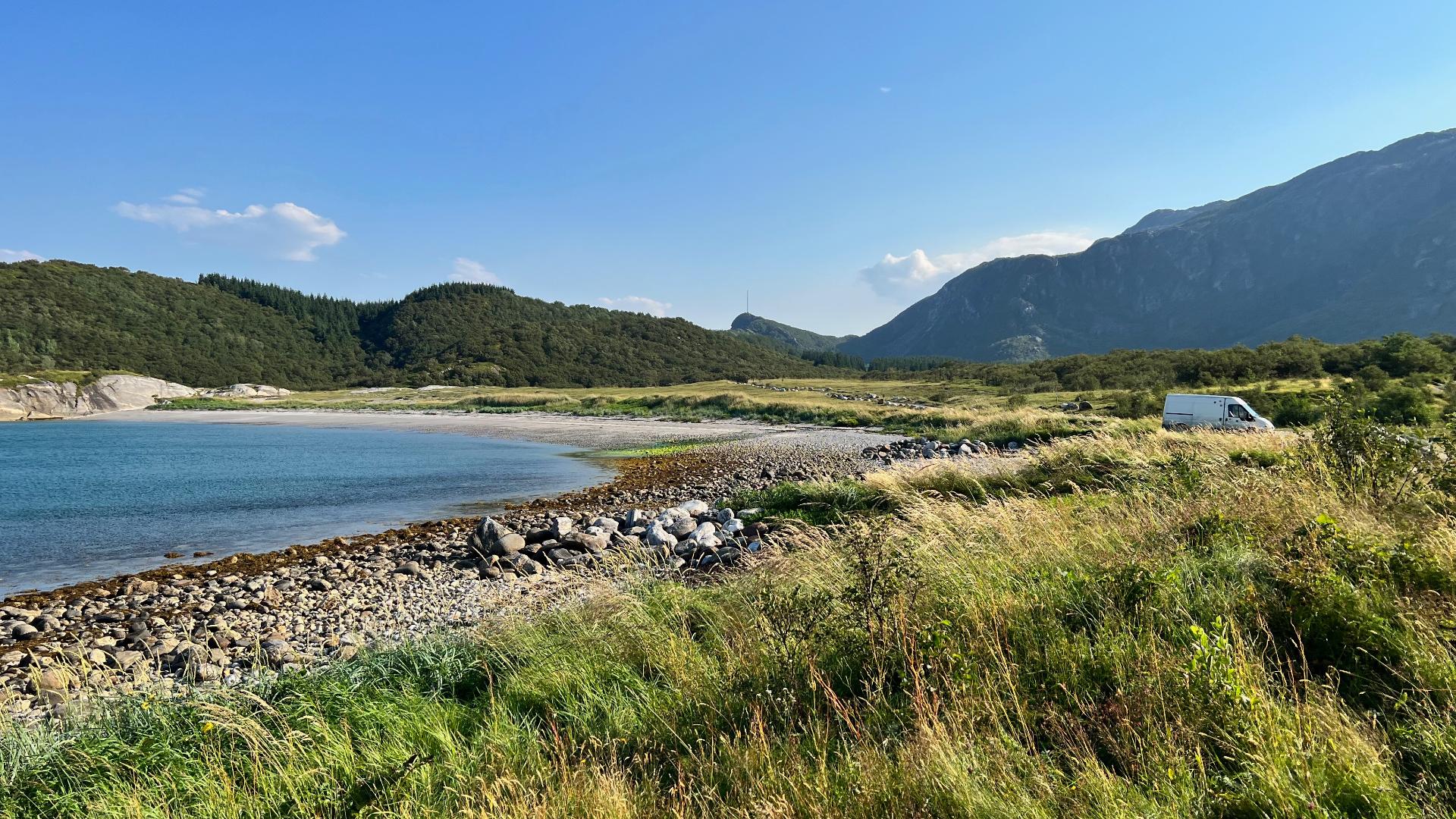
The cemetery is between Sandnessjøen and Tjøtta, right along Road 17. It is a quiet, simple place. Most of the dead were never identified. The rows of identical markers stretch across the grass towards the sea. It is a powerful stop, and an important one.
The German captain ran the burning ship aground at Sør-Rosøya, which may have saved the roughly 250 who survived. The wreck sat in the water for 25 years before the remains were recovered between 1969 and 1970 and brought here to Tjøtta.
The cemetery is between Sandnessjøen and Tjøtta, right along Road 17. It is a quiet, simple place. Most of the dead were never identified. The rows of identical markers stretch across the grass towards the sea. It is a powerful stop, and an important one.