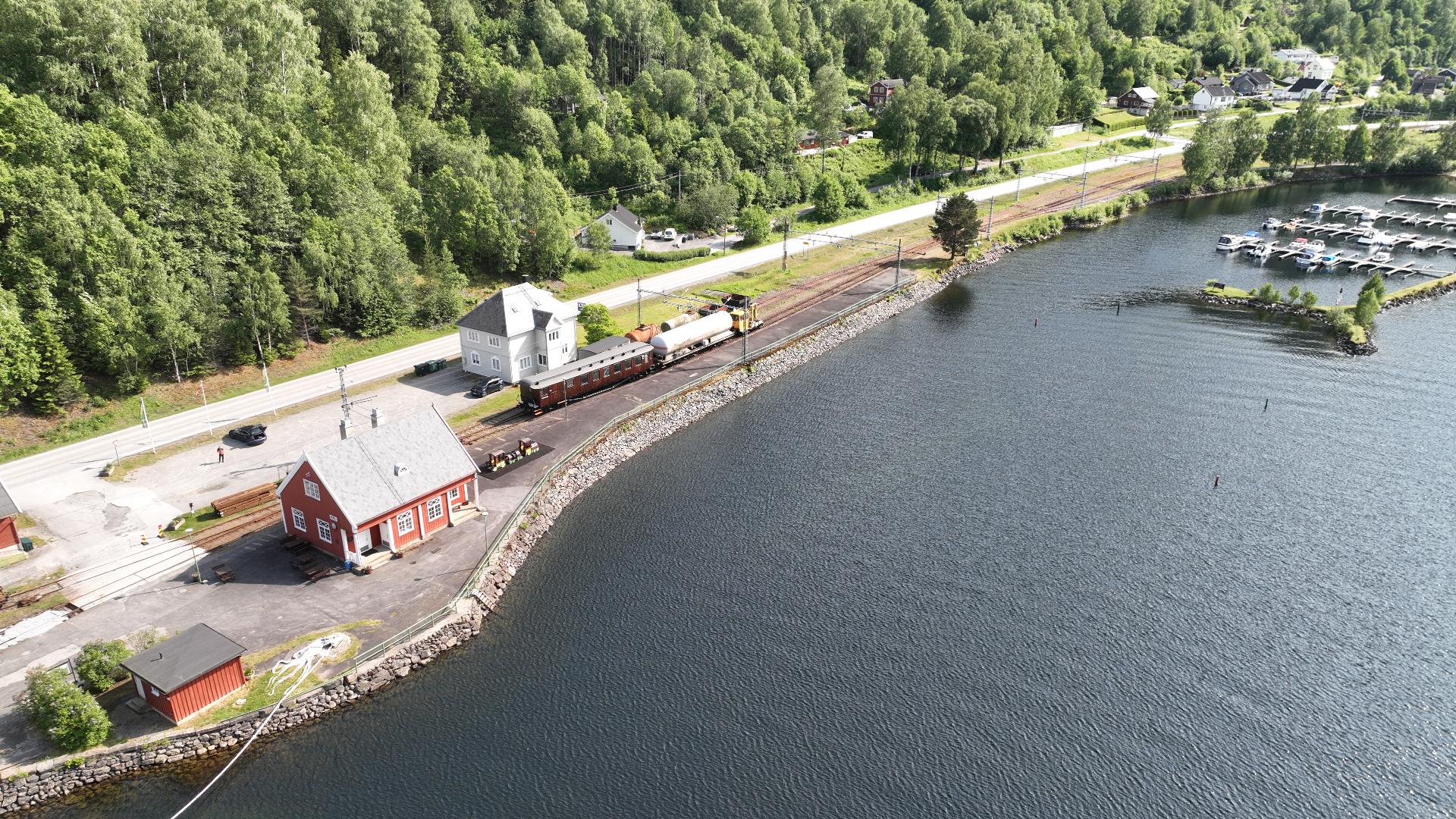
Tinnsjøen is a long, deep lake that was a critical link in the transport chain from Rjukan to the coast. Fertiliser went by train to Mæl, then by railway ferry across the lake, then by train again to Notodden and the port.
The lake is also where the ferry SF Hydro was sunk on 20 February 1944, in the final act of the Norwegian heavy water sabotage. After the commandos destroyed the heavy water production at Vemork in 1943, the Germans repaired the plant and tried to ship the remaining stock of heavy water out of Norway. The Norwegian resistance learned of the shipment and sabotaged the ferry. SF Hydro sank in the deepest part of the lake, about 460 metres down, taking the heavy water with it. Eighteen people died, fourteen of them Norwegian civilians. It was a painful decision, but the saboteurs calculated that the heavy water could not be allowed to reach Germany.
The wreck is still on the bottom. In 2005, an expedition retrieved one barrel, and analysis confirmed it was indeed heavy water and not a decoy. There is a memorial at the site.
The lake itself is striking. It is 32 kilometres long and up to 460 metres deep, making it one of the deepest lakes in Norway. The drive along its western shore between Mæl and the south end offers views across the water to the mountains beyond.
The lake is also where the ferry SF Hydro was sunk on 20 February 1944, in the final act of the Norwegian heavy water sabotage. After the commandos destroyed the heavy water production at Vemork in 1943, the Germans repaired the plant and tried to ship the remaining stock of heavy water out of Norway. The Norwegian resistance learned of the shipment and sabotaged the ferry. SF Hydro sank in the deepest part of the lake, about 460 metres down, taking the heavy water with it. Eighteen people died, fourteen of them Norwegian civilians. It was a painful decision, but the saboteurs calculated that the heavy water could not be allowed to reach Germany.
The wreck is still on the bottom. In 2005, an expedition retrieved one barrel, and analysis confirmed it was indeed heavy water and not a decoy. There is a memorial at the site.
The lake itself is striking. It is 32 kilometres long and up to 460 metres deep, making it one of the deepest lakes in Norway. The drive along its western shore between Mæl and the south end offers views across the water to the mountains beyond.