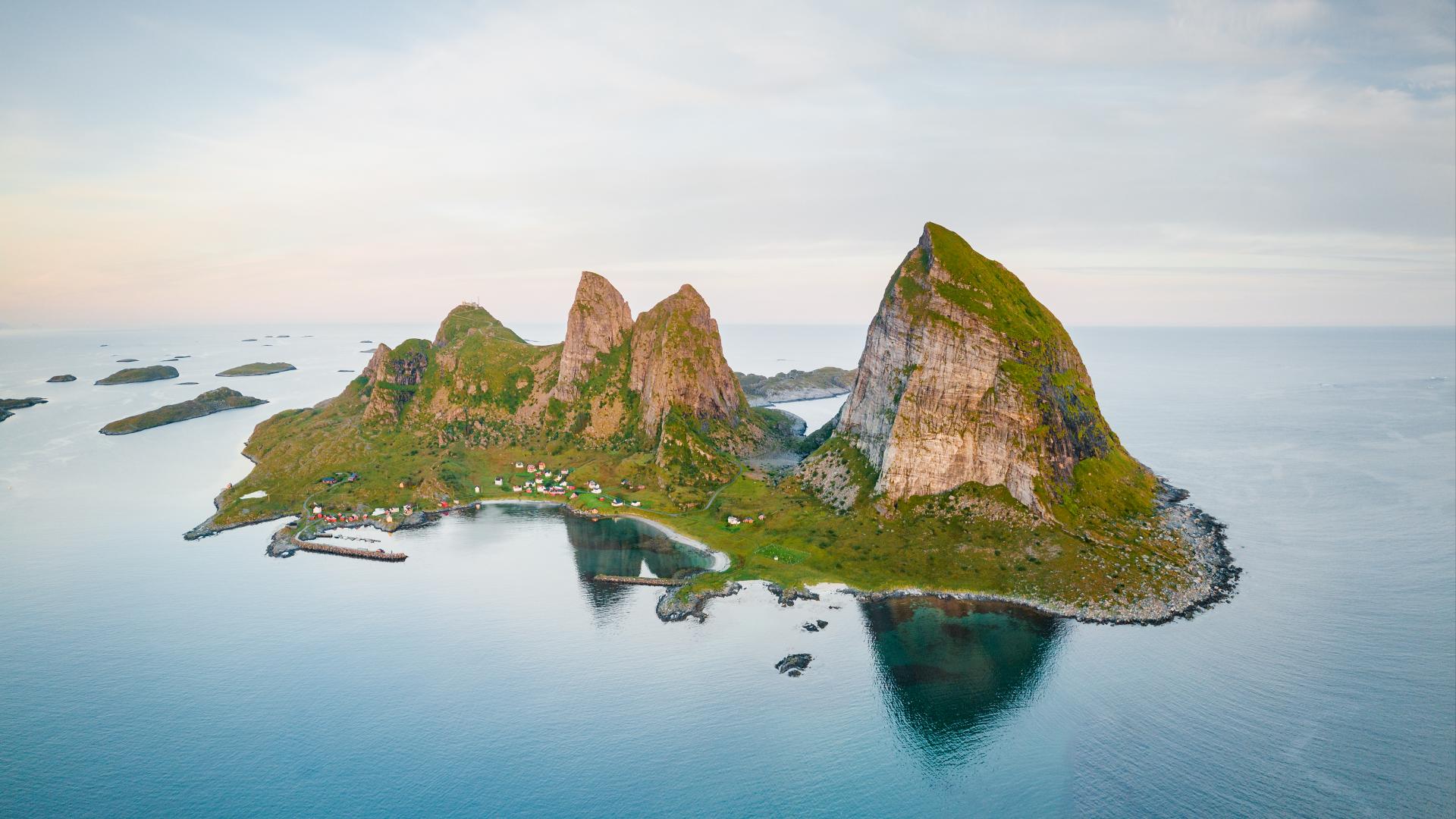
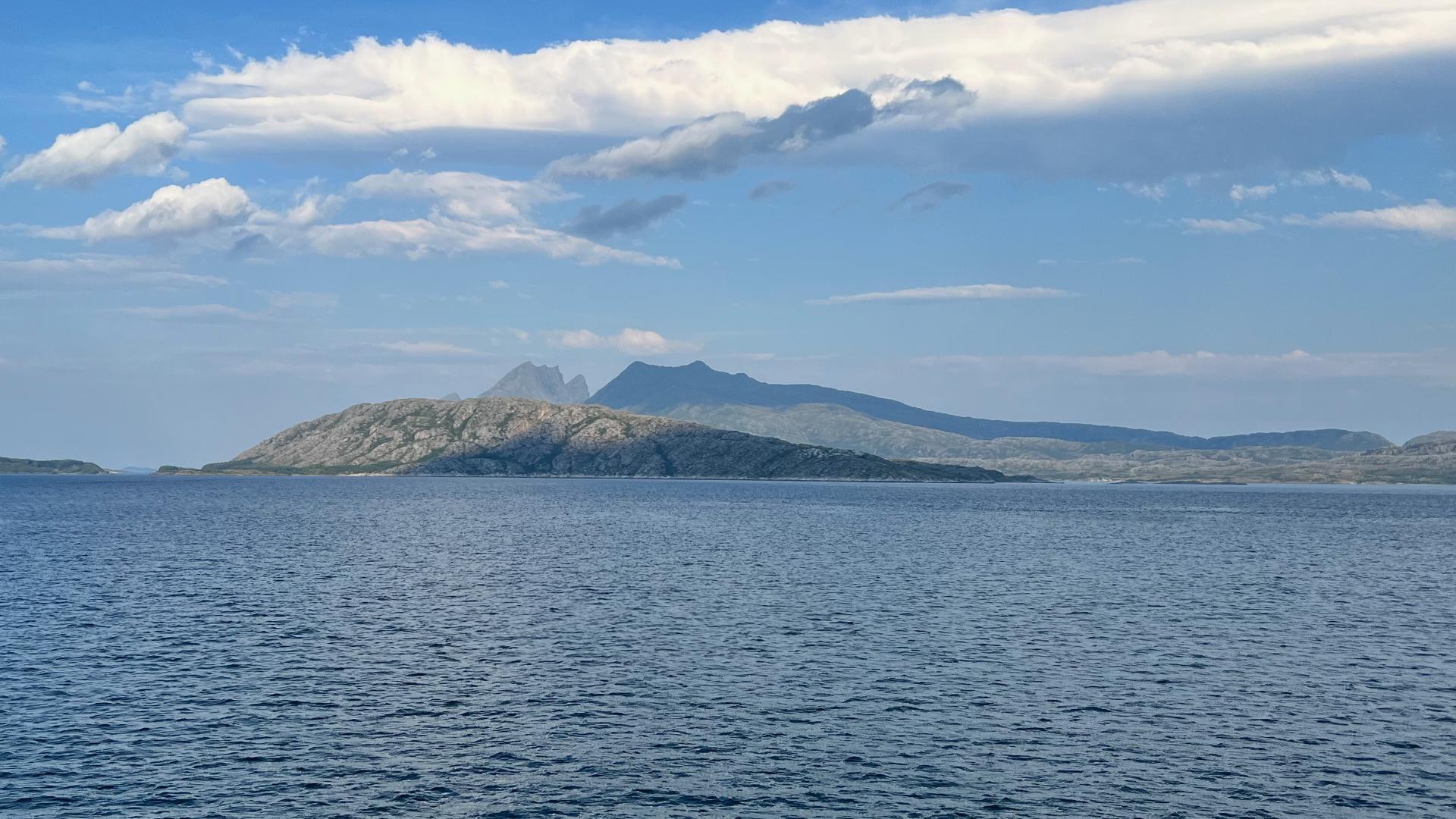
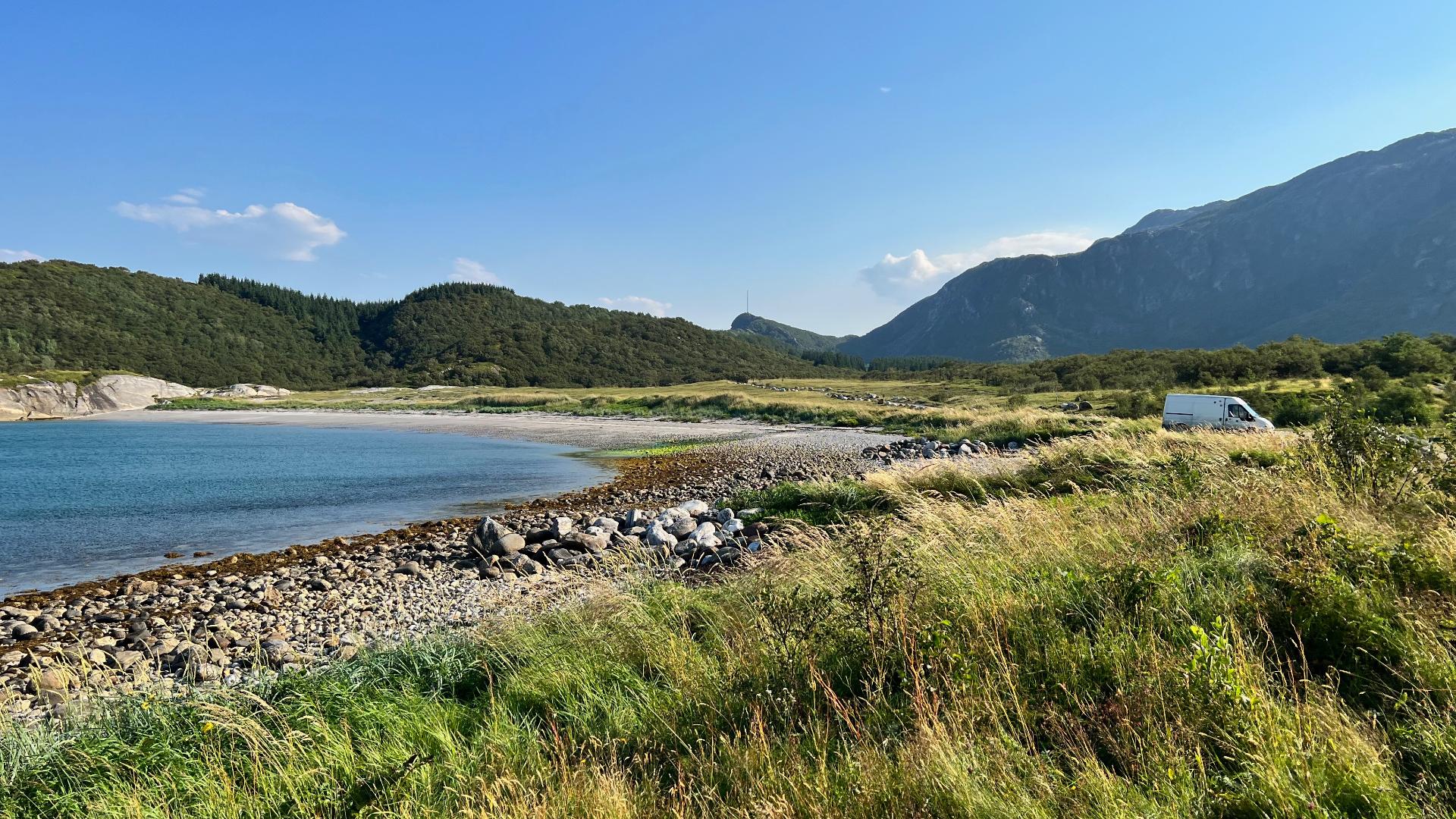
Around 8,200 years ago, the seabed off the Norwegian continental shelf collapsed in one of the largest underwater landslides in Earth’s history. The Storegga Slide, named after the ‘Great Edge’ on the shelf margin, sent 3,500 cubic kilometres of rock and sediment cascading into the deep ocean, triggering a mega-tsunami that swept across the entire North Atlantic. Waves up to 10–12 metres high slammed into the Norwegian coast. In narrow fjords, the water may have funnelled to heights of 40 metres. The Helgeland coast, directly facing the open Norwegian Sea, would have been among the first and hardest hit. Mesolithic hunter-gatherer communities living along these shores, people who depended on the sea for food and travel, experienced a catastrophe on an almost unimaginable scale. The slide also contributed to the final drowning of Doggerland, the low-lying land bridge that once connected Britain to continental Europe across what is now the North Sea. Today, the evidence is buried in sediment layers along the coast. But standing here on the outer Helgeland islands, looking west across the Norwegian Sea toward the continental shelf edge, you are gazing at the source of one of the most powerful natural disasters in European prehistory. The peaceful ocean before you once rose and consumed this entire coastline in a matter of minutes.
🪨 Geology
Helgeland
Coastal
The Storegga Mega-Tsunami: When the Ocean Swallowed the Coast
Open in map
5 minutes
Get the free Xplore Norway app
Hear every place narrated automatically as you drive, with offline maps for all of Norway.
- Automatic GPS audio guide
- Offline maps for all of Norway
- Free to download
1596 places across Norway