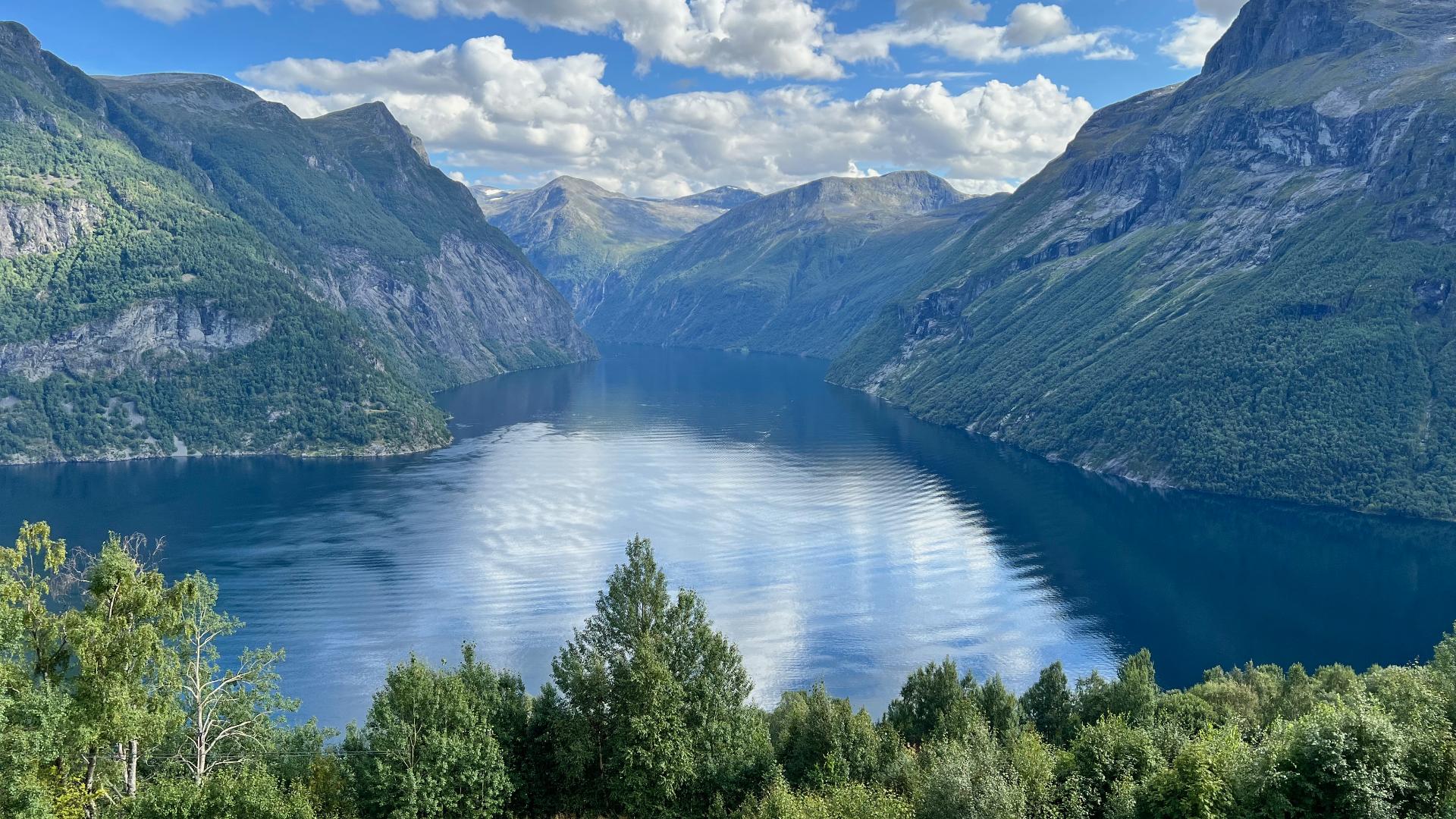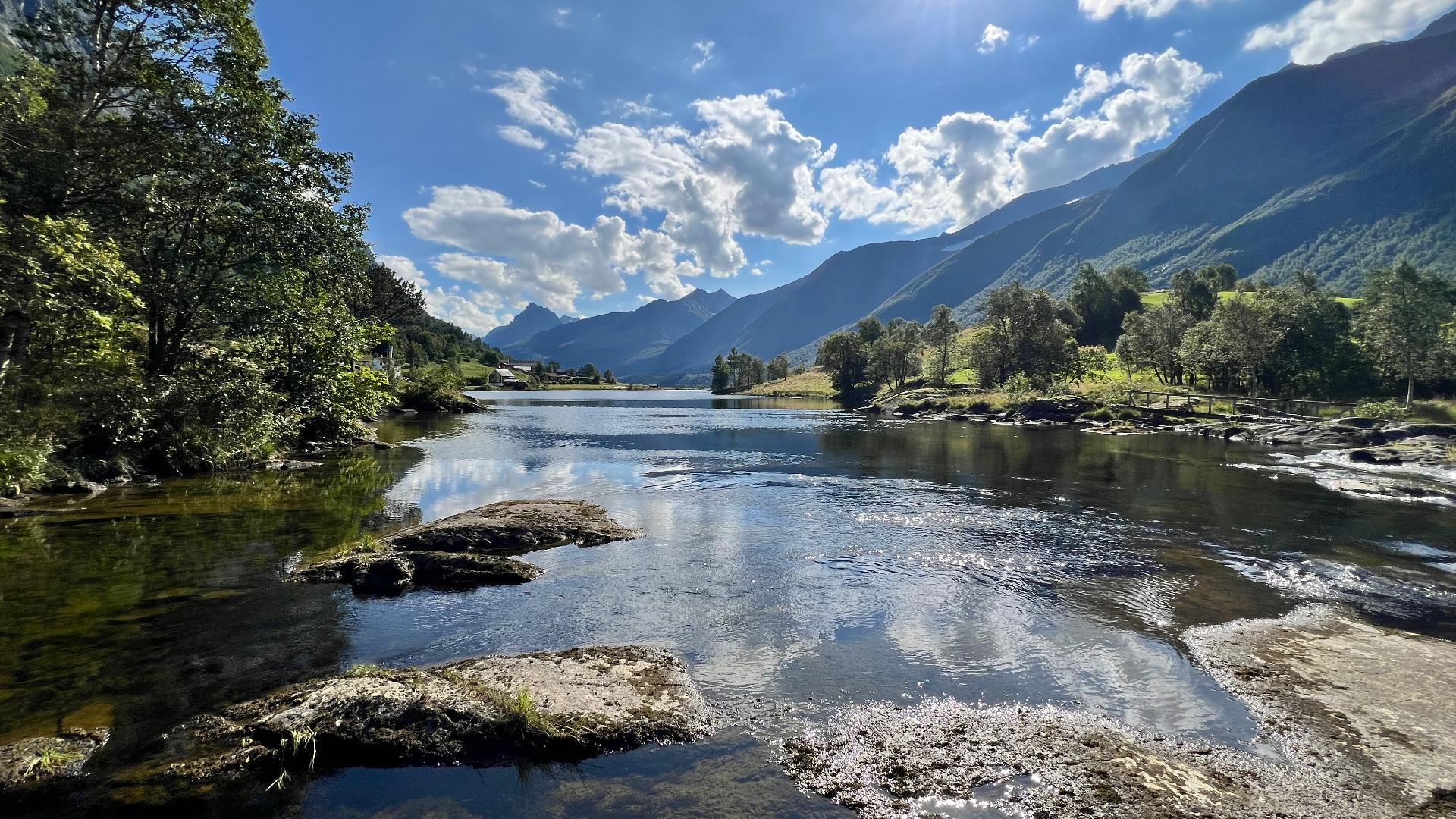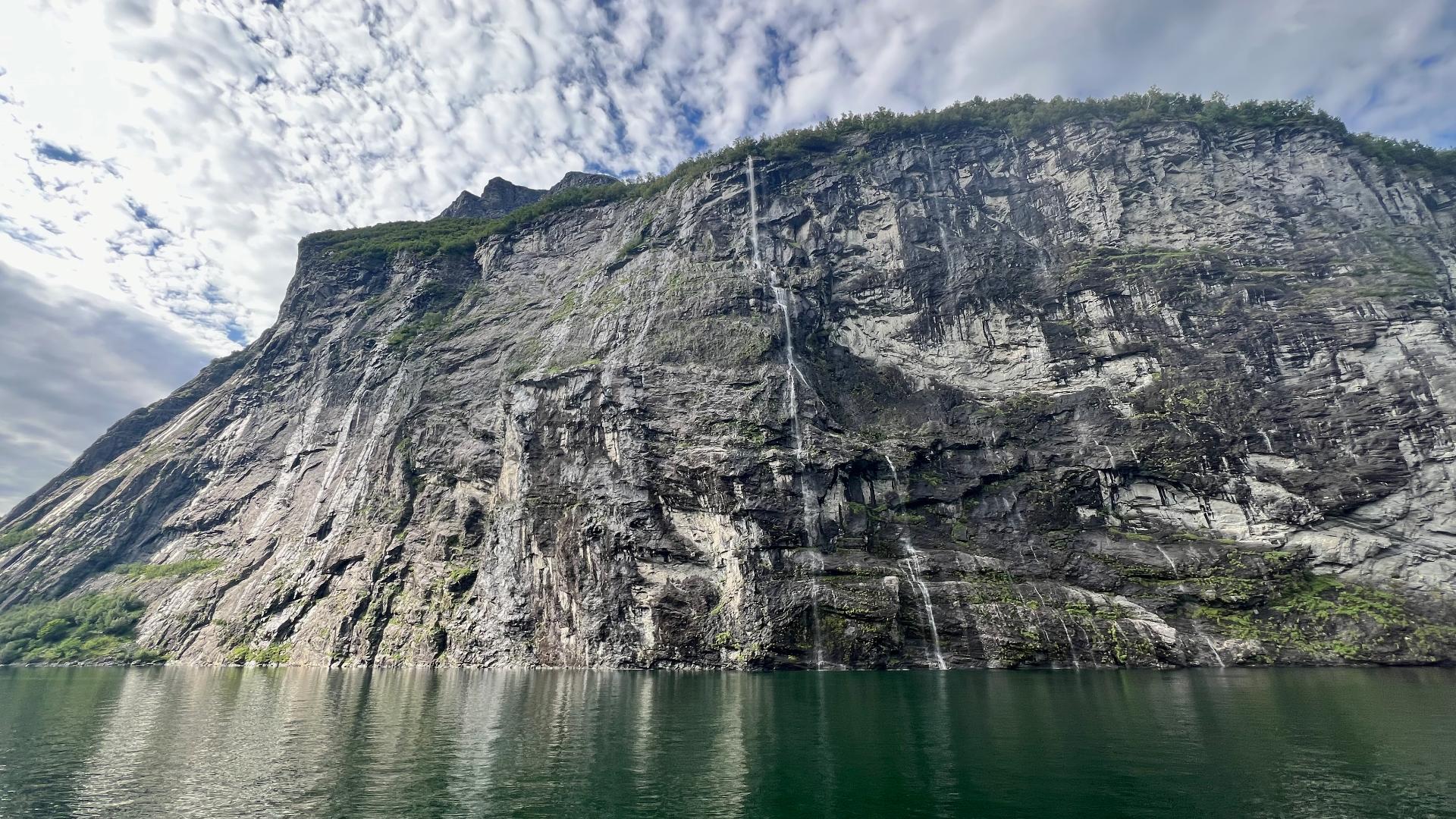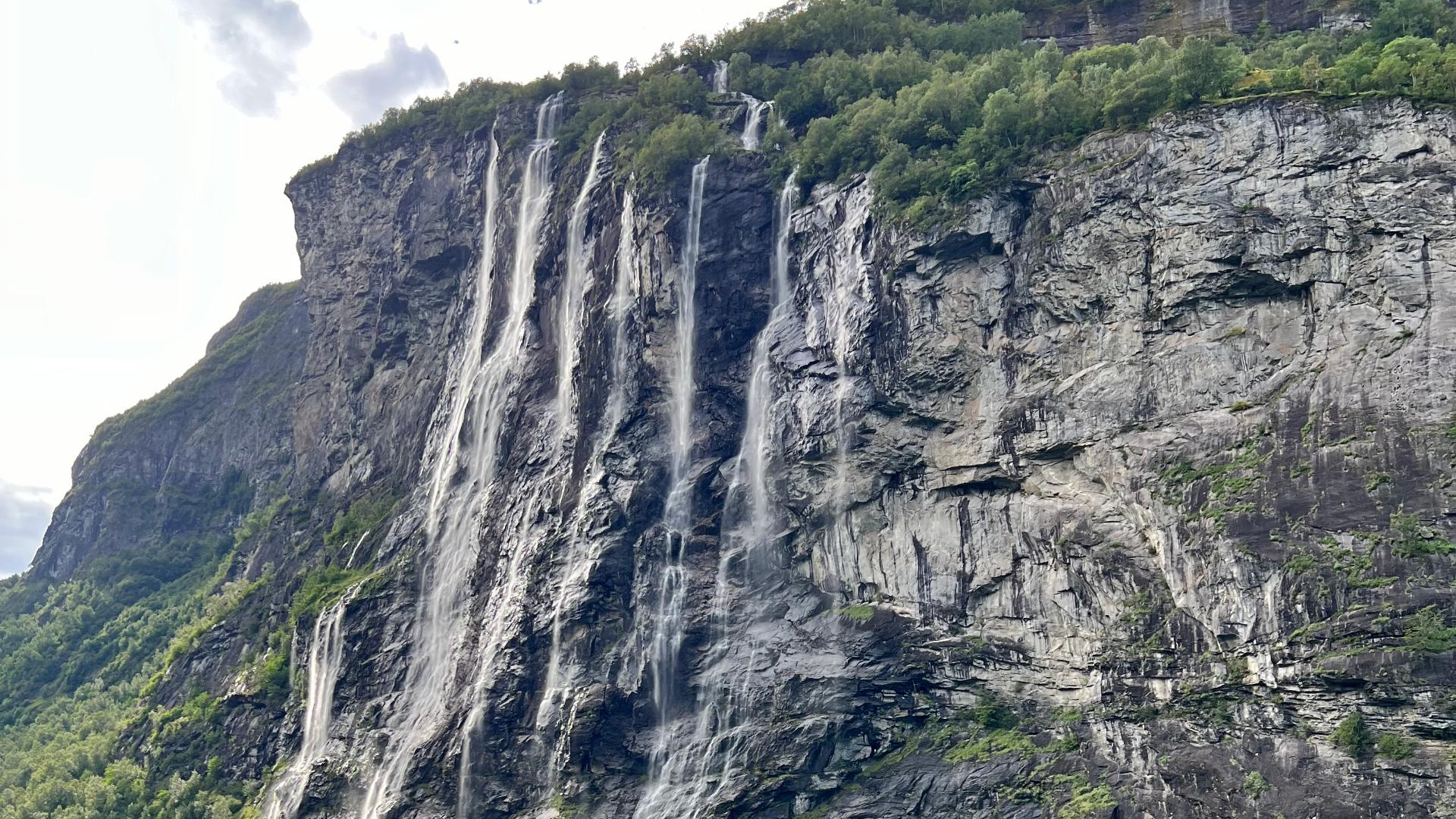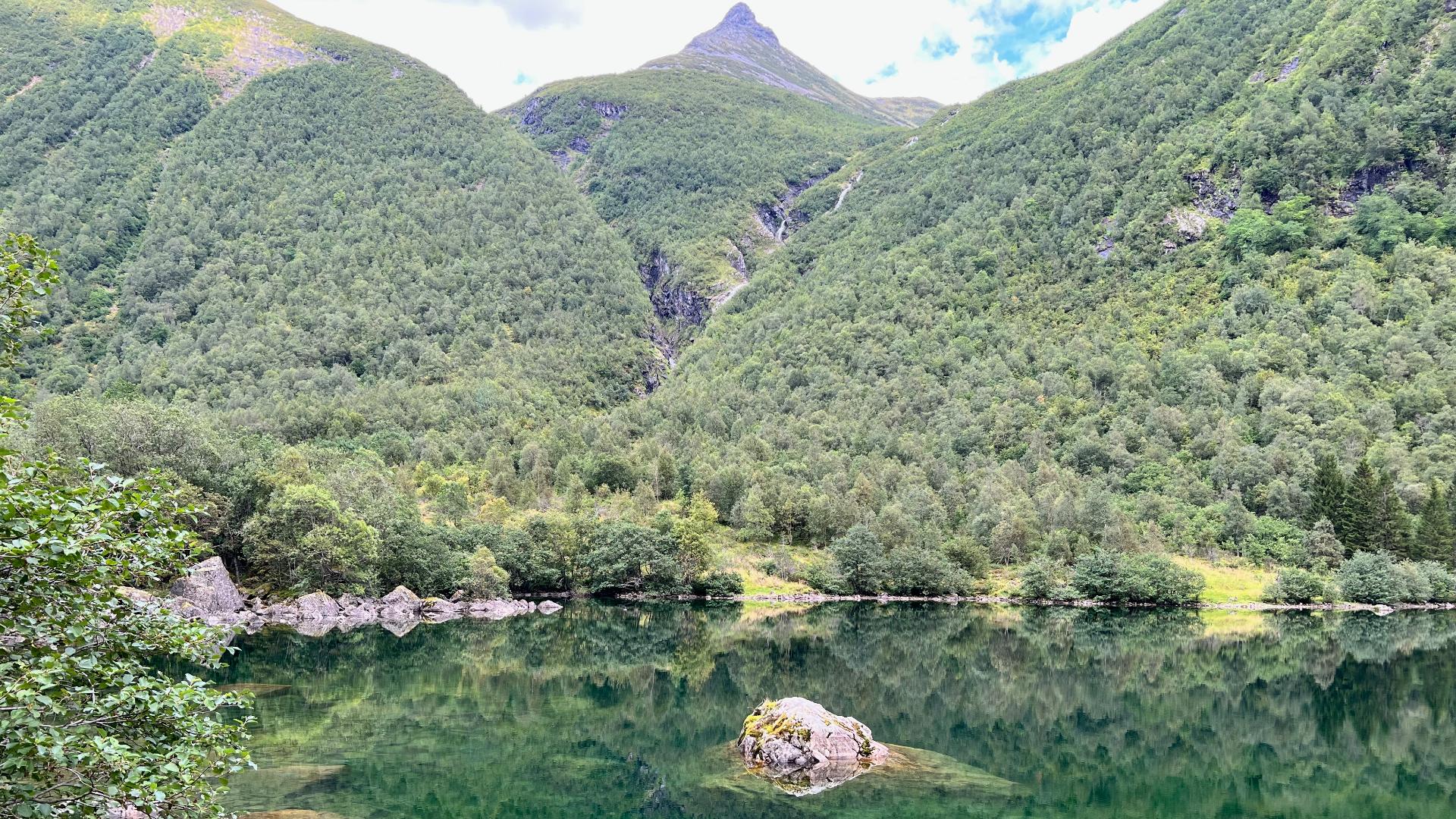
The lake alongside the road here did not exist before 1908. On the 26th of May that year, a rockslide from the mountain Keipen blocked the river Lygna and the valley began to fill with water. The farmers gathered their animals and belongings and fled. Within days, two farms, a road, stone fences, and an entire apple orchard had disappeared beneath the surface.
Today, Lygnstøylsvatnet is one of Norway's most unusual sights. On a calm, clear day, you can see the remains of the old buildings from the roadside. Stone foundations, gates and the ghostly outlines of trees sit at 5 to 13 metres depth, preserved in the cold, clear water for over a hundred years. It has become a popular dive site, and for good reason.
There is a small layby with an information board about two thirds of the way along the lake if you are coming from the south. It is worth stopping, even just for a few minutes. The combination of the crystal-clear water and the ruins below the surface is unlike anything else you will see on this trip.
Today, Lygnstøylsvatnet is one of Norway's most unusual sights. On a calm, clear day, you can see the remains of the old buildings from the roadside. Stone foundations, gates and the ghostly outlines of trees sit at 5 to 13 metres depth, preserved in the cold, clear water for over a hundred years. It has become a popular dive site, and for good reason.
There is a small layby with an information board about two thirds of the way along the lake if you are coming from the south. It is worth stopping, even just for a few minutes. The combination of the crystal-clear water and the ruins below the surface is unlike anything else you will see on this trip.