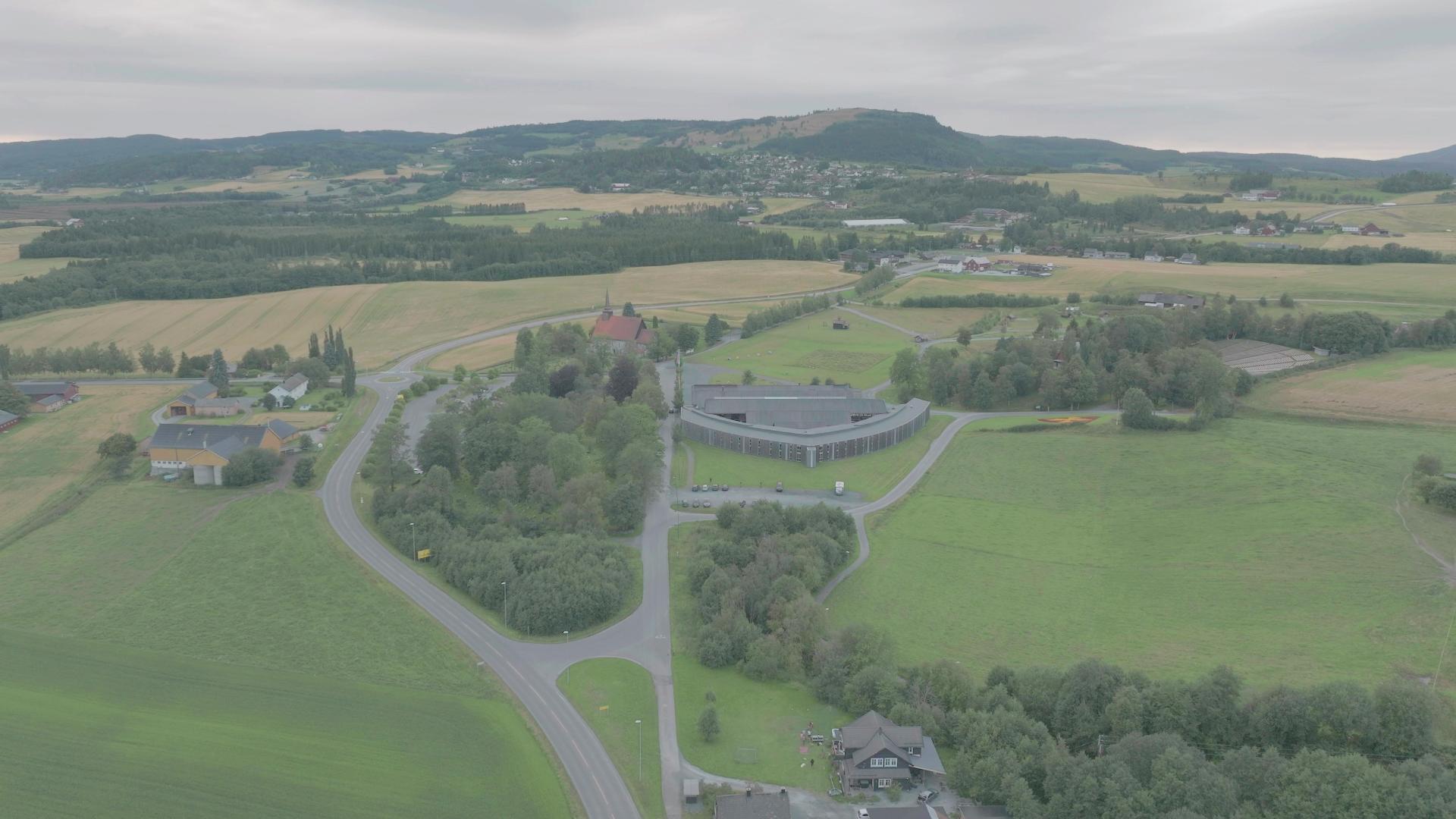
This is where Norway became Norway. On 29 July 1030, King Olav Haraldsson was killed in battle here, fighting to reclaim his throne from Danish-backed chieftains. He lost the battle but won something larger: within a year, miracles were reported at his burial site, he was declared a saint, and his death became the event that cemented Christianity in Norway. The cathedral in Trondheim, Nidarosdomen, was built over his original grave.
Olav's half-brother was also at the battle, a fifteen-year-old boy named Harald. He survived, fled to Constantinople, served in the Byzantine emperor's personal guard, and returned to become King Harald Hardrada. He died in 1066 at the Battle of Stamford Bridge in England, just days before William the Conqueror invaded at Hastings.
Stiklestad Church was built on the battle site around 1180 and is one of the oldest stone churches in the region. Behind it, the Stiklestad Nasjonale Kultursenter includes a folk museum with about 30 historic buildings and exhibition halls covering the Viking Age and medieval period.
The highlight is Spelet om Heilag Olav, an outdoor theatrical performance staged every year during Olsok in late July. It has been running since 1954, involves nearly 700 volunteers, and is one of the largest and oldest outdoor theatre productions in northern Europe. If the timing works, it is a remarkable experience.
Olav's half-brother was also at the battle, a fifteen-year-old boy named Harald. He survived, fled to Constantinople, served in the Byzantine emperor's personal guard, and returned to become King Harald Hardrada. He died in 1066 at the Battle of Stamford Bridge in England, just days before William the Conqueror invaded at Hastings.
Stiklestad Church was built on the battle site around 1180 and is one of the oldest stone churches in the region. Behind it, the Stiklestad Nasjonale Kultursenter includes a folk museum with about 30 historic buildings and exhibition halls covering the Viking Age and medieval period.
The highlight is Spelet om Heilag Olav, an outdoor theatrical performance staged every year during Olsok in late July. It has been running since 1954, involves nearly 700 volunteers, and is one of the largest and oldest outdoor theatre productions in northern Europe. If the timing works, it is a remarkable experience.