Steinkjer is the starting point of the Kystriksveien, and for most travellers heading north, this is where the adventure begins. But this small town of about 13,000 people is more than just a junction; it is the county capital of Trøndelag and one of Norway's oldest centres of power.
The name comes from Old Norse Steinker: "steinn" meaning stone and "ker" meaning a barrier for catching fish. People have lived here for thousands of years, and the proof is spectacular. About 20 minutes south of town, along county road 763 near Snåsavatnet, you will find Bølareinen: a life-size reindeer carved into bare rock over 5,000 years ago. Discovered in 1842, it is probably the most famous rock carving in all of Norway. The site has around 30 figures in total, including a bear, an elk, a seabird, and even a skier. When those carvings were made, the lake was still part of the Trondheimsfjorden, with the water level 35 to 40 metres higher than today.
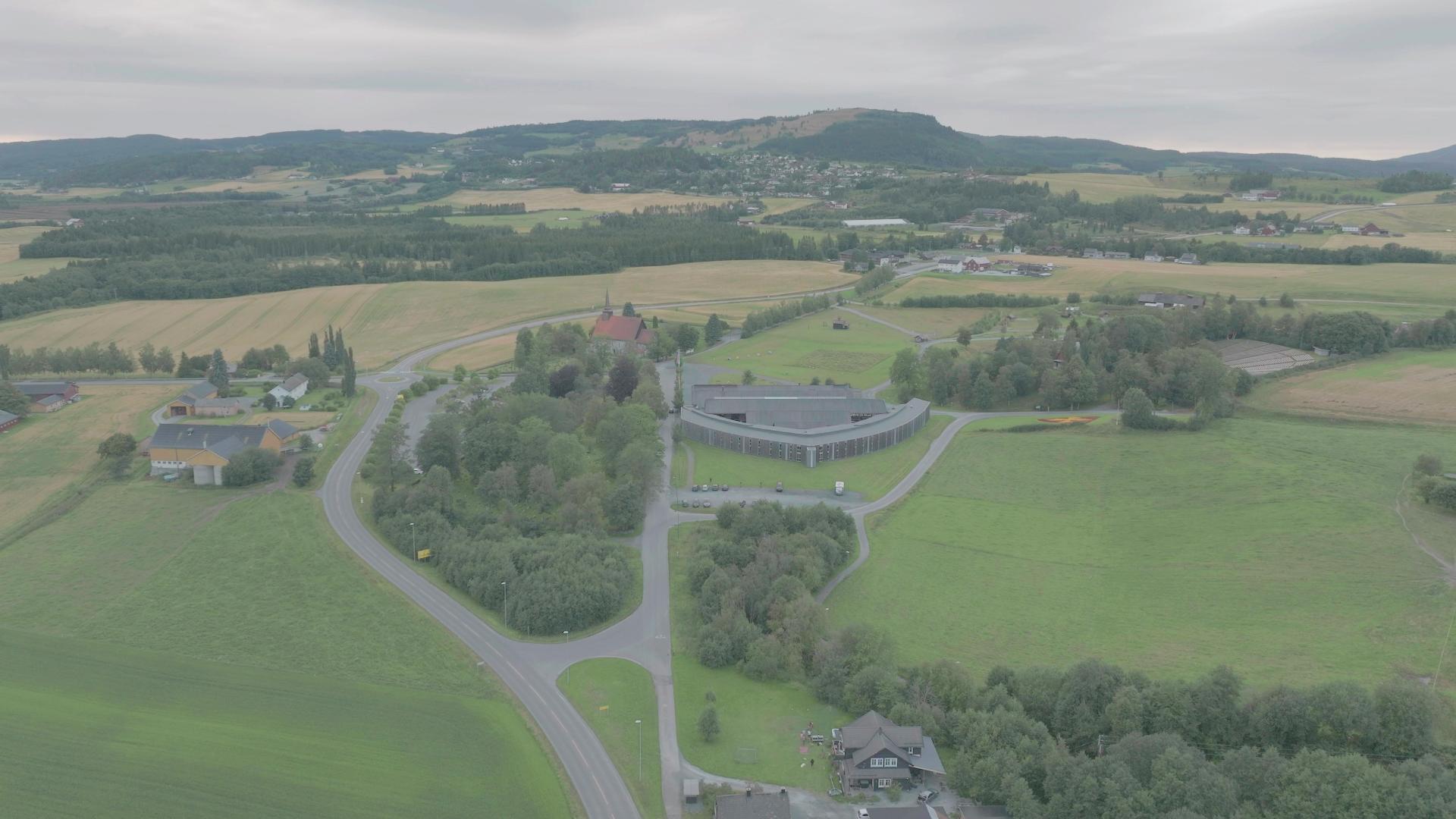
Fast forward to the Viking Age, and Steinkjer was a seat of serious power. Just north of the centre lies Egge, a chieftain's farm mentioned in Snorre's royal sagas. During the 900s and 1000s, powerful figures like Trond Haka and Kalv Arnesson ruled from here. Kalv led the peasant army against King Olav Haraldsson at the Battle of Stiklestad in 1030, one of the most decisive battles in Norwegian history. A richly equipped boat grave excavated at Egge in 1982 contained weapons, horse gear, gaming pieces, and the remarkable Egge Sword, decorated in a style matching the famous axe from Mammen in Denmark, dated to 971 AD. Today, Egge Museum tells this story well, along with 100 years of tractor history and life in interwar Steinkjer.
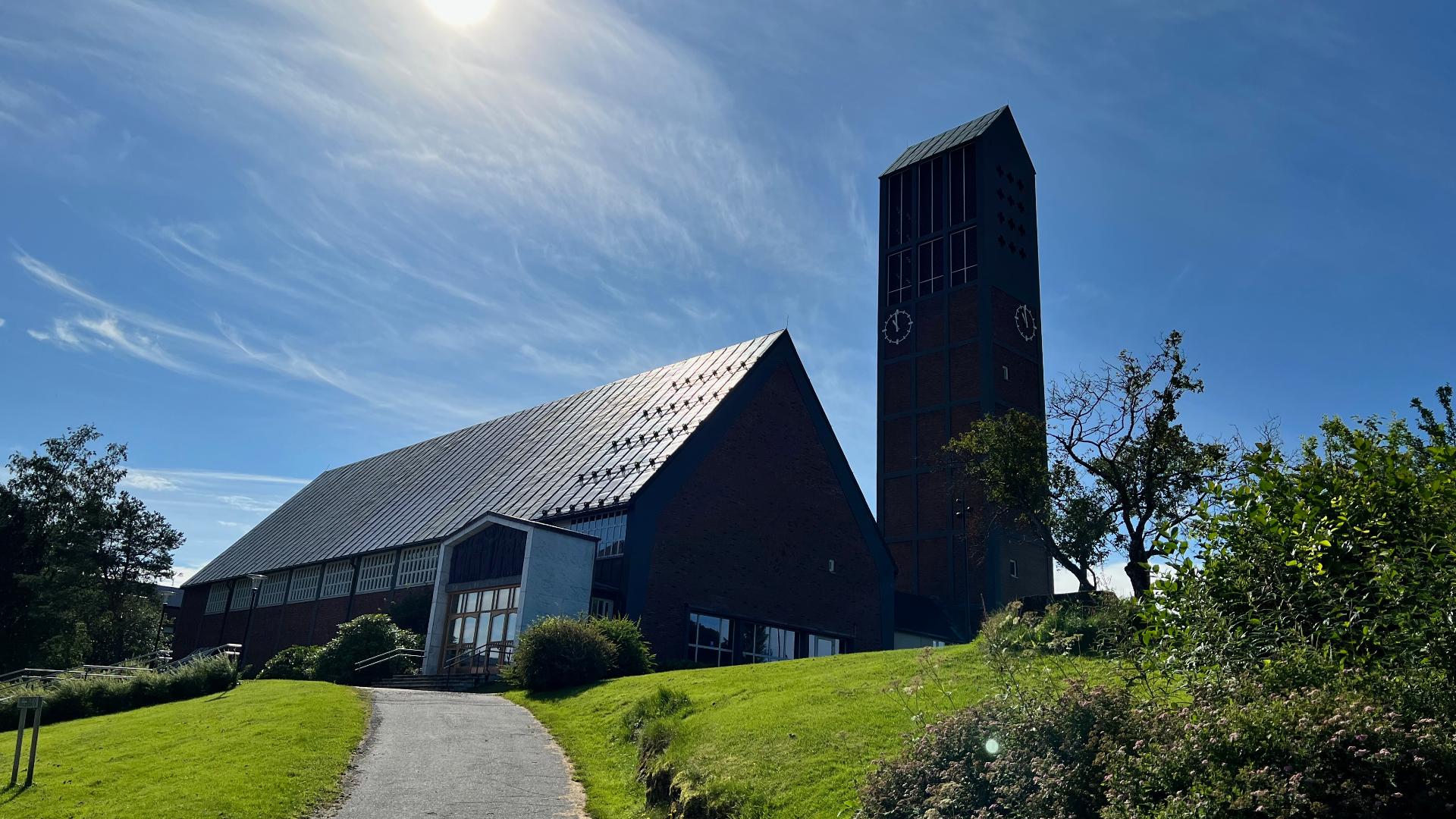
Modern Steinkjer carries the scars of war, though you might not notice at first glance. On 21 April 1940, the Luftwaffe carpet-bombed the town, destroying 242 houses and leaving 1,800 civilians homeless. Remarkably, nobody died in the attack. But 80 percent of Steinkjer was gone. What rose from the ashes in the 1950s became one of Norway's best-preserved reconstruction towns, built in the functionalist "funkis" style that remains visible throughout the centre today. The rebuilding was not considered complete until 1965, when Steinkjer Church was inaugurated. Designed by architect Olav Platou, the church combines concrete, wood, and glass with a freestanding 38-metre tower. Inside, stained glass windows by Jakob Weidemann bathe the space in a distinctive blue light.
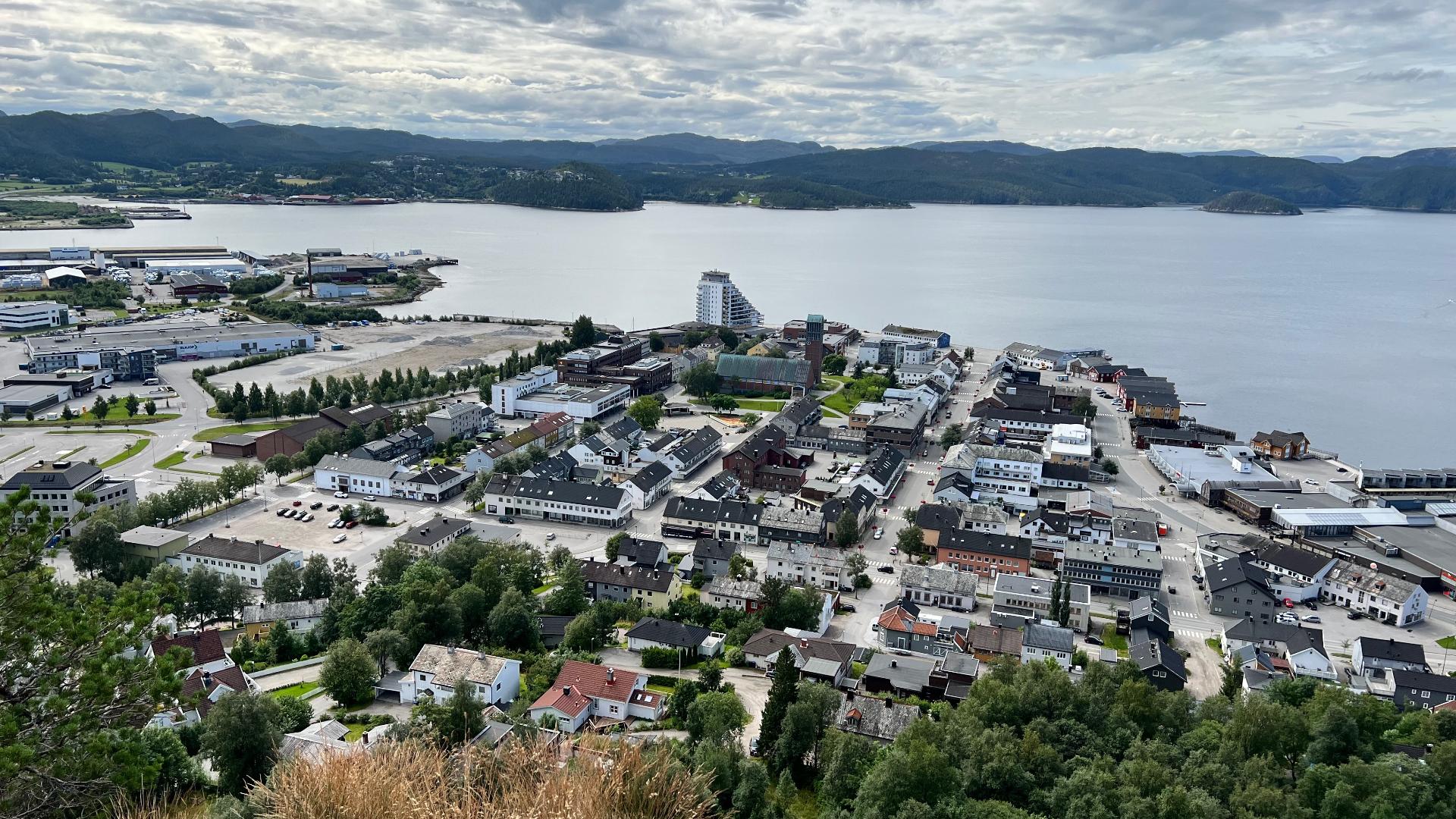
If you want to stretch your legs, hike up Oftenåsen, the city mountain at 336 metres. At the top you will find the world's largest garden chair: 4.75 metres tall and weighing 2.5 tonnes, built in 2013 as a tribute to two locals who improved the hiking trails. The panoramic view over the town, the fjord, and the surrounding mountains is worth the climb.
The name comes from Old Norse Steinker: "steinn" meaning stone and "ker" meaning a barrier for catching fish. People have lived here for thousands of years, and the proof is spectacular. About 20 minutes south of town, along county road 763 near Snåsavatnet, you will find Bølareinen: a life-size reindeer carved into bare rock over 5,000 years ago. Discovered in 1842, it is probably the most famous rock carving in all of Norway. The site has around 30 figures in total, including a bear, an elk, a seabird, and even a skier. When those carvings were made, the lake was still part of the Trondheimsfjorden, with the water level 35 to 40 metres higher than today.
Fast forward to the Viking Age, and Steinkjer was a seat of serious power. Just north of the centre lies Egge, a chieftain's farm mentioned in Snorre's royal sagas. During the 900s and 1000s, powerful figures like Trond Haka and Kalv Arnesson ruled from here. Kalv led the peasant army against King Olav Haraldsson at the Battle of Stiklestad in 1030, one of the most decisive battles in Norwegian history. A richly equipped boat grave excavated at Egge in 1982 contained weapons, horse gear, gaming pieces, and the remarkable Egge Sword, decorated in a style matching the famous axe from Mammen in Denmark, dated to 971 AD. Today, Egge Museum tells this story well, along with 100 years of tractor history and life in interwar Steinkjer.
Modern Steinkjer carries the scars of war, though you might not notice at first glance. On 21 April 1940, the Luftwaffe carpet-bombed the town, destroying 242 houses and leaving 1,800 civilians homeless. Remarkably, nobody died in the attack. But 80 percent of Steinkjer was gone. What rose from the ashes in the 1950s became one of Norway's best-preserved reconstruction towns, built in the functionalist "funkis" style that remains visible throughout the centre today. The rebuilding was not considered complete until 1965, when Steinkjer Church was inaugurated. Designed by architect Olav Platou, the church combines concrete, wood, and glass with a freestanding 38-metre tower. Inside, stained glass windows by Jakob Weidemann bathe the space in a distinctive blue light.
If you want to stretch your legs, hike up Oftenåsen, the city mountain at 336 metres. At the top you will find the world's largest garden chair: 4.75 metres tall and weighing 2.5 tonnes, built in 2013 as a tribute to two locals who improved the hiking trails. The panoramic view over the town, the fjord, and the surrounding mountains is worth the climb.