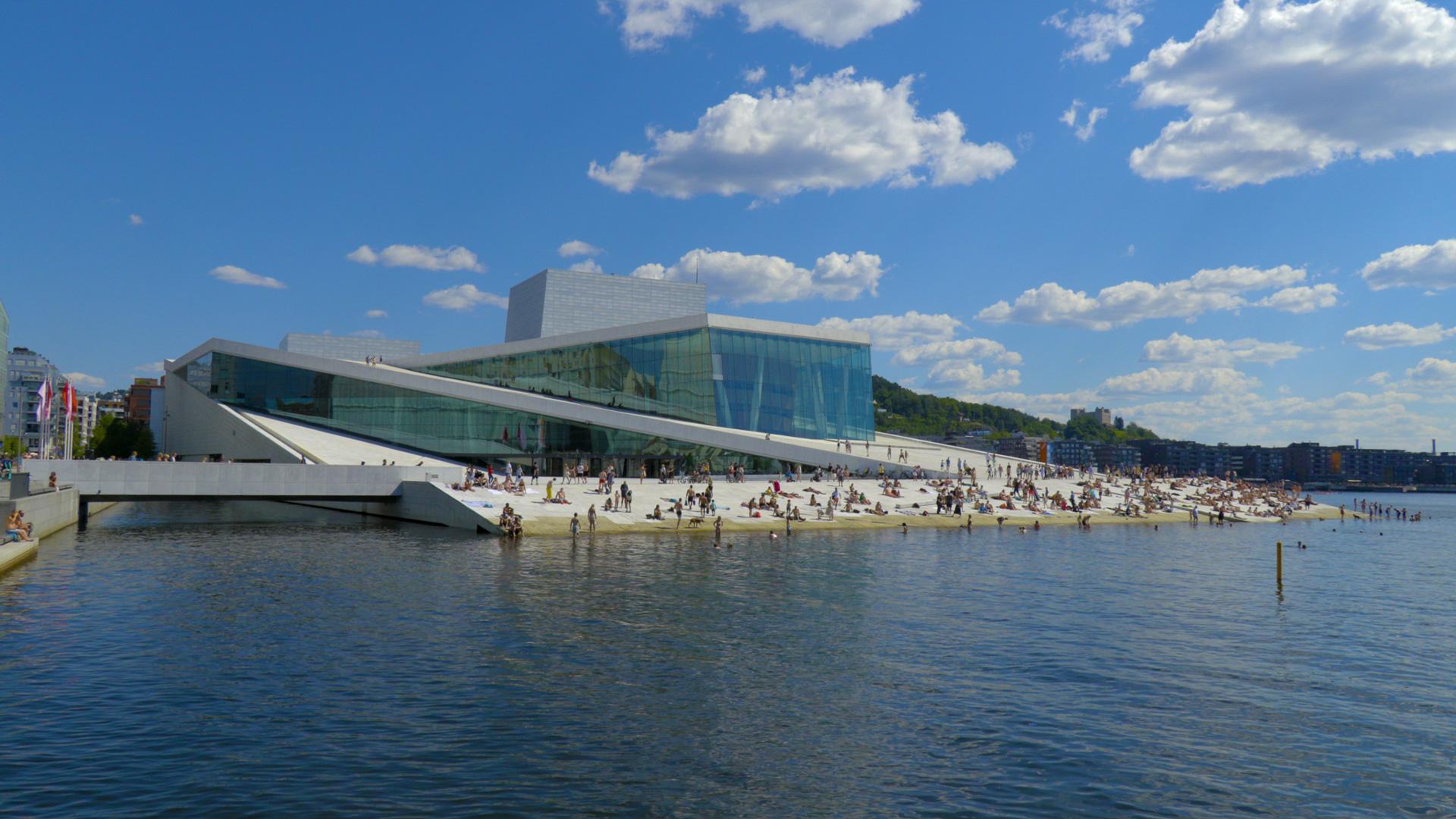
Rising from the waters of the Oslofjord like an iceberg of white marble, the Oslo Opera House is one of Norway's most striking modern buildings. It was designed by the Norwegian architecture firm Snøhetta, which won an international competition in 2000, beating 350 other entries. Construction began in 2003, and the building was completed in 2007, ahead of schedule and roughly 300 million kroner under its budget of 4.4 billion kroner. That alone makes it something of a miracle in Norwegian public construction. The gala opening took place on 12 April 2008, attended by King Harald and other Nordic heads of state.
The most distinctive feature is the roof. It slopes all the way down to ground level, creating a vast public plaza that anyone can walk on, completely free of charge. The surface is clad in white Carrara marble from Italy and Norwegian granite, and the subtle variations in the stone were designed by the Norwegian artists Kristian Blystad, Kalle Grude and Jorunn Sannes. On a sunny day, the white surface is almost blindingly bright, and the panoramic views across the fjord and the city are spectacular. The roof is usually accessible around the clock, though it may be closed when icy or during special events.
There is, however, one problem nobody anticipated. The brilliant white marble has been yellowing over the years. The culprit turned out to be a protective polymer coating applied to the stone, which degrades under sunlight and causes discolouration. Statsbygg, the state building authority, now spends between one and six million kroner every year on cleaning, repairing and replacing marble slabs. Scientific studies have found that a three-step cleaning process can remove the yellowing, but the maintenance is essentially never-ending. The iconic white iceberg, it turns out, needs constant care to stay white.
Inside, the building contains over 1,100 rooms spread across 49,000 square metres. The main auditorium seats 1,364 people, and there are two smaller performance spaces seating 200 and 400. While the exterior is all cool white stone, the interior is lined with warm oak wood, creating a striking contrast. The opera house is home to the Norwegian National Opera and Ballet, which has its long summer break from June to late September, so visitors in summer should not expect performances.
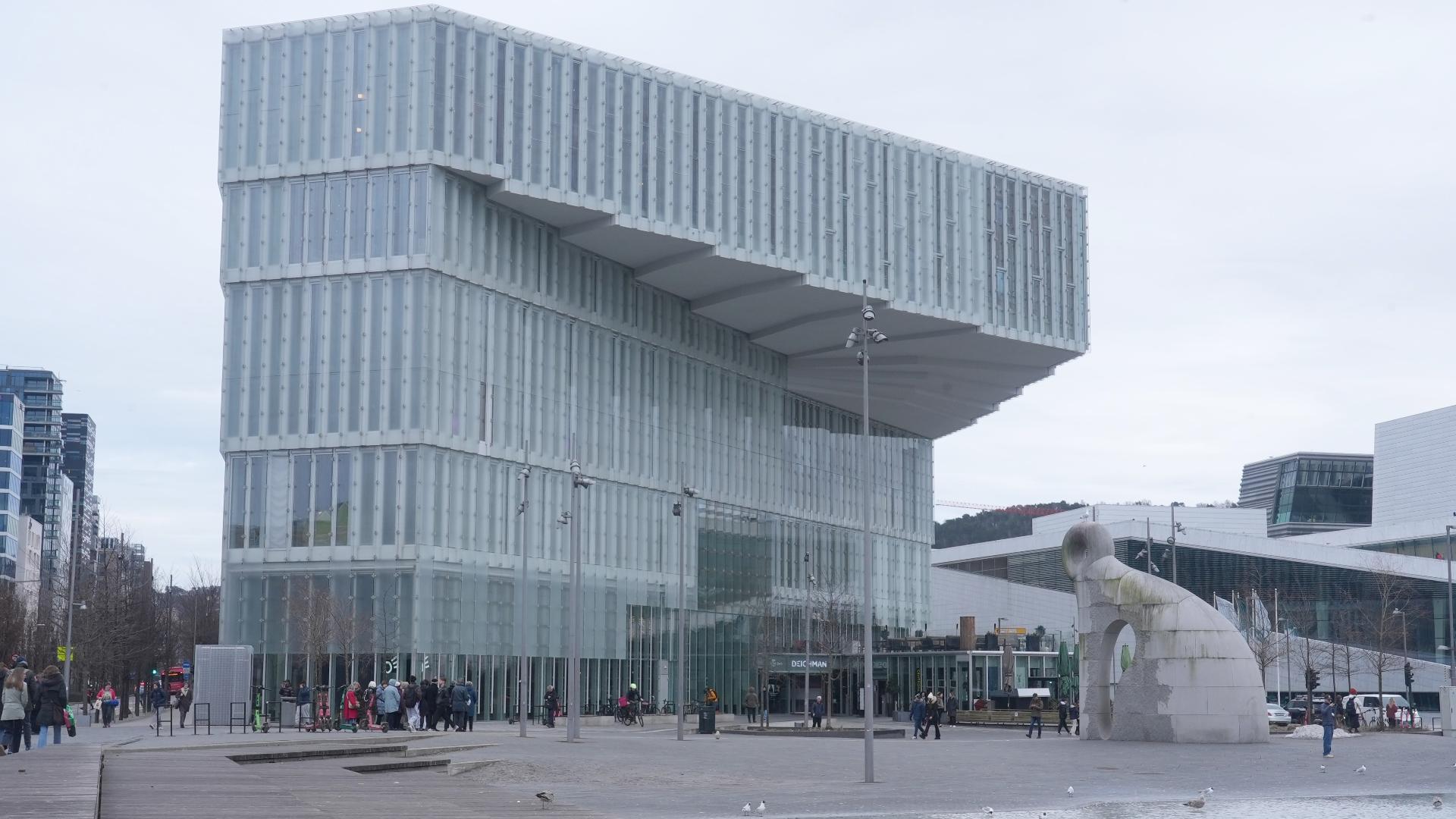
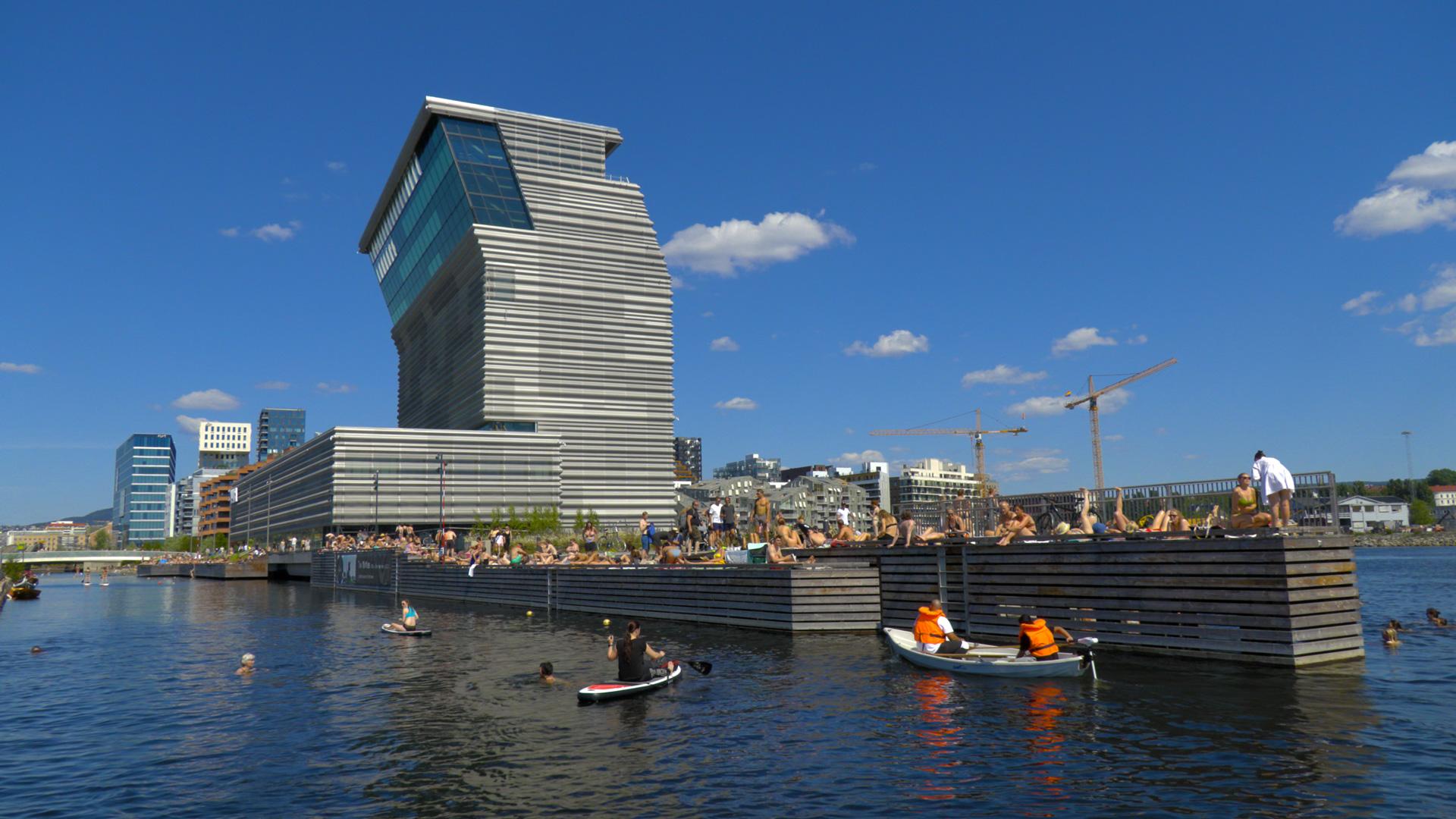
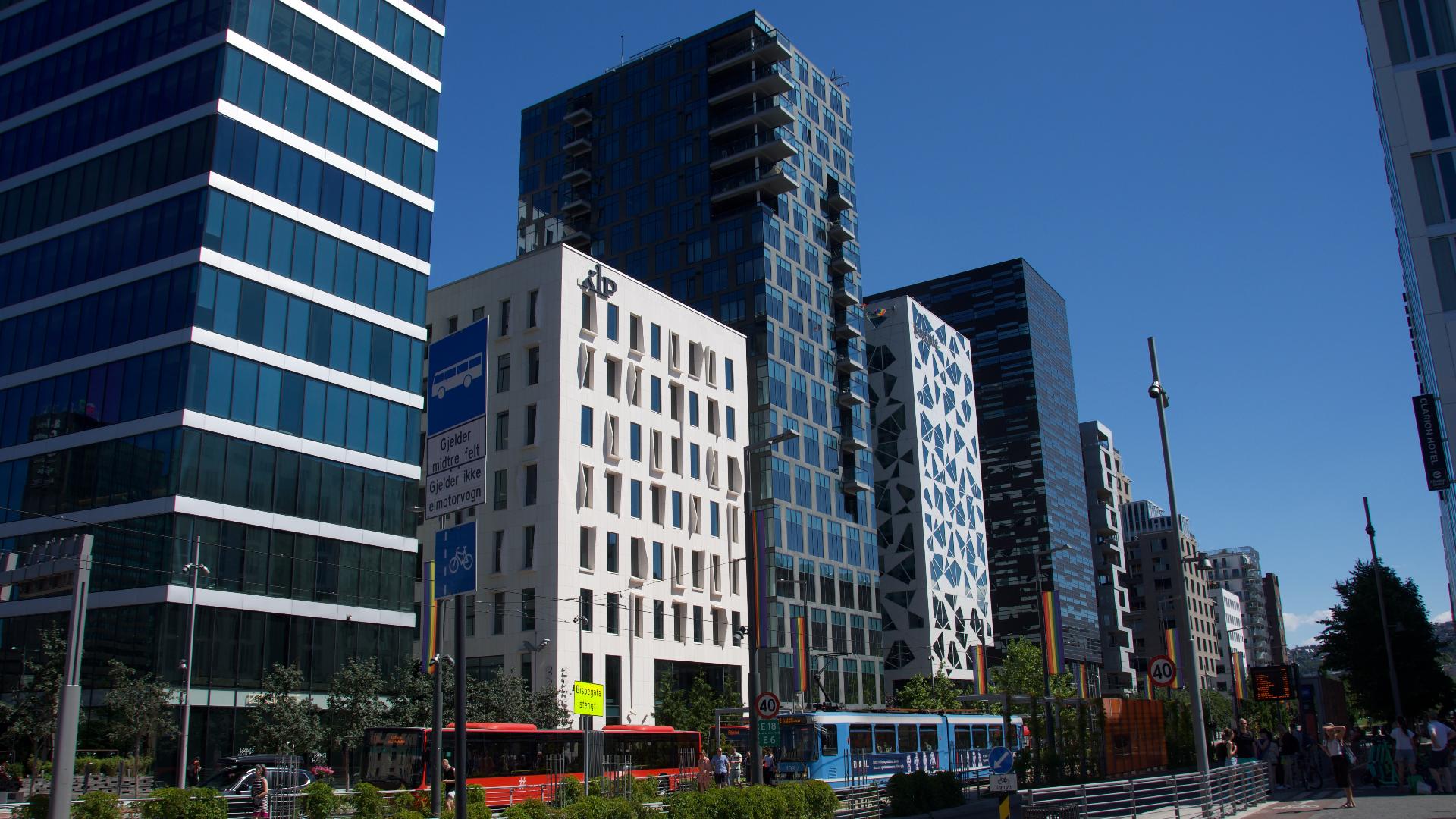
The building is the largest cultural structure erected in Norway since Nidarosdomen in Trondheim was completed around the year 1300. It draws roughly 1.7 million visitors annually, most of whom simply come to walk the roof and enjoy the views. When it first opened, it stood somewhat alone by the waterfront next to a motorway. Since then, the surrounding Bjørvika neighbourhood has been completely transformed, with the Munch Museum, Deichman Library and the Barcode office buildings now flanking it on all sides.
The most distinctive feature is the roof. It slopes all the way down to ground level, creating a vast public plaza that anyone can walk on, completely free of charge. The surface is clad in white Carrara marble from Italy and Norwegian granite, and the subtle variations in the stone were designed by the Norwegian artists Kristian Blystad, Kalle Grude and Jorunn Sannes. On a sunny day, the white surface is almost blindingly bright, and the panoramic views across the fjord and the city are spectacular. The roof is usually accessible around the clock, though it may be closed when icy or during special events.
There is, however, one problem nobody anticipated. The brilliant white marble has been yellowing over the years. The culprit turned out to be a protective polymer coating applied to the stone, which degrades under sunlight and causes discolouration. Statsbygg, the state building authority, now spends between one and six million kroner every year on cleaning, repairing and replacing marble slabs. Scientific studies have found that a three-step cleaning process can remove the yellowing, but the maintenance is essentially never-ending. The iconic white iceberg, it turns out, needs constant care to stay white.
Inside, the building contains over 1,100 rooms spread across 49,000 square metres. The main auditorium seats 1,364 people, and there are two smaller performance spaces seating 200 and 400. While the exterior is all cool white stone, the interior is lined with warm oak wood, creating a striking contrast. The opera house is home to the Norwegian National Opera and Ballet, which has its long summer break from June to late September, so visitors in summer should not expect performances.
The building is the largest cultural structure erected in Norway since Nidarosdomen in Trondheim was completed around the year 1300. It draws roughly 1.7 million visitors annually, most of whom simply come to walk the roof and enjoy the views. When it first opened, it stood somewhat alone by the waterfront next to a motorway. Since then, the surrounding Bjørvika neighbourhood has been completely transformed, with the Munch Museum, Deichman Library and the Barcode office buildings now flanking it on all sides.