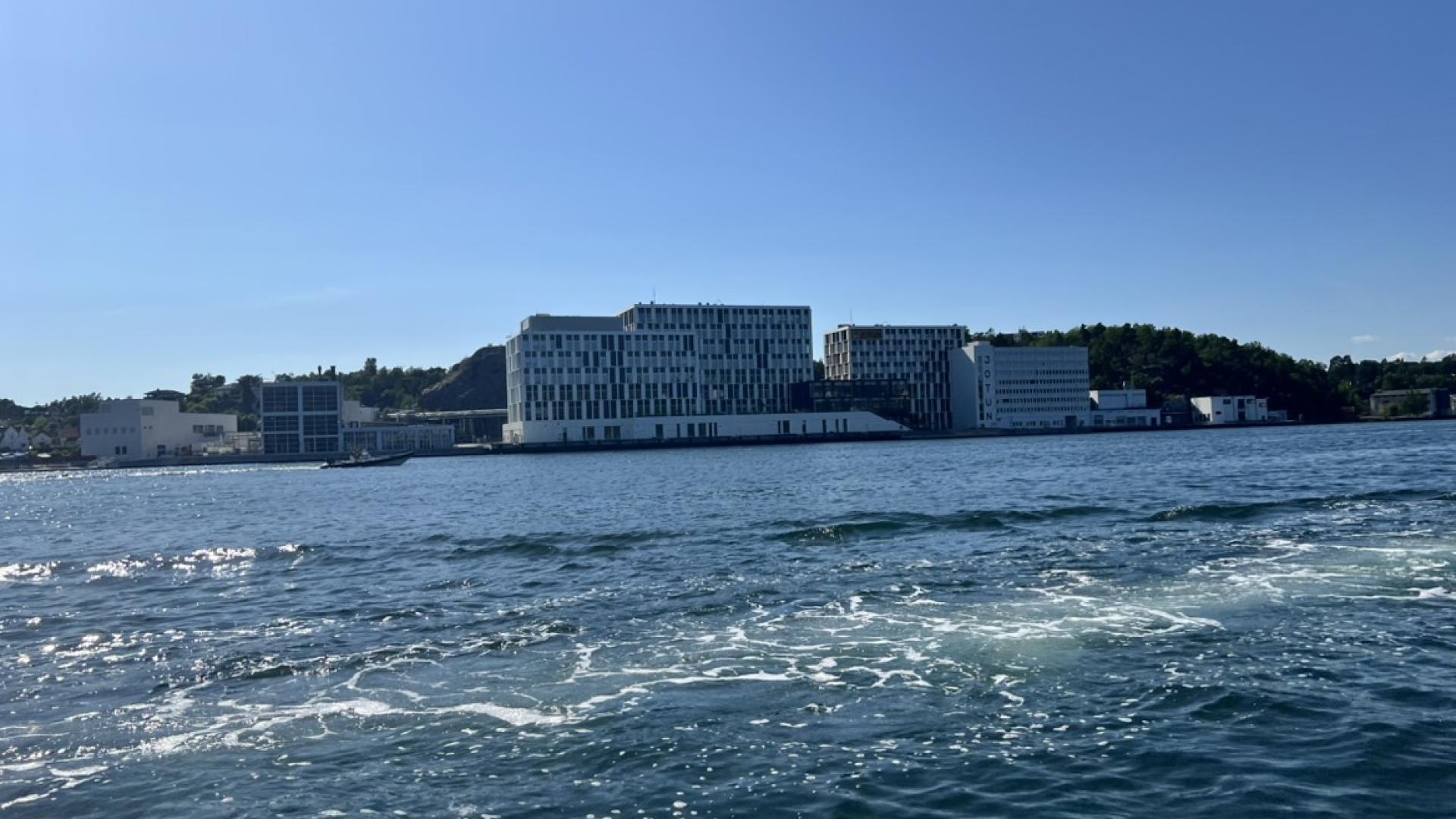
The Nerdrum Museum in Stavern opened in April 2024, two days before painter Odd Nerdrum's 80th birthday. It is housed in the Pipe House of the former Agnes Fabrikker, Norway's last match factory, which operated from 1877 to 1984. The old industrial brick building has been redesigned to permanently display 46 works spanning over 50 years: paintings, sketches, drawings, and graphics. Built and financed as a birthday gift by the Nerdrum family, none of the works are for sale.
Nerdrum was born in 1944 in Helsingborg, Sweden, to Norwegian resistance fighters who had fled German-occupied Norway during World War II. He studied at Oslo's National Academy of Fine Arts but rejected modernism, finding his artistic home instead in the tradition of Rembrandt and Caravaggio after seeing Rembrandt's The Conspiracy of Claudius Civilis in Stockholm. He mixes his own pigments, stretches his own canvases, and works from live models, producing only six to eight paintings per year. His subjects are apocalyptic landscapes and timeless figures dressed in furs and skins. His painting Dawn was owned by David Bowie and inspired a scene in the film The Cell.
Nerdrum deliberately calls his work kitsch rather than art, a philosophical statement outlined in his 2001 manifesto arguing that emotional, narrative, skill-based painting belongs to a tradition separate from the contemporary art establishment. His life has been as dramatic as his canvases. In 2011 he was convicted of tax evasion for hiding 14 million kroner from painting sales in an Austrian safe deposit box. His defence, that the money was set aside to compensate collectors for paintings disintegrating due to an experimental medium, was rejected. Under Norwegian law, painting in prison was classified as commercial activity, meaning the master painter would be forbidden from painting while incarcerated. After international outcry, King Harald V granted him a royal pardon in 2017.
Nerdrum was born in 1944 in Helsingborg, Sweden, to Norwegian resistance fighters who had fled German-occupied Norway during World War II. He studied at Oslo's National Academy of Fine Arts but rejected modernism, finding his artistic home instead in the tradition of Rembrandt and Caravaggio after seeing Rembrandt's The Conspiracy of Claudius Civilis in Stockholm. He mixes his own pigments, stretches his own canvases, and works from live models, producing only six to eight paintings per year. His subjects are apocalyptic landscapes and timeless figures dressed in furs and skins. His painting Dawn was owned by David Bowie and inspired a scene in the film The Cell.
Nerdrum deliberately calls his work kitsch rather than art, a philosophical statement outlined in his 2001 manifesto arguing that emotional, narrative, skill-based painting belongs to a tradition separate from the contemporary art establishment. His life has been as dramatic as his canvases. In 2011 he was convicted of tax evasion for hiding 14 million kroner from painting sales in an Austrian safe deposit box. His defence, that the money was set aside to compensate collectors for paintings disintegrating due to an experimental medium, was rejected. Under Norwegian law, painting in prison was classified as commercial activity, meaning the master painter would be forbidden from painting while incarcerated. After international outcry, King Harald V granted him a royal pardon in 2017.