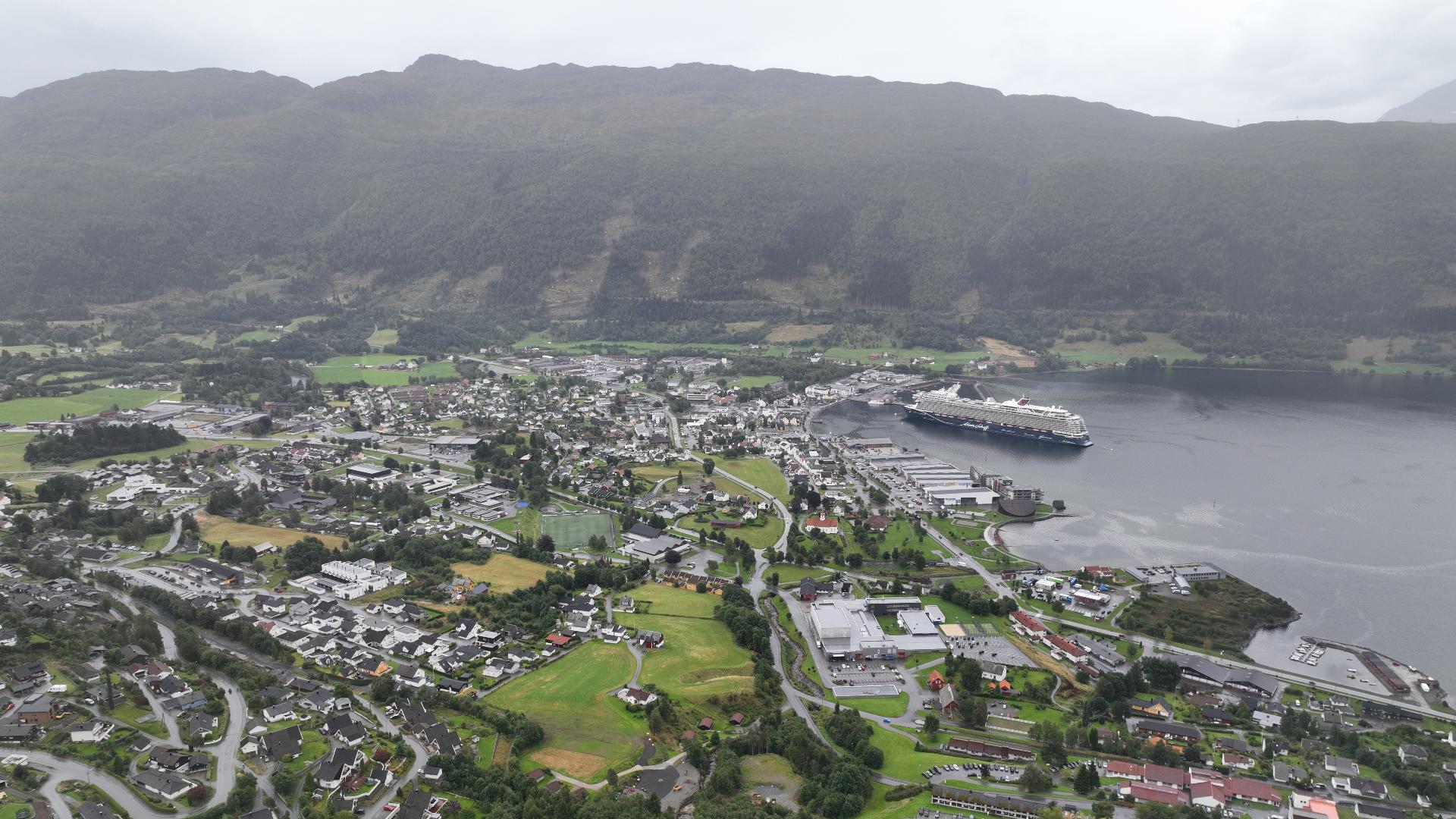
Måløy is a fishing town on the island of Vågsøy, connected to the mainland by the Måløy bridge. It is one of the most important fishing ports in Norway and a major seafood exporter. The town has always lived from the sea, and that has not changed.
It is also a Hurtigruten port, so the coastal express stops here on its way up and down the Norwegian coast. For most visitors, Måløy is either a Hurtigruten stop or a base for visiting Kannesteinen, the famous mushroom-shaped rock at Oppedal 10 kilometres away.
The town has a dramatic war history. On 27 December 1941, two days after Christmas, 570 British commandos launched Operation Archery, a raid on the German positions on Vågsøy. What was supposed to be a quick strike turned into a brutal house-to-house battle through Måløy. A German mountain troop unit from the Eastern Front happened to be on leave here, and they knew how to fight in streets. The British lost 17 men and the southern part of town was almost completely destroyed. But they captured 98 prisoners, a complete copy of the German naval code, and brought back over 70 loyal Norwegians. The raid had an outsized strategic effect: it convinced Hitler to divert 30,000 extra troops to defend Norway, troops that were badly needed elsewhere. Captain Martin Linge, the Norwegian commando leader, was killed in the attack. The Norwegian special forces unit Lingekompaniet was later named after him.
It is also a Hurtigruten port, so the coastal express stops here on its way up and down the Norwegian coast. For most visitors, Måløy is either a Hurtigruten stop or a base for visiting Kannesteinen, the famous mushroom-shaped rock at Oppedal 10 kilometres away.
The town has a dramatic war history. On 27 December 1941, two days after Christmas, 570 British commandos launched Operation Archery, a raid on the German positions on Vågsøy. What was supposed to be a quick strike turned into a brutal house-to-house battle through Måløy. A German mountain troop unit from the Eastern Front happened to be on leave here, and they knew how to fight in streets. The British lost 17 men and the southern part of town was almost completely destroyed. But they captured 98 prisoners, a complete copy of the German naval code, and brought back over 70 loyal Norwegians. The raid had an outsized strategic effect: it convinced Hitler to divert 30,000 extra troops to defend Norway, troops that were badly needed elsewhere. Captain Martin Linge, the Norwegian commando leader, was killed in the attack. The Norwegian special forces unit Lingekompaniet was later named after him.