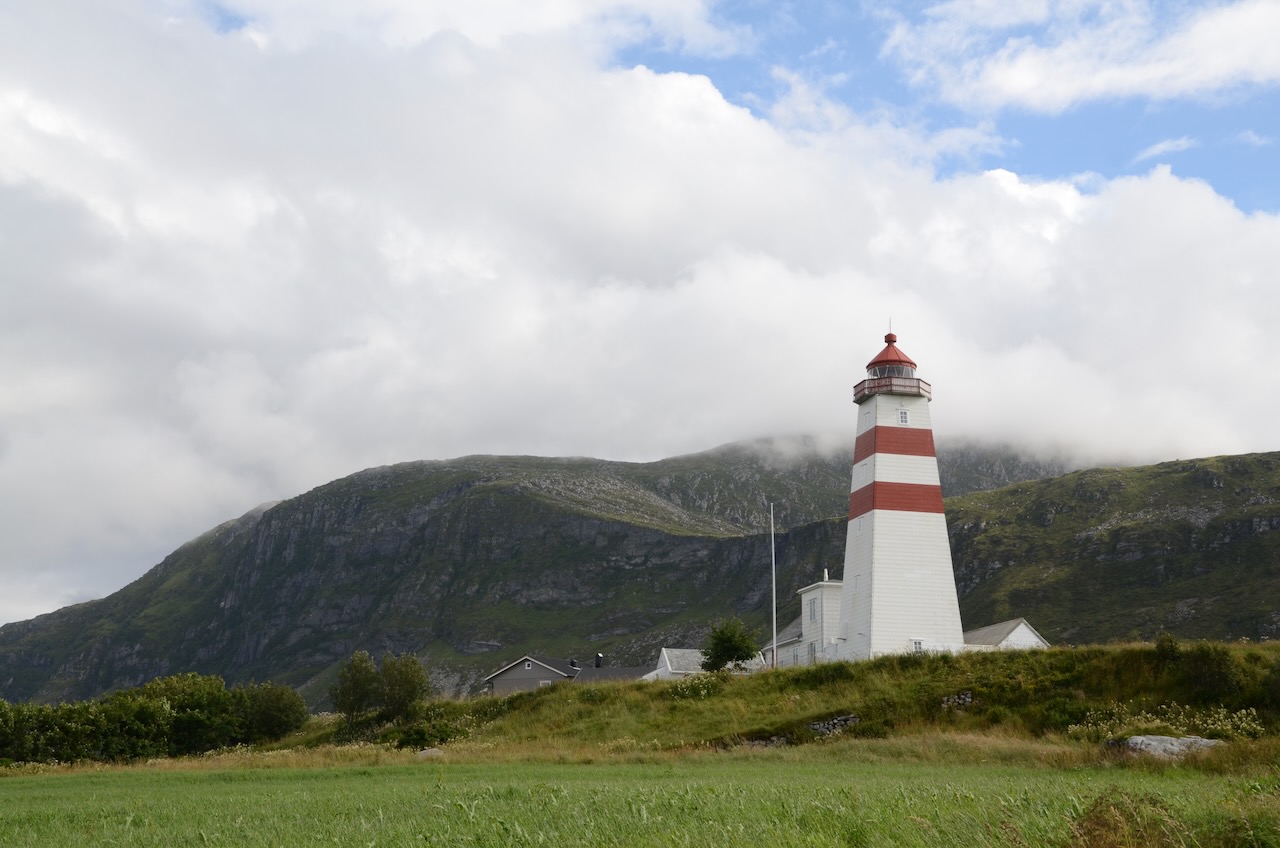
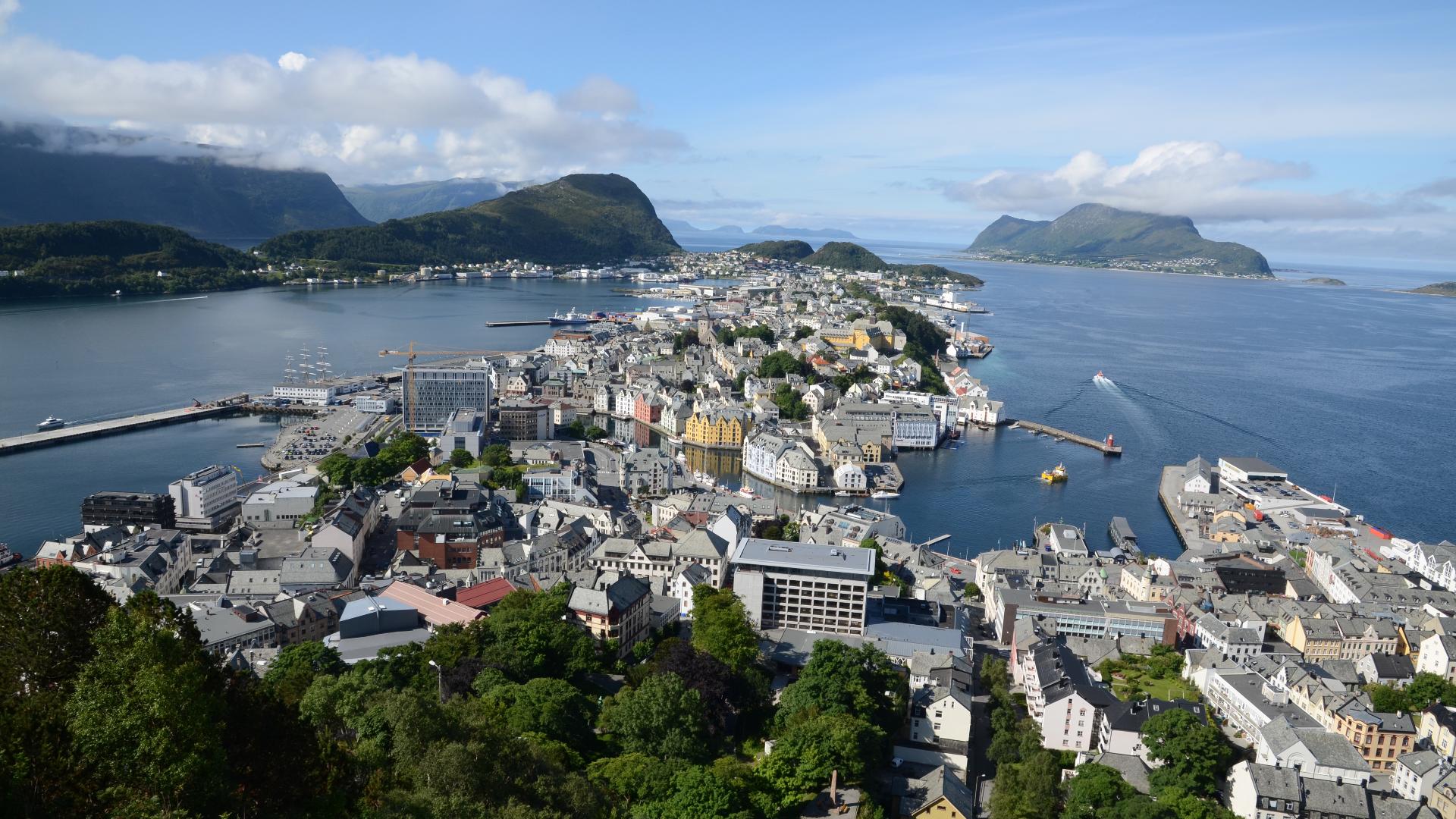
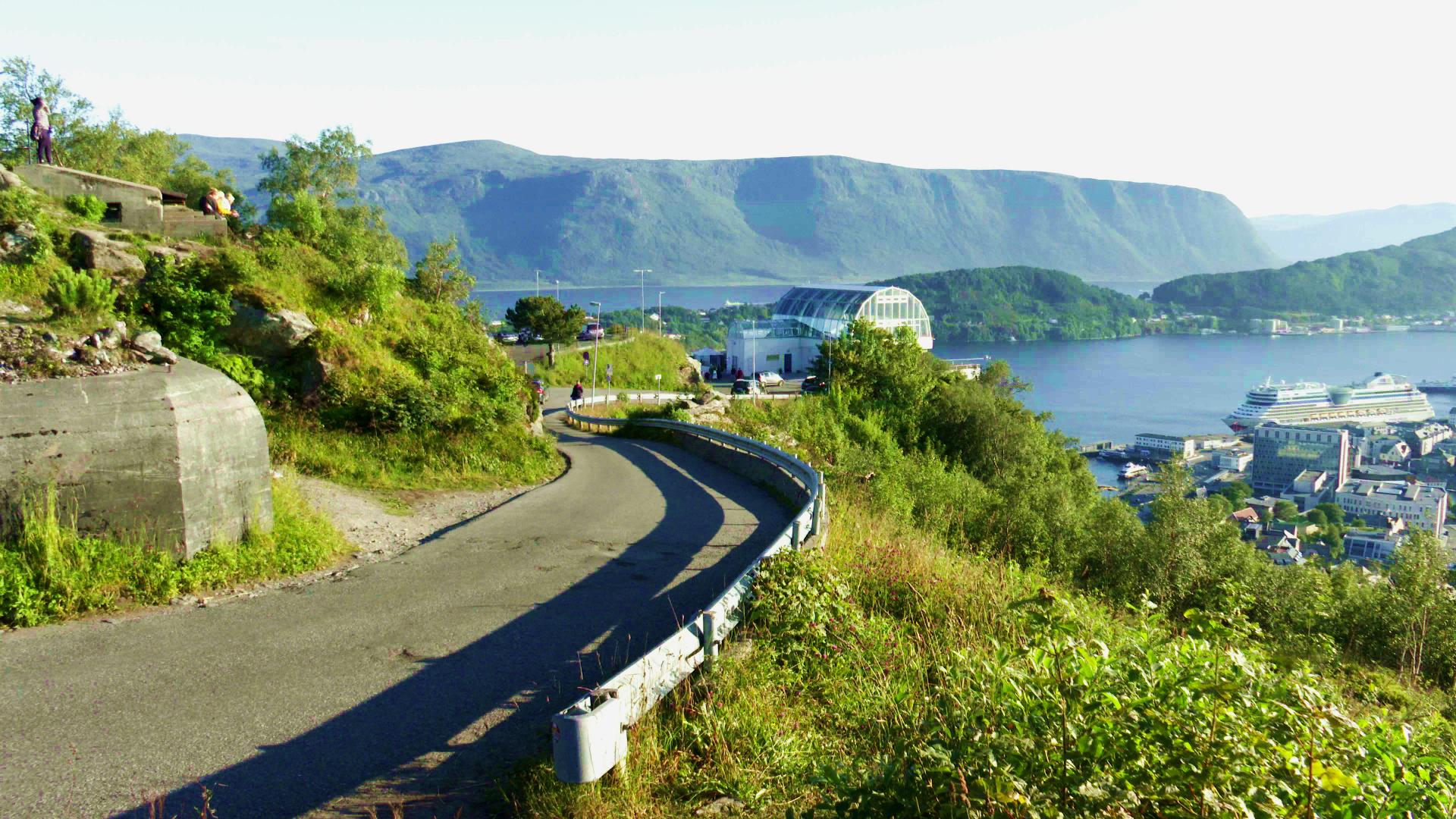
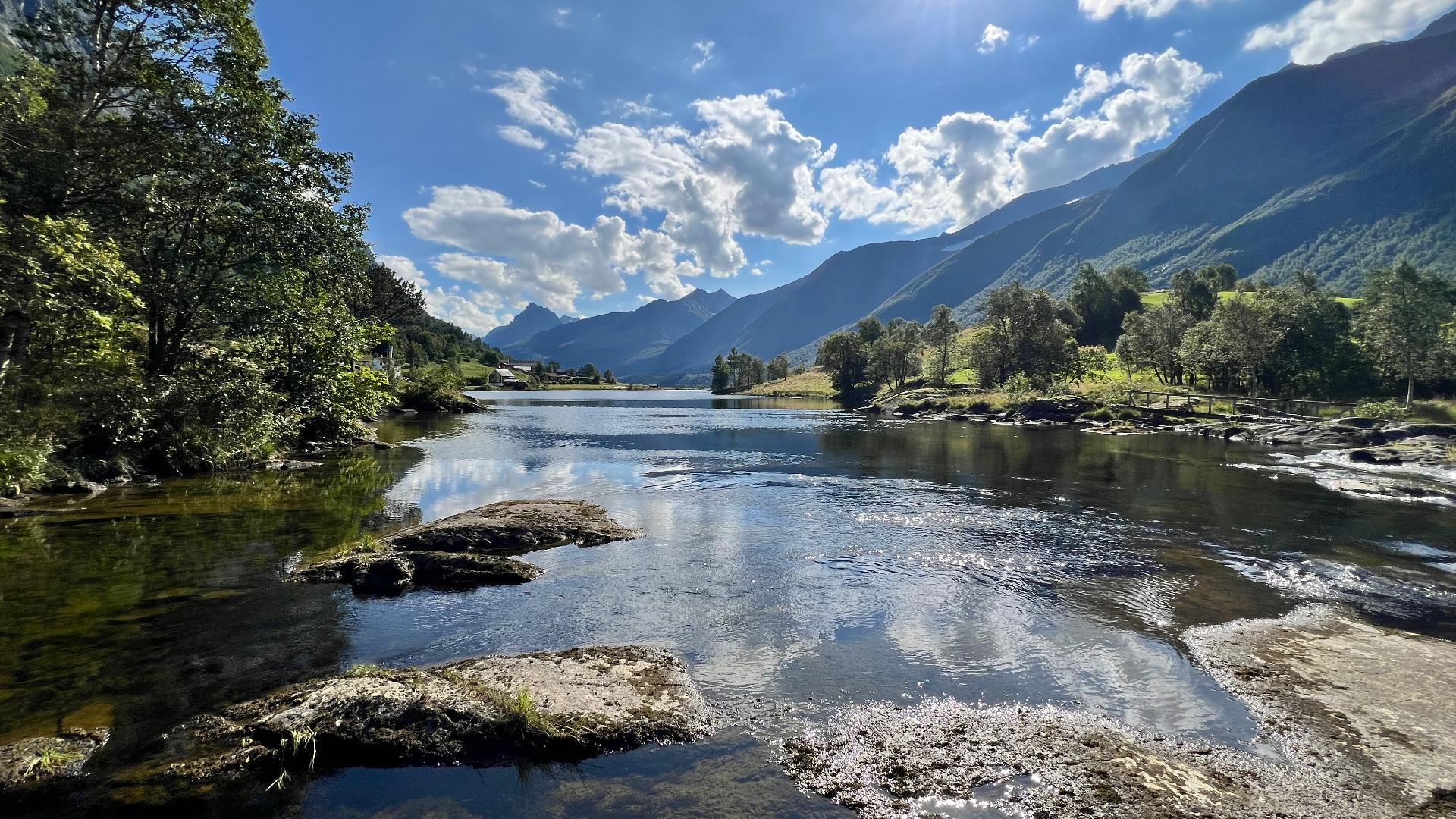
Kvitneset is the northernmost point of Hareidlandet, a windswept headland where Sulafjorden meets Breisundet. It is about 6 kilometres north of Hareid, past Brandal. Today it is used for hiking and sheep grazing. But the ruins scattered across the landscape tell a different story.
On 17 May 1941, Norway's national day, the first 22 German soldiers arrived at Brandal. Children who had been secretly celebrating the banned holiday were quickly hidden indoors, flags and costumes stuffed out of sight. The soldiers moved into private homes and announced that the headland was being requisitioned. Within days, 64 more soldiers arrived along with four French-made 10.5 cm Schneider field guns, 460 crates of ammunition and 4,000 shells. By June the battery was operational.
Over the following year, up to 140 local men were put to work building the fortress. Firing positions, command bunkers, anti-tank emplacements and ammunition tunnels were blasted into the rock. The battery, officially designated HKB 34/976 Kvitnes, was part of Festung Norwegen, the German Atlantic Wall defences along the Norwegian coast. In June 1942, Russian prisoners of war arrived. Up to 120 men were held in a small camp of plywood huts with turf walls and bare earth floors, surrounded by barbed wire. The locals in Brandal quietly fed the prisoners whenever they could, and the Germans allowed it. One prisoner died and is buried at Hareid.
Most of the positions are still visible today. The command bunker and armoured entrance still stand, and several tunnels blasted into the rock remain intact. There are also three Iron Age burial mounds on the headland, a reminder that people have been drawn to this spot for thousands of years.
The last 2 kilometres to Kvitneset are narrow gravel road. It is easier to park in Brandal and walk the 30 minutes on foot.
On 17 May 1941, Norway's national day, the first 22 German soldiers arrived at Brandal. Children who had been secretly celebrating the banned holiday were quickly hidden indoors, flags and costumes stuffed out of sight. The soldiers moved into private homes and announced that the headland was being requisitioned. Within days, 64 more soldiers arrived along with four French-made 10.5 cm Schneider field guns, 460 crates of ammunition and 4,000 shells. By June the battery was operational.
Over the following year, up to 140 local men were put to work building the fortress. Firing positions, command bunkers, anti-tank emplacements and ammunition tunnels were blasted into the rock. The battery, officially designated HKB 34/976 Kvitnes, was part of Festung Norwegen, the German Atlantic Wall defences along the Norwegian coast. In June 1942, Russian prisoners of war arrived. Up to 120 men were held in a small camp of plywood huts with turf walls and bare earth floors, surrounded by barbed wire. The locals in Brandal quietly fed the prisoners whenever they could, and the Germans allowed it. One prisoner died and is buried at Hareid.
Most of the positions are still visible today. The command bunker and armoured entrance still stand, and several tunnels blasted into the rock remain intact. There are also three Iron Age burial mounds on the headland, a reminder that people have been drawn to this spot for thousands of years.
The last 2 kilometres to Kvitneset are narrow gravel road. It is easier to park in Brandal and walk the 30 minutes on foot.