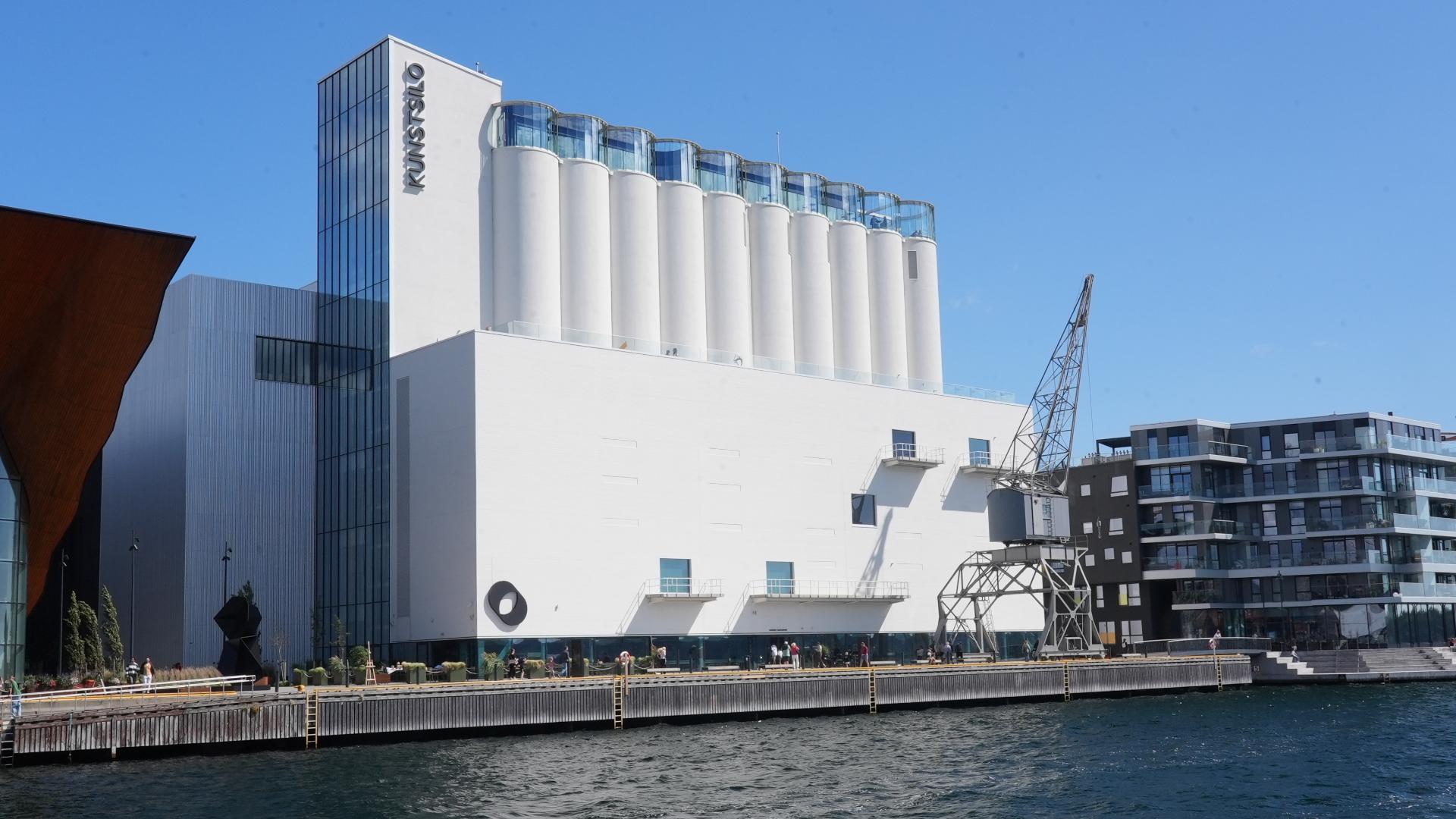
When Kunstsilo opened in May 2024, it instantly put Kristiansand on the international art map. Built inside a massive 1935 functionalist grain silo on the harbour island of Odderøya, the museum holds the world's largest collection of Nordic modernist art, donated by businessman Nicolai Tangen, who also happens to be the head of Norway's sovereign wealth fund.
The transformation of the silo is an architectural feat. The concrete cylinders that once stored grain have been hollowed out and reconnected into a sequence of towering gallery spaces. Spanish-Norwegian firm Mestres Wåge Arquitectes kept the raw industrial character while adding 5,500 square metres of exhibition space across multiple floors. The result is unlike any conventional museum: you walk through curved concrete walls into soaring vertical galleries where the art hangs in spaces shaped by the silo's original geometry.
The permanent collection spans Scandinavian modernism from the early 1900s through the late 20th century, with works by Edvard Munch, Nikolai Astrup, and dozens of other Nordic masters. Temporary exhibitions rotate regularly and often push into contemporary territory. In 2025, Kunstsilo won the prestigious Prix Versailles as the world's most beautiful museum, recognising both its architecture and the way the building connects to its harbour setting.
The road to opening was anything but smooth, and the project was fiercely contested for years. When the plans were first announced, many in Kristiansand saw it as an elitist vanity project: a wealthy art collector handing his personal collection to the city, with taxpayers expected to foot the bill for turning a crumbling silo into a museum. A petition gathered over 1,200 signatures against the project, and in the 2019 local elections, parties opposing Kunstsilo gained significant support. The municipal council approved its 50 million kroner contribution by the narrowest possible margin, and critics argued the financial plan was weak and the costs underestimated. What started as legitimate economic concerns eventually spiralled into conspiracy theories and personal harassment of museum director Reidar Fuglestad, who developed heart problems under the pressure. Tangen himself was controversial: his appointment as head of the sovereign wealth fund in 2020 triggered a separate conflict-of-interest debate in parliament, which did not help the museum's public image. The mood shifted when the cultural minister committed 175 million kroner in state funding and Tangen personally contributed 210 million, reducing the financial risk. By the time the doors opened, much of the opposition had faded, and the museum became an instant success.
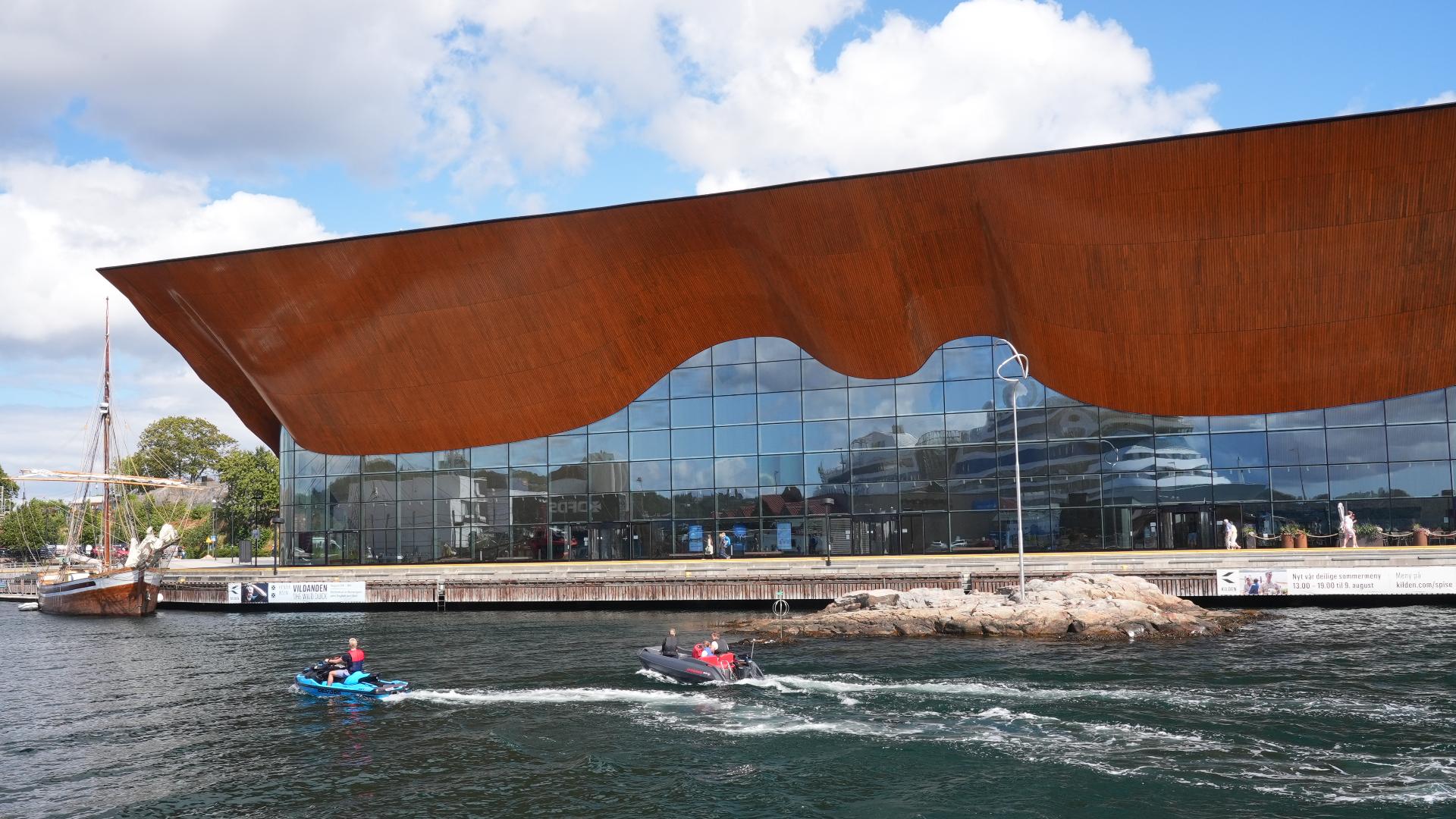
Kunstsilo sits right next to Kilden, Kristiansand's performing arts centre, and the KNUDEN culture school, forming a new cultural waterfront quarter. Together they have transformed this side of the harbour from industrial wasteland into the cultural heart of Southern Norway. For visitors, the museum is an easy walk from the city centre and the fish market.
Even if modern art is not your thing, the building alone is worth seeing. The original silo was the first functionalist structure in Kristiansand, and standing inside its converted cylinders gives you a physical sense of industrial history that no flat-walled gallery can match.
The transformation of the silo is an architectural feat. The concrete cylinders that once stored grain have been hollowed out and reconnected into a sequence of towering gallery spaces. Spanish-Norwegian firm Mestres Wåge Arquitectes kept the raw industrial character while adding 5,500 square metres of exhibition space across multiple floors. The result is unlike any conventional museum: you walk through curved concrete walls into soaring vertical galleries where the art hangs in spaces shaped by the silo's original geometry.
The permanent collection spans Scandinavian modernism from the early 1900s through the late 20th century, with works by Edvard Munch, Nikolai Astrup, and dozens of other Nordic masters. Temporary exhibitions rotate regularly and often push into contemporary territory. In 2025, Kunstsilo won the prestigious Prix Versailles as the world's most beautiful museum, recognising both its architecture and the way the building connects to its harbour setting.
The road to opening was anything but smooth, and the project was fiercely contested for years. When the plans were first announced, many in Kristiansand saw it as an elitist vanity project: a wealthy art collector handing his personal collection to the city, with taxpayers expected to foot the bill for turning a crumbling silo into a museum. A petition gathered over 1,200 signatures against the project, and in the 2019 local elections, parties opposing Kunstsilo gained significant support. The municipal council approved its 50 million kroner contribution by the narrowest possible margin, and critics argued the financial plan was weak and the costs underestimated. What started as legitimate economic concerns eventually spiralled into conspiracy theories and personal harassment of museum director Reidar Fuglestad, who developed heart problems under the pressure. Tangen himself was controversial: his appointment as head of the sovereign wealth fund in 2020 triggered a separate conflict-of-interest debate in parliament, which did not help the museum's public image. The mood shifted when the cultural minister committed 175 million kroner in state funding and Tangen personally contributed 210 million, reducing the financial risk. By the time the doors opened, much of the opposition had faded, and the museum became an instant success.
Kunstsilo sits right next to Kilden, Kristiansand's performing arts centre, and the KNUDEN culture school, forming a new cultural waterfront quarter. Together they have transformed this side of the harbour from industrial wasteland into the cultural heart of Southern Norway. For visitors, the museum is an easy walk from the city centre and the fish market.
Even if modern art is not your thing, the building alone is worth seeing. The original silo was the first functionalist structure in Kristiansand, and standing inside its converted cylinders gives you a physical sense of industrial history that no flat-walled gallery can match.