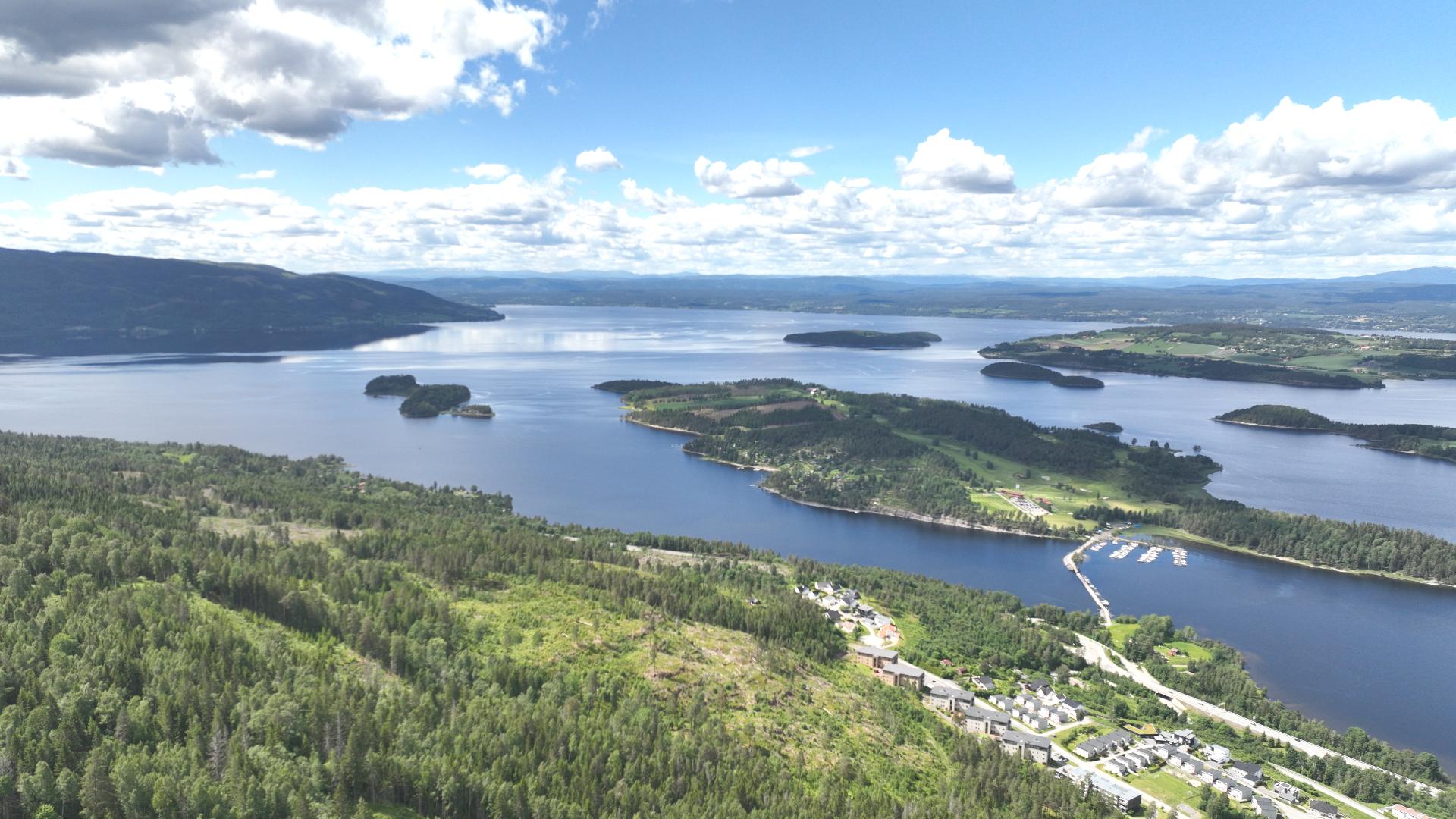
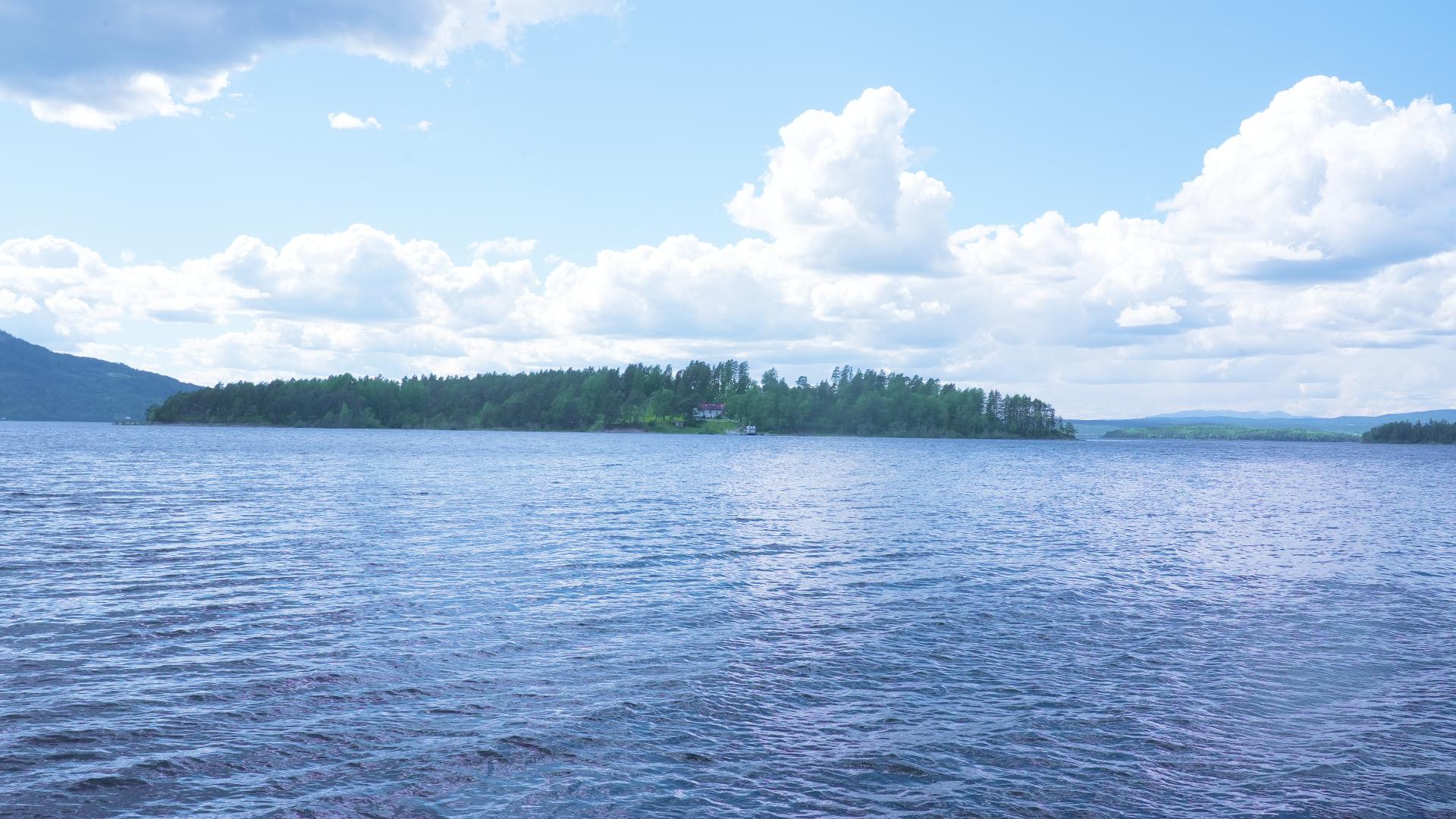
Vikersund is the administrative centre of Modum municipality, with around 3,250 inhabitants. The town lies at the southwestern arm of Tyrifjorden, where the Drammenselva river enters the lake at Vikerfossen waterfall. The name Modum probably comes from Old Norse "Móðheimr" meaning "home by the calm river".
Vikersund station opened in 1866 on the Randsfjordbanen line and today serves as a stop for Bergen-Oslo express trains. From here you can take the Krøderbanen heritage railway, Norway's longest museum railway at 26 km. The line was built in 1872 to connect Drammen with Hallingdal's waterways. Steam trains run on Sundays from late June to late August, operated by the Norwegian Railway Club. King Oscar II attended the opening in 1872. The journey takes about 55 minutes through pleasant countryside with stops at Snarum, Sysle and Kløftefoss before reaching Krøderen station, which has a small railway museum.
Above the town stands Heggen kirke, a medieval stone church built around 1200 in Romanesque style. It was expanded into a cross-shaped church between 1697 and 1725, with further additions in 1832 and 1878. The interior features ceiling paintings from 1840, two glass paintings by Emanuel Vigeland from 1948, and what is said to be the oldest Norwegian copy of Leonardo's Last Supper as part of the altarpiece. The pulpit dates from 1702.
Norway's first Labour Party prime minister, Christopher Hornsrud, is buried in the cemetery. He served just 18 days in 1928 before a vote of no confidence, but lived in Modum most of his life and became mayor here before entering parliament. He died in 1960 at age 101.
Norway's first Labour Party prime minister, Christopher Hornsrud, is buried in the cemetery. He served just 18 days in 1928 before a vote of no confidence, but lived in Modum most of his life and became mayor here before entering parliament. He died in 1960 at age 101.
East of town are the Vike church ruins from the 1200s, abandoned around the Reformation. The walls stood until the late 1700s but were then used as a quarry.
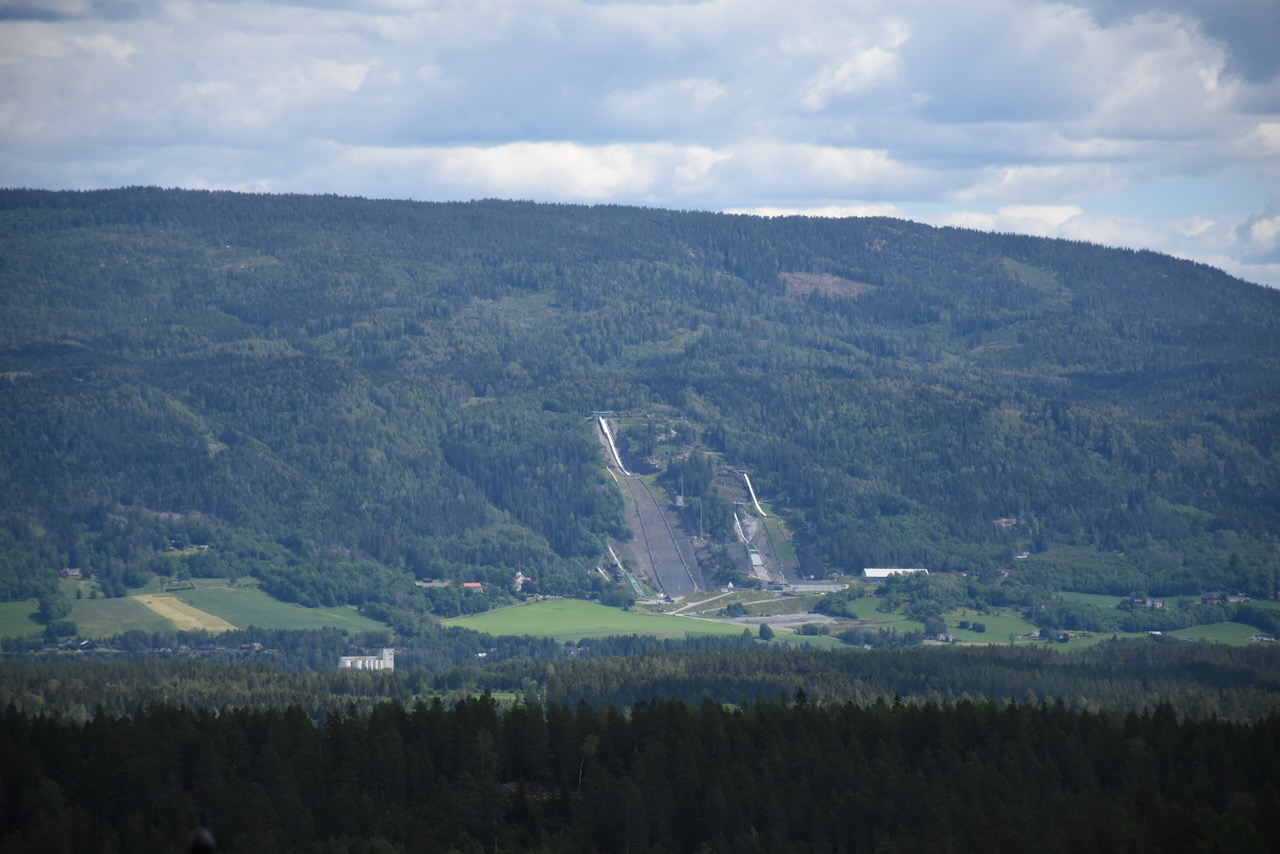
The world's largest ski flying hill, Vikersundbakken, looms above town with its 1,078 steps to the top — covered separately.
Tyrifjord Hotell sits on the opposite shore of the fjord with private beach and views across to the ski jump. The site has a history as a coaching inn back to the 1660s.