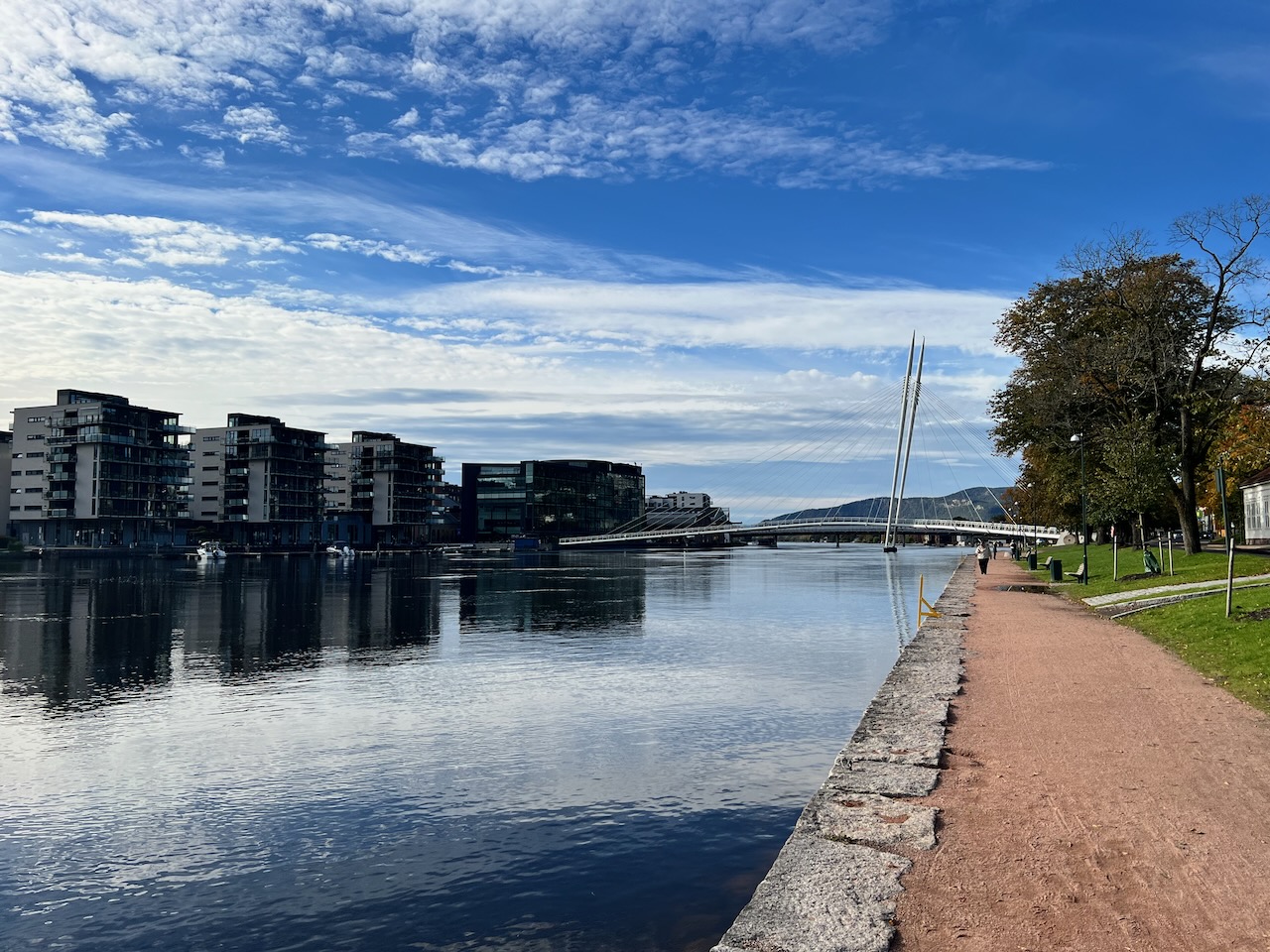
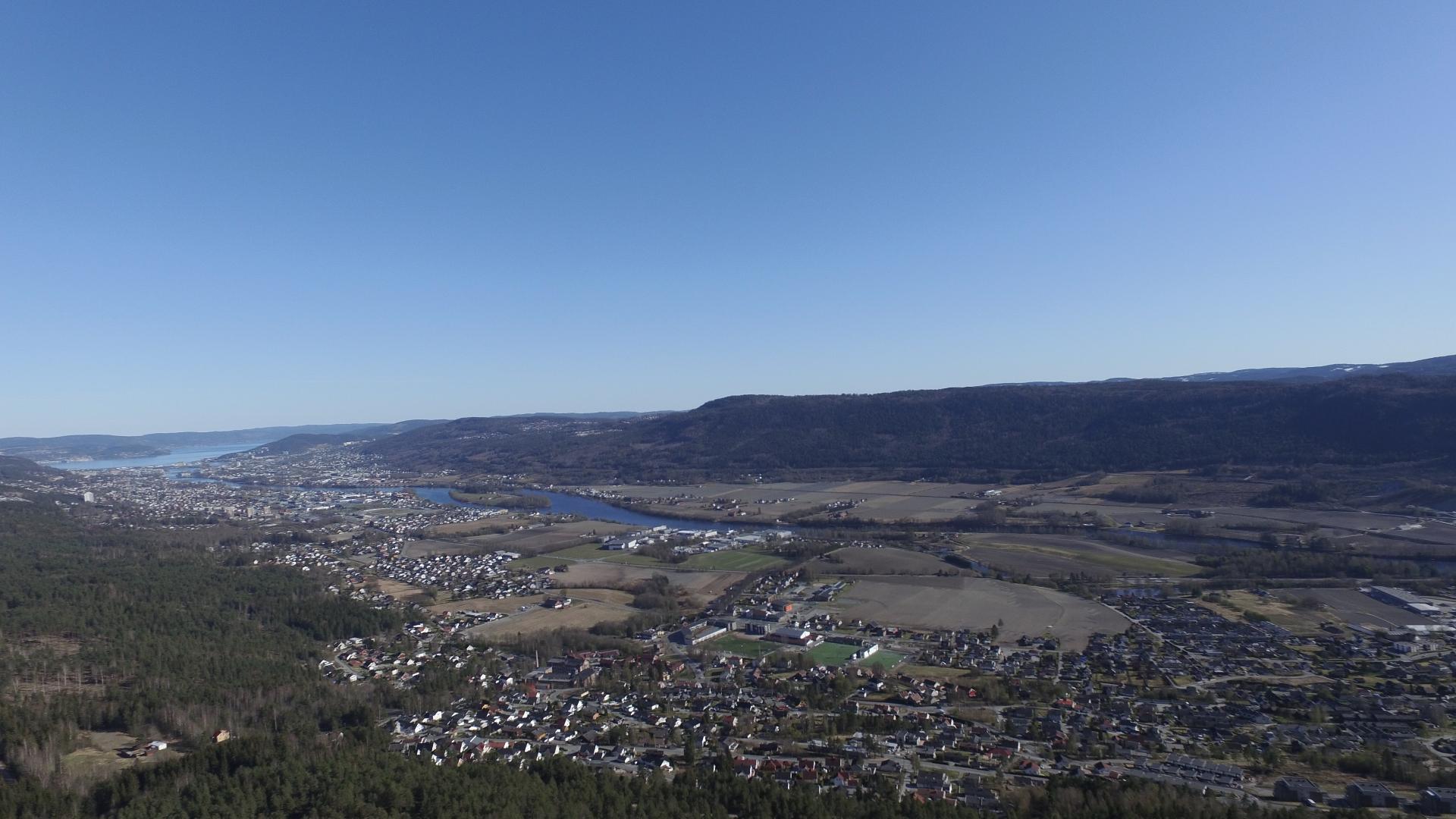
Hokksund is a small town on the Drammenselva river, the administrative centre of Øvre Eiker municipality.
Most travellers pass through without stopping, but this has been an important crossroads for over a thousand years. In Viking times, the river was five to six metres higher than today, making Hokksund a harbour for trade routes reaching into Hallingdal and Numedal.
Most travellers pass through without stopping, but this has been an important crossroads for over a thousand years. In Viking times, the river was five to six metres higher than today, making Hokksund a harbour for trade routes reaching into Hallingdal and Numedal.
The area's wealth in that period is evident from the Hoen Hoard, Norway's largest Viking gold treasure. In 1834, a farm worker named Halvor Kvernmoen was digging a drainage ditch when his spade struck a gold ring. The complete find weighed over 2.5 kilograms and included 50 pieces of jewellery, 20 gold coins, and 200 glass beads and semi-precious stones. The objects came from across Europe and the Middle East, dating from Roman times to the 9th century.
Both the finder and the landowner received rewards from the Stortinget. The treasure is now at the Museum of Cultural History in Oslo, but a large replica of Kvernmoen's spade stands in a roundabout in town, and there's an information board at the discovery site.
When silver was found at Kongsberg in 1623, the king ordered a road built from there to Hokksund. It's considered Norway's first proper road. The railway arrived in 1866 with the Randsfjord Line, and Hokksund station is now a junction where the Bergen and Sørlandet lines meet.
The town's other claim to history is Nøstetangen Glassworks, Norway's first, which operated from 1741 to 1777. Using German and English expertise, the works produced crystal and fine glassware that rivalled the best in Europe. The famous chandelier in Kongsberg Church came from here. Today there's a small museum in the old magistrate's court building where you can see original pieces and watch glass being blown using traditional techniques.