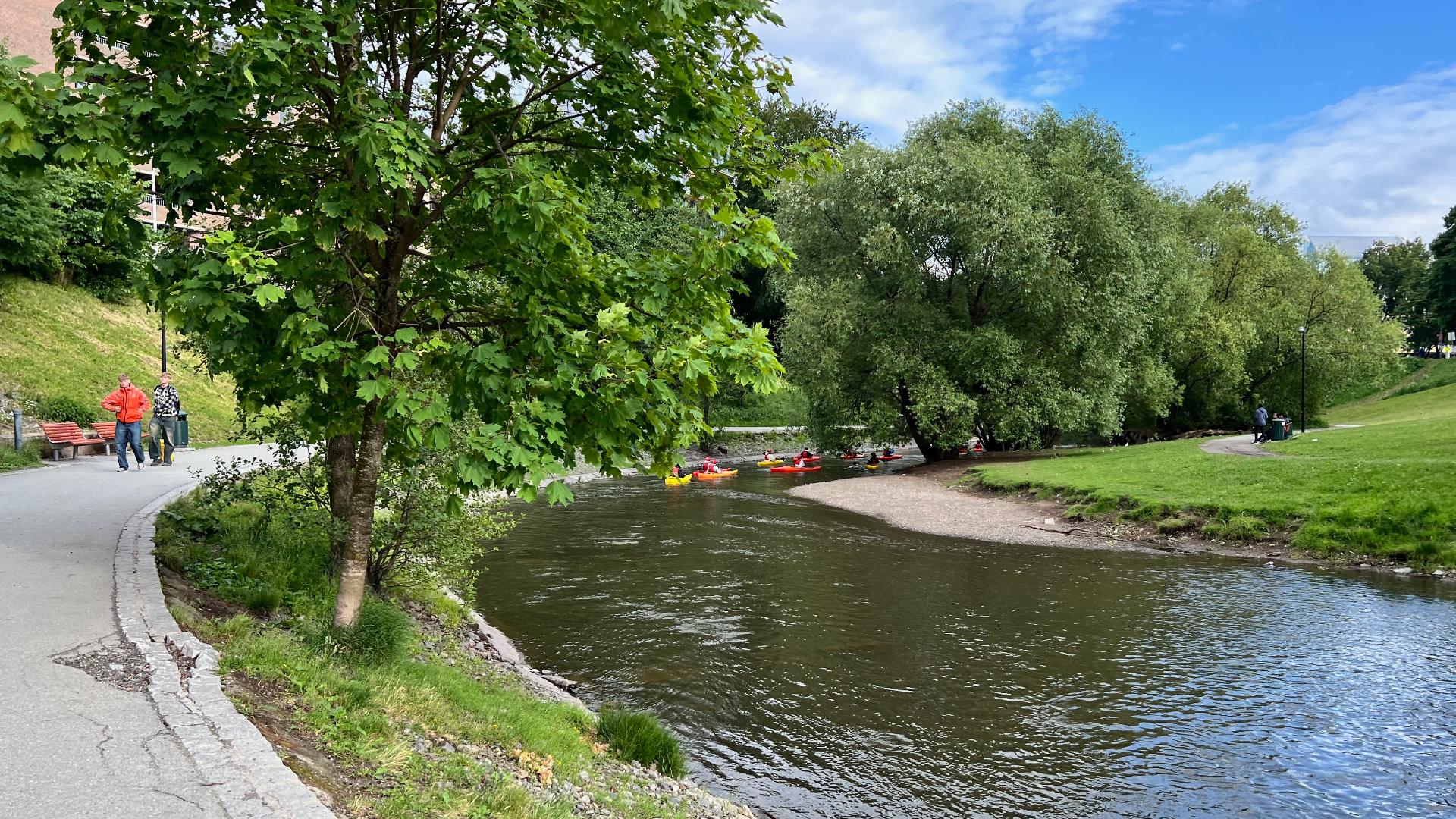
Grünerløkka is the neighbourhood east of Akerselva that went from working-class poverty to hipster hotspot in the span of a few decades. When Christiania industrialised in the nineteenth century, factories sprang up along the river to exploit the water power of its many waterfalls. Workers needed housing, and Grünerløkka filled up fast. By 1900 the parish had over 22,000 residents packed into dense apartment blocks. It remains the most densely populated part of Oslo to this day.
By the mid-twentieth century, the area had declined badly. The buildings were run down, and there were serious discussions about demolishing entire blocks. In the 1970s, the city decided instead to restore and upgrade the existing buildings, a decision that saved the neighbourhood's character. Around the same time, immigrants from Turkey, Pakistan and other countries started moving in, opening shops and restaurants that gave Grünerløkka a flavour quite different from the rest of Oslo. Young Norwegians started discovering the area, drawn by cheap rents and the new diversity.
Through the 1990s and 2000s, gentrification accelerated. Vintage shops, independent cafes, street art and live music venues appeared on every corner. Living in Grünerløkka became fashionable, then expensive, and eventually the rising rents pushed out many of the immigrants who had helped make the area interesting in the first place. It is a familiar gentrification story, but the result is a neighbourhood that is genuinely enjoyable to wander through.
The main squares are Olaf Ryes plass, Birkelunden and Sofienbergparken, all popular gathering spots on warm days. If you are looking for a place to eat or go out in the evening, this is the part of Oslo to head for. There are restaurants, bars and cafes in every price range and style.
By the mid-twentieth century, the area had declined badly. The buildings were run down, and there were serious discussions about demolishing entire blocks. In the 1970s, the city decided instead to restore and upgrade the existing buildings, a decision that saved the neighbourhood's character. Around the same time, immigrants from Turkey, Pakistan and other countries started moving in, opening shops and restaurants that gave Grünerløkka a flavour quite different from the rest of Oslo. Young Norwegians started discovering the area, drawn by cheap rents and the new diversity.
Through the 1990s and 2000s, gentrification accelerated. Vintage shops, independent cafes, street art and live music venues appeared on every corner. Living in Grünerløkka became fashionable, then expensive, and eventually the rising rents pushed out many of the immigrants who had helped make the area interesting in the first place. It is a familiar gentrification story, but the result is a neighbourhood that is genuinely enjoyable to wander through.
The main squares are Olaf Ryes plass, Birkelunden and Sofienbergparken, all popular gathering spots on warm days. If you are looking for a place to eat or go out in the evening, this is the part of Oslo to head for. There are restaurants, bars and cafes in every price range and style.