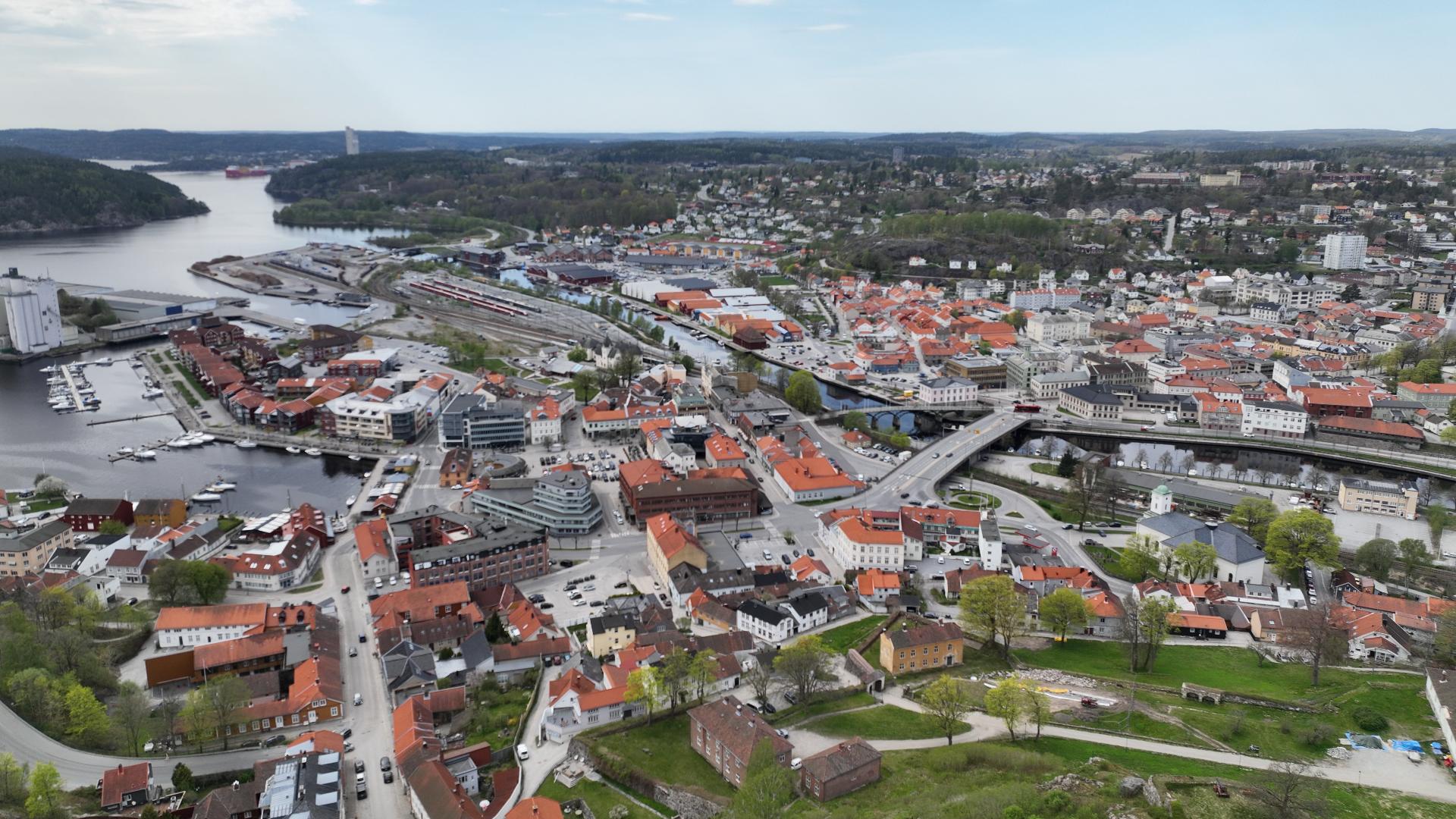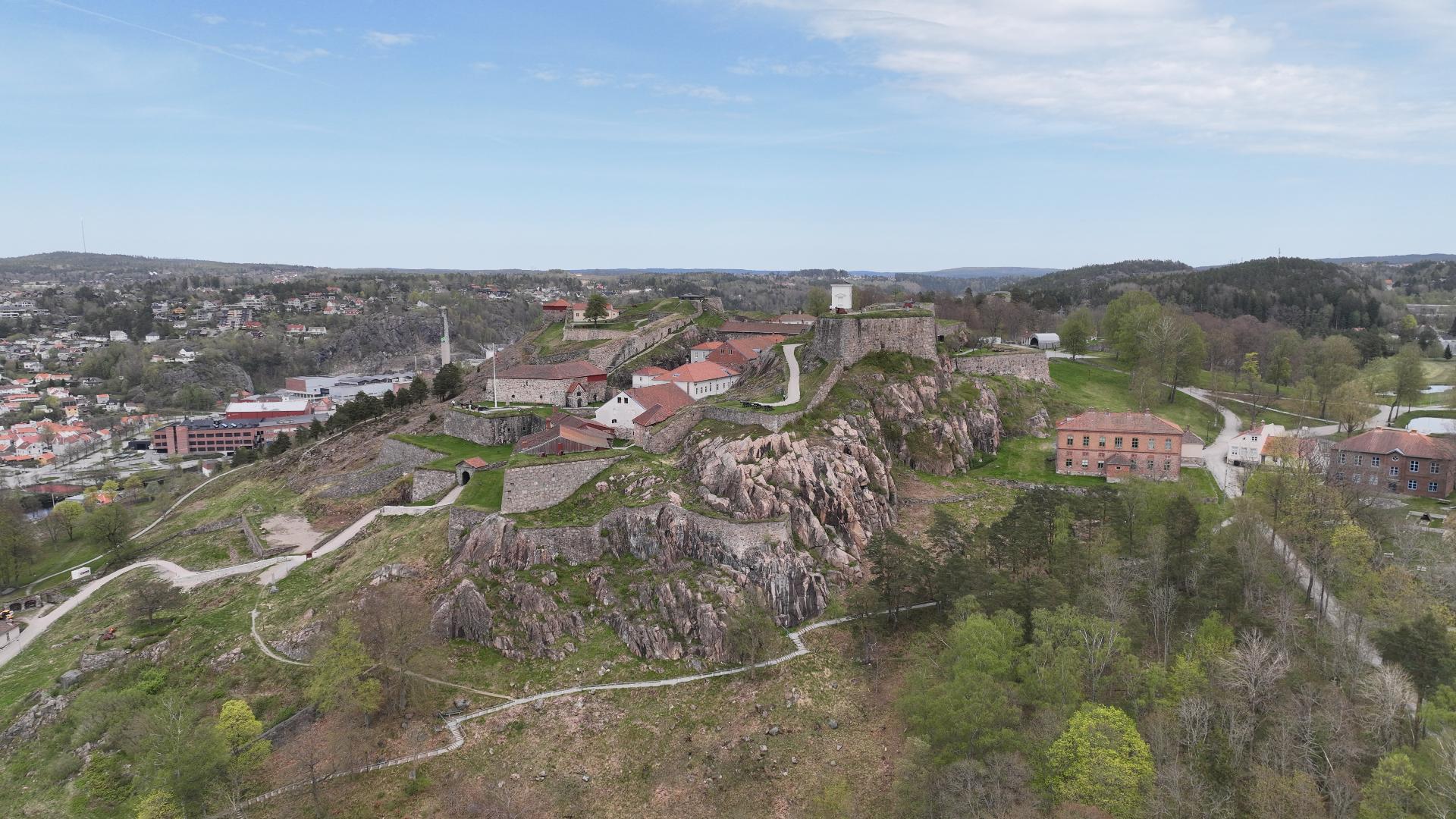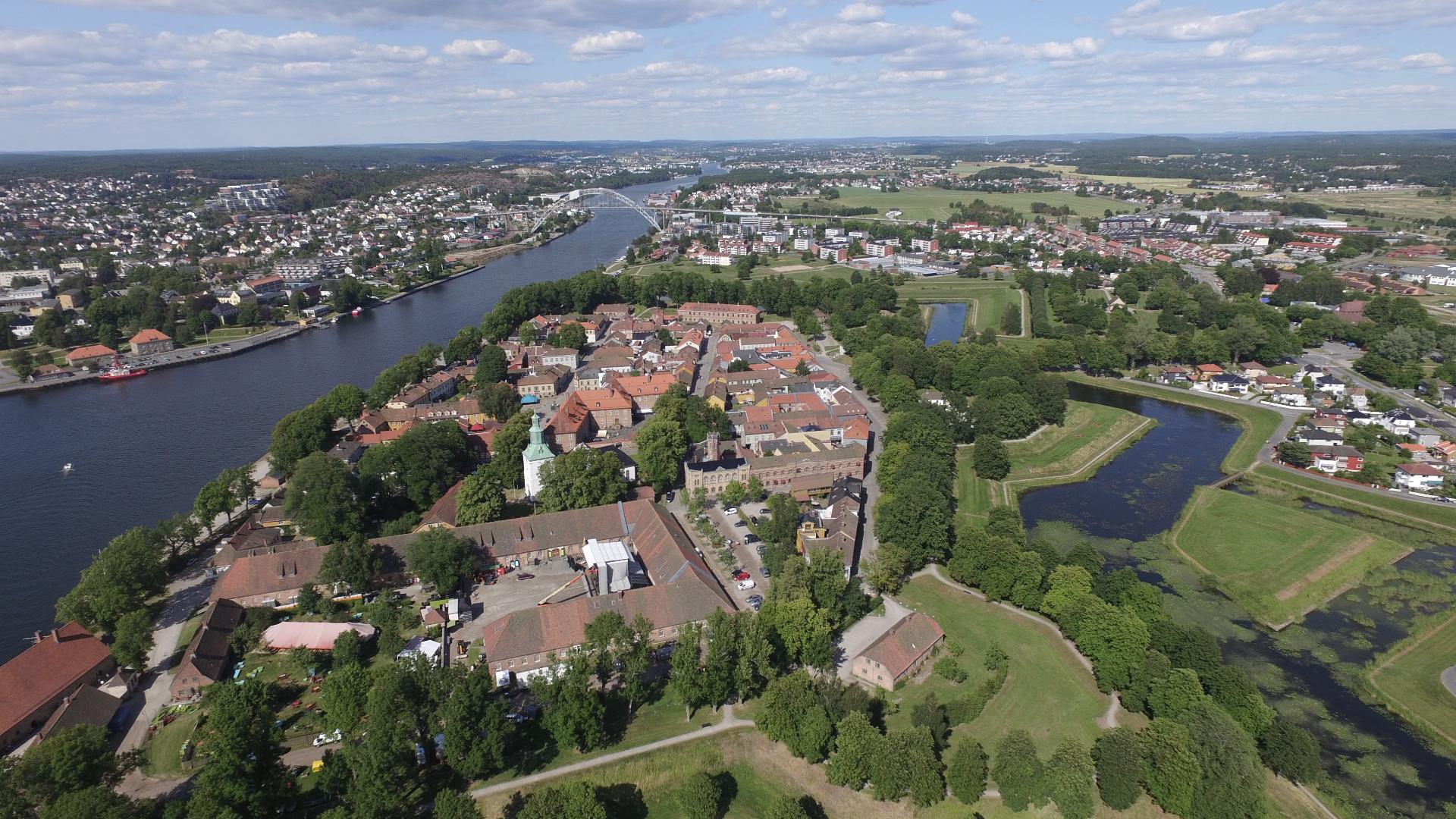
Fredrikstad began as a strategic necessity. When neighboring Sarpsborg was burned by Swedish forces in 1567, King Frederick II ordered a new fortress city built 15 kilometers south. The result is one of Europe's best-preserved star fortifications, built according to the Old Dutch system with water-filled moats, deep earthen ramparts, and wide bastions designed to withstand artillery siege. Over 450 years later, Fredrikstad remains largely intact and still inhabited; more than 300 people live within the fortress walls of Gamlebyen (Old Town), making it a living community rather than a museum.
Walking the cobblestone streets feels like stepping through four centuries. The defensive walls are still there, the moats still water-filled, the bastions still imposing. At the center stands the neoclassical Fredrikstad Domkirke, and the town encompasses museums, galleries, and artisan workshops housed in historic buildings. The famous drawbridge still functions and occasionally raises for river traffic. You can walk the complete perimeter of the star fortifications and enjoy views across the Glomma River to modern Fredrikstad beyond. This is not Norway's oldest city, but it is the best-preserved fortress city in the Nordic region; its survival is the real story.
Walking the cobblestone streets feels like stepping through four centuries. The defensive walls are still there, the moats still water-filled, the bastions still imposing. At the center stands the neoclassical Fredrikstad Domkirke, and the town encompasses museums, galleries, and artisan workshops housed in historic buildings. The famous drawbridge still functions and occasionally raises for river traffic. You can walk the complete perimeter of the star fortifications and enjoy views across the Glomma River to modern Fredrikstad beyond. This is not Norway's oldest city, but it is the best-preserved fortress city in the Nordic region; its survival is the real story.