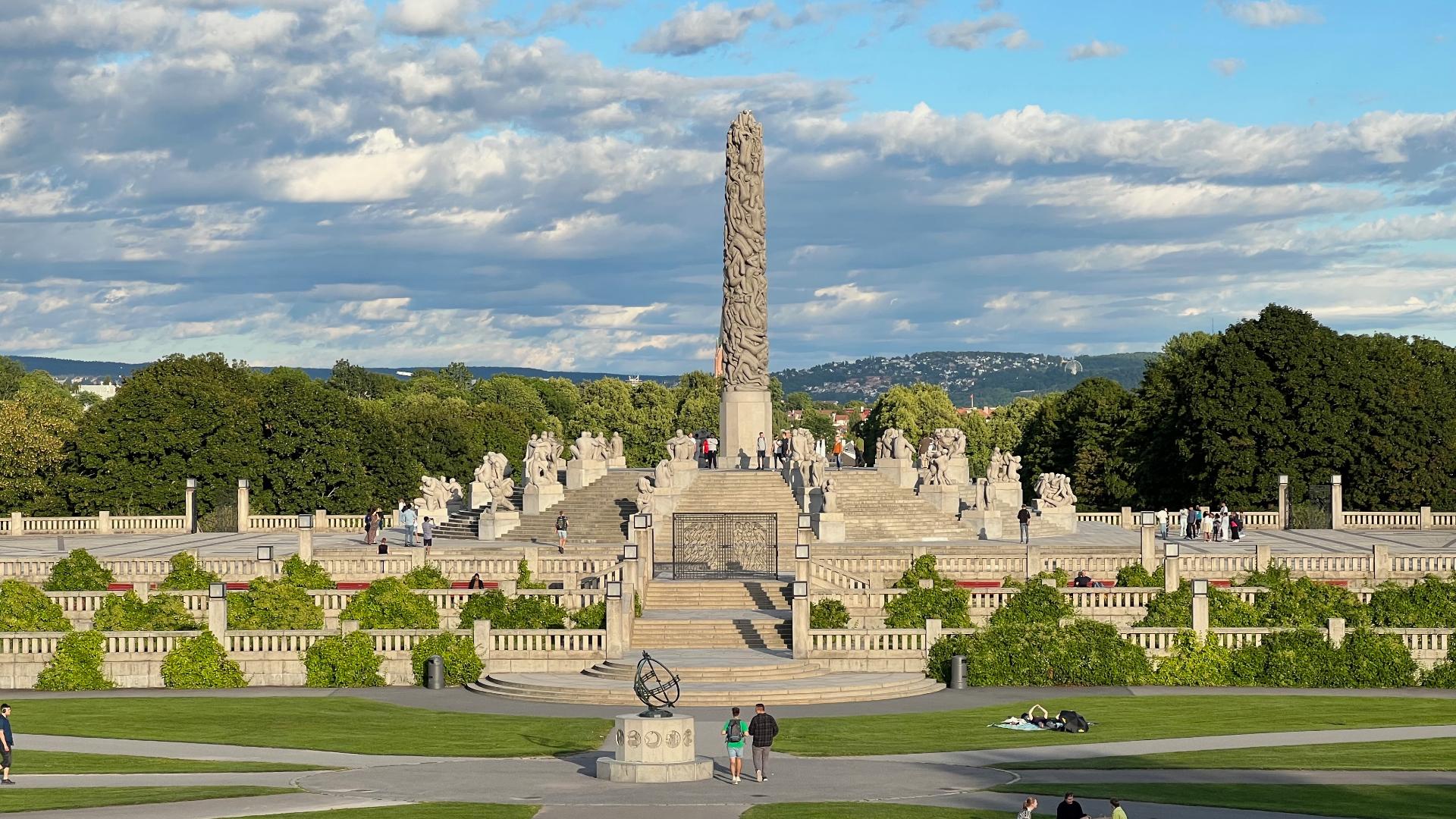
Tucked away in the residential neighbourhood of Slemdal, far from the tourist centre, is one of Oslo's most extraordinary and least visited attractions. The Emanuel Vigeland Museum is the mausoleum and life's work of Emanuel Vigeland, the younger and lesser-known brother of sculptor Gustav Vigeland. Do not confuse the two: Gustav made the famous park, Emanuel made this very different place.
Emanuel originally built the structure in 1926 as a gallery for his paintings and sculptures. But as he grew older, he decided it would become his tomb. Inspired by Italian masters, he named it Tomba Emmanuelle. He bricked up all the windows, plunging the interior into near-total darkness, and spent the next twenty years painting an 800-square-metre fresco called Vita, meaning Life, across the entire barrel-vaulted ceiling and walls.
The fresco depicts the full arc of human existence, from conception to death, through multitudes of naked bodies in scenes of intimacy, birth, ecstasy and decay. The images are intense, erotic and deeply personal. When you first enter, the darkness is almost total; your eyes need several minutes to adjust. The acoustics are remarkable: even the softest footstep echoes for up to fourteen seconds under the vault. Emanuel's ashes rest in an urn above the entrance door.
The museum was opened to the public in 1959, more than a decade after his death. It remains one of those places that people either find profoundly moving or deeply unsettling, sometimes both at once. It is open only on Sundays, and photography is not allowed inside. To get there, take the metro to Slemdal station and walk a few minutes uphill.
Emanuel originally built the structure in 1926 as a gallery for his paintings and sculptures. But as he grew older, he decided it would become his tomb. Inspired by Italian masters, he named it Tomba Emmanuelle. He bricked up all the windows, plunging the interior into near-total darkness, and spent the next twenty years painting an 800-square-metre fresco called Vita, meaning Life, across the entire barrel-vaulted ceiling and walls.
The fresco depicts the full arc of human existence, from conception to death, through multitudes of naked bodies in scenes of intimacy, birth, ecstasy and decay. The images are intense, erotic and deeply personal. When you first enter, the darkness is almost total; your eyes need several minutes to adjust. The acoustics are remarkable: even the softest footstep echoes for up to fourteen seconds under the vault. Emanuel's ashes rest in an urn above the entrance door.
The museum was opened to the public in 1959, more than a decade after his death. It remains one of those places that people either find profoundly moving or deeply unsettling, sometimes both at once. It is open only on Sundays, and photography is not allowed inside. To get there, take the metro to Slemdal station and walk a few minutes uphill.