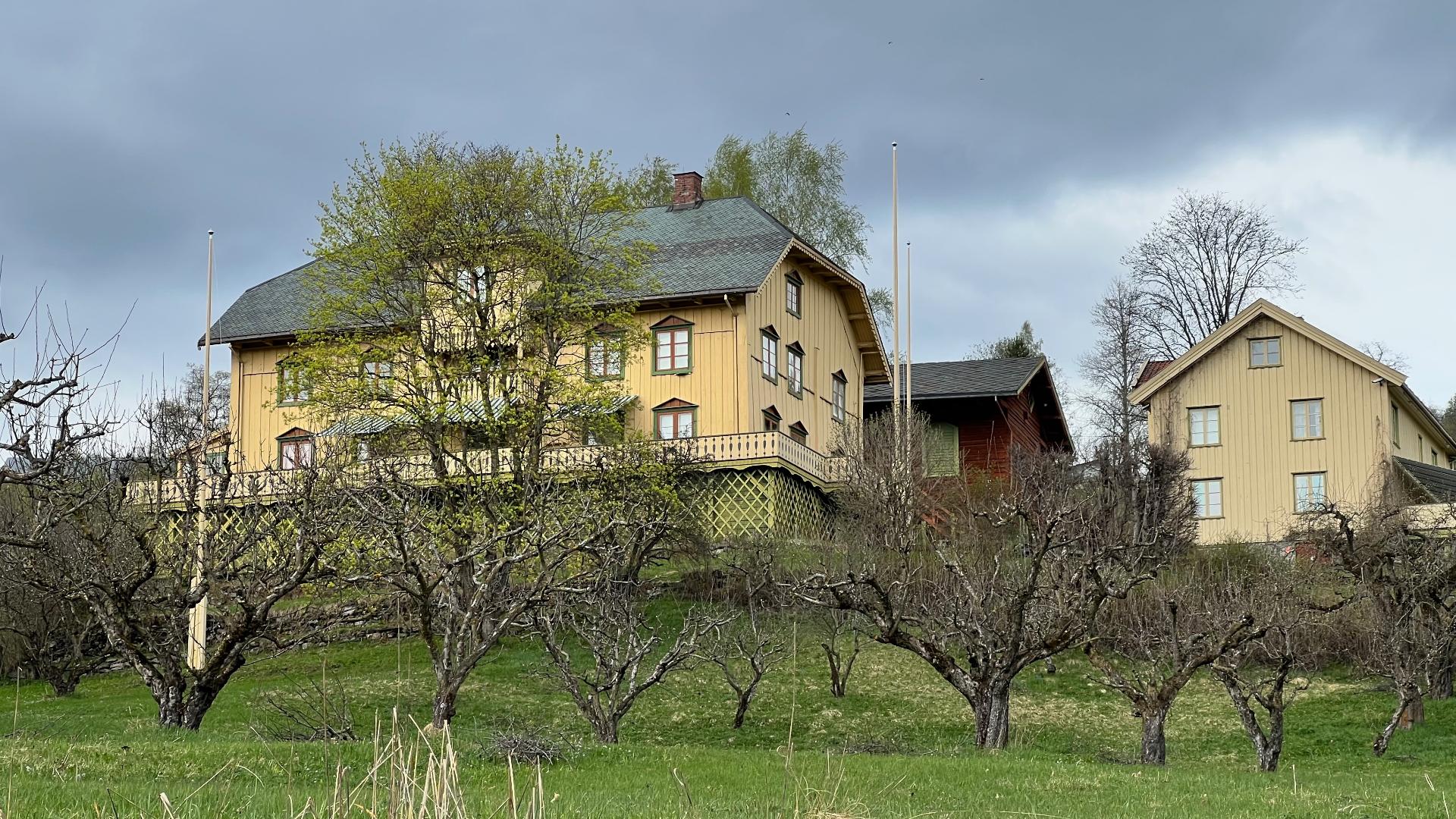
You're now in the place that gave Gudbrandsdalen its name. This was the power centre of the valley for centuries, and it's where one of the most dramatic moments in Norwegian history took place.
In the year 1021, King Olav Haraldsson - later known as St Olav - marched through the valley to convert the population to Christianity. The problem was that the most powerful chieftain in the region, Dale-Gudbrand, wasn't interested. He controlled this area from his farm here at Hundorp, and he had a large wooden statue of Thor that the locals worshipped.
According to Snorre's sagas, Olav challenged Dale-Gudbrand to a test of the gods. At dawn, when the farmers gathered around their Thor statue, Olav pointed to the east and shouted "Look, there comes our God with great light!" Everyone turned to see the sunrise. At that moment, one of Olav's men, Kolbein the Strong, stepped forward and smashed the Thor statue with his club. Mice and snakes came pouring out - they'd been living inside the hollow wooden idol.
Dale-Gudbrand got the message. He converted, and the valley followed. The club that smashed Thor is still depicted on Sør-Fron's coat of arms today.
The large mounds you can see around the farm are burial mounds from the Iron Age and Viking period. With diameters of up to 32 metres, they're the largest in the entire valley. There are also stone settings and traces of settlement going back thousands of years. Recent georadar surveys are still uncovering new finds.
The farm later housed regional administrators and a folk high school. Today it's a pilgrim centre on the route from Oslo to Trondheim, and you can stay overnight. The site was chosen as Oppland's millennium site in 1999 - a recognition that this is where the history of the valley truly began.