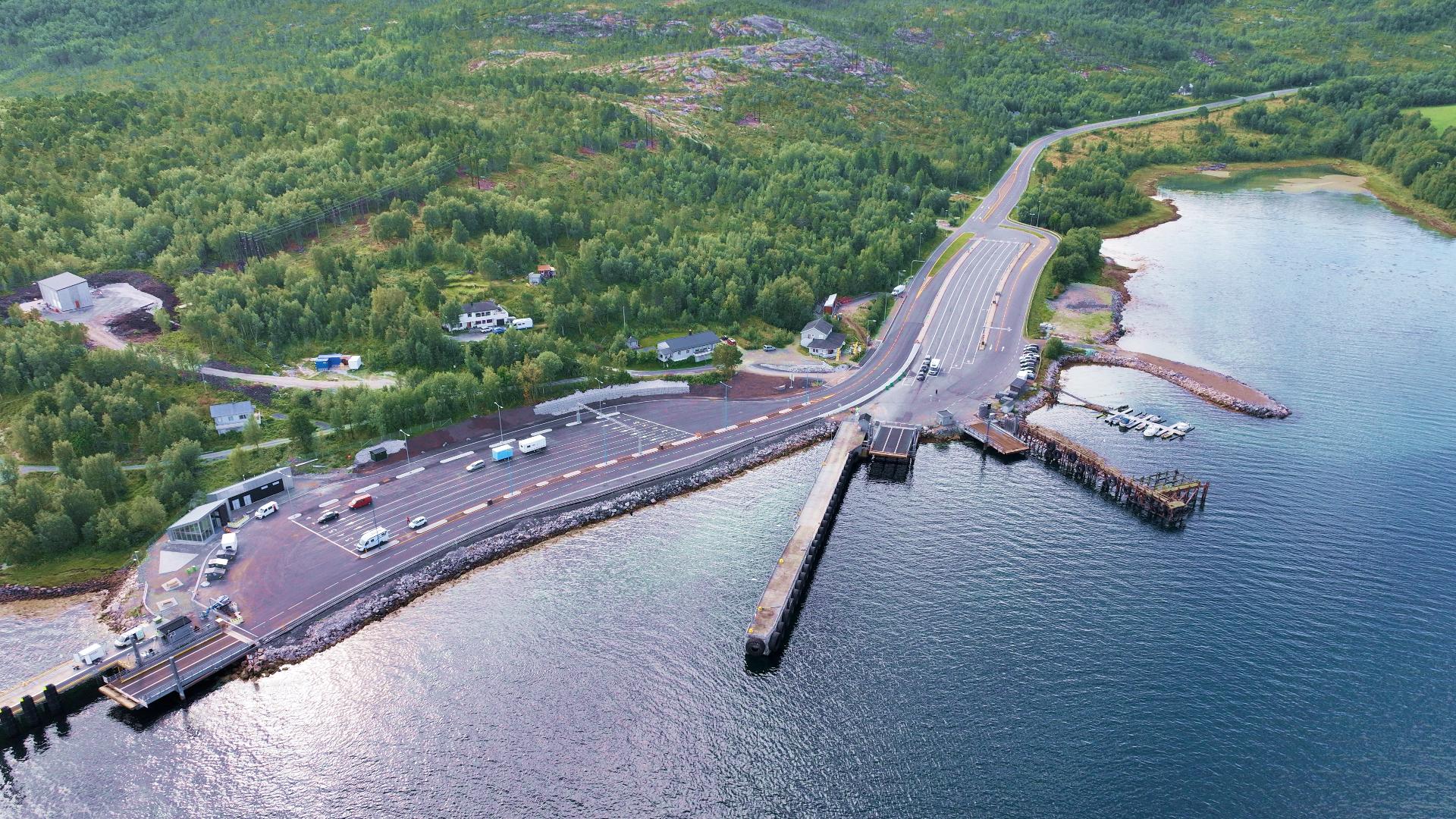
Bjerkvik is a small settlement of about 1,100 people at the head of Herjangsfjorden, roughly 15 kilometres north of Narvik. It is where E10 from Lofoten meets E6. But the real story here is military.
Just east of the village lies Elvegårdsmoen, a military camp established in 1909 and one of the oldest preserved military sites in northern Norway. On April 9, 1940, German forces seized it without resistance and helped themselves to all the weapons and supplies stored there. Five weeks later, on May 13, British warships bombarded Bjerkvik while French Foreign Legion troops stormed the beach. It was the first Allied amphibious landing of World War II against a defended shore. Fourteen civilians were killed in the bombardment, and three-quarters of the village was destroyed. The French recaptured Elvegårdsmoen and pushed on toward Narvik.
The area saw tragedy again in peacetime. On March 5, 1986, an avalanche in nearby Vassdalen killed 16 Norwegian soldiers during the NATO exercise Anchor Express. The avalanche swept from Storebalak mountain, taking 31 soldiers and three tracked vehicles. It remains the worst peacetime disaster in Norwegian military history. Soldiers had reportedly asked to turn back, and local residents had warned against entering the valley. No officers were prosecuted.
Memorials to the fallen stand in the village. Bjerkvik kirke, built in 1955, was designed by Arnstein Arneberg, the architect behind Oslo City Hall.
Just east of the village lies Elvegårdsmoen, a military camp established in 1909 and one of the oldest preserved military sites in northern Norway. On April 9, 1940, German forces seized it without resistance and helped themselves to all the weapons and supplies stored there. Five weeks later, on May 13, British warships bombarded Bjerkvik while French Foreign Legion troops stormed the beach. It was the first Allied amphibious landing of World War II against a defended shore. Fourteen civilians were killed in the bombardment, and three-quarters of the village was destroyed. The French recaptured Elvegårdsmoen and pushed on toward Narvik.
The area saw tragedy again in peacetime. On March 5, 1986, an avalanche in nearby Vassdalen killed 16 Norwegian soldiers during the NATO exercise Anchor Express. The avalanche swept from Storebalak mountain, taking 31 soldiers and three tracked vehicles. It remains the worst peacetime disaster in Norwegian military history. Soldiers had reportedly asked to turn back, and local residents had warned against entering the valley. No officers were prosecuted.
Memorials to the fallen stand in the village. Bjerkvik kirke, built in 1955, was designed by Arnstein Arneberg, the architect behind Oslo City Hall.