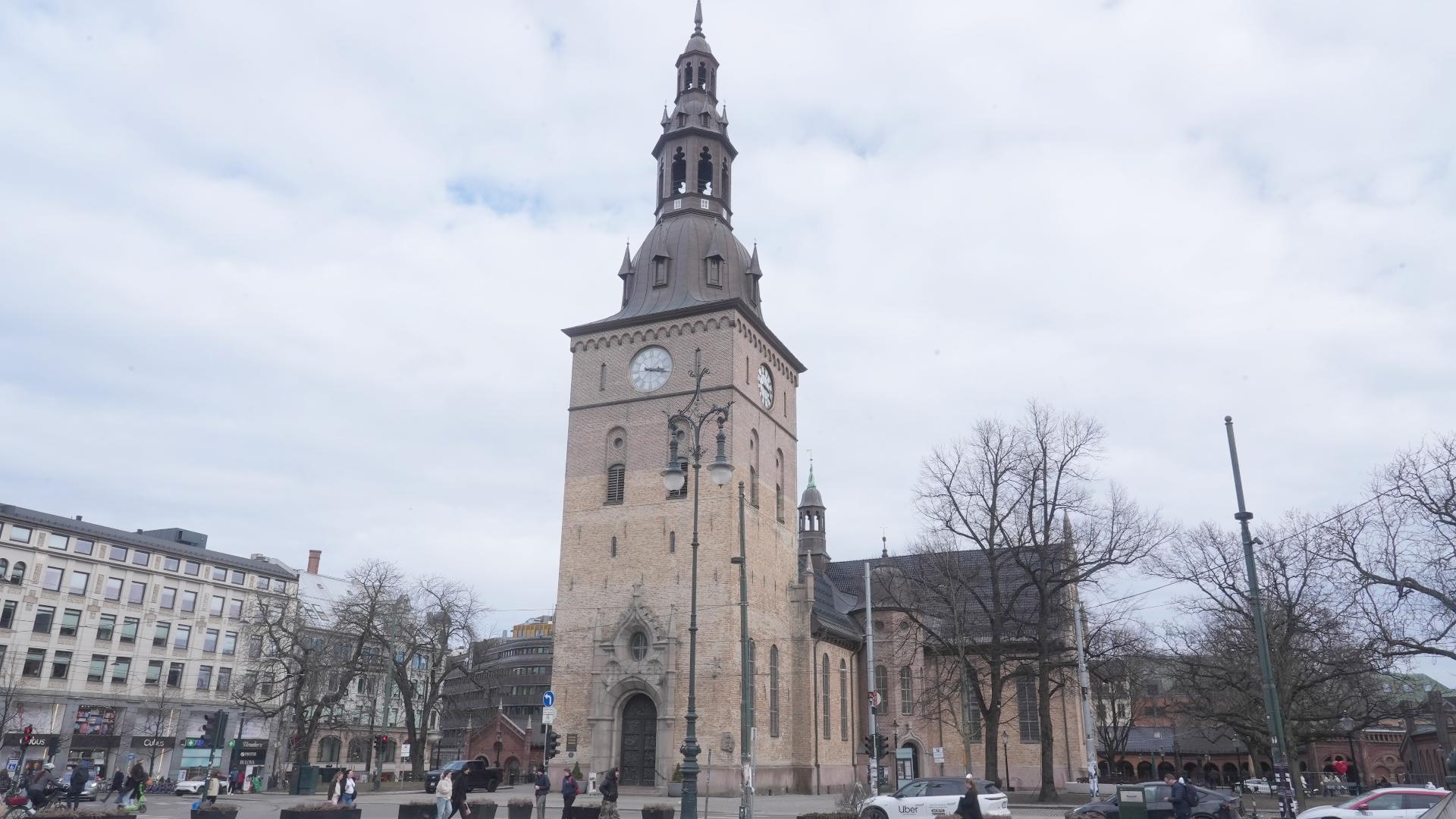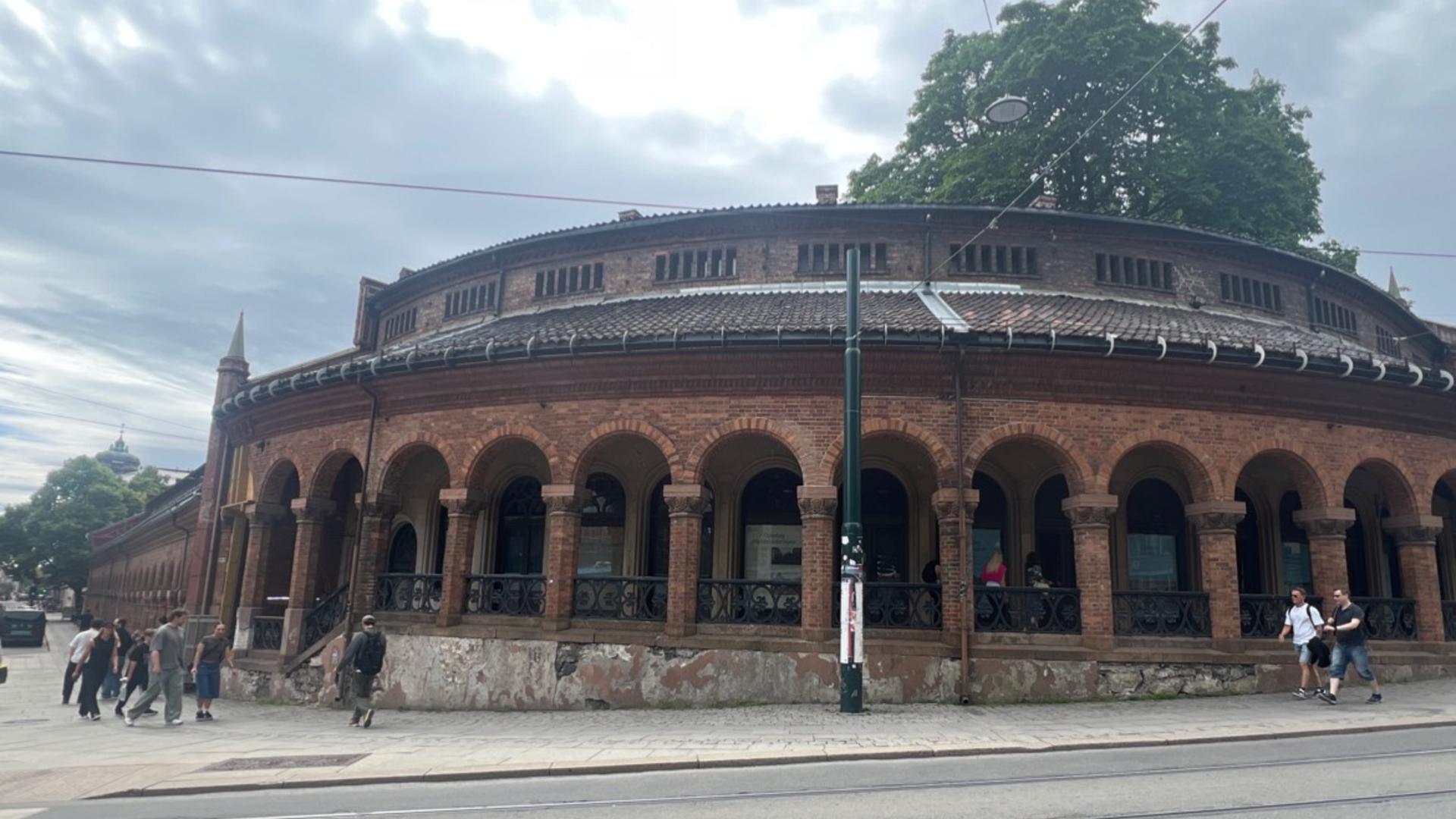
Behind Oslo Domkirke you will find the Basarhallene, a horseshoe-shaped row of arcades that most tourists walk straight past. They were built between 1840 and 1859, designed by architect Christian Heinrich Grosch in neo-Romanesque style with round arches and heavy stonework.
The arcades were originally butcher shops, built to bring order to the chaotic meat trade that had been happening at Stortorvet. The area around the church used to be a graveyard called Urtegården. The name Kirkeristen, which is still used for this area, comes from the iron fence that was placed around the churchyard to keep grazing animals out.
Grosch was the dominant architect of early nineteenth-century Christiania — he also designed the original University buildings, Oslo Børs and the old Norges Bank. Today the Basarhallene house small craft shops and cafés. They are one of the oldest commercial structures in Oslo and well worth a detour when visiting the cathedral.
The arcades were originally butcher shops, built to bring order to the chaotic meat trade that had been happening at Stortorvet. The area around the church used to be a graveyard called Urtegården. The name Kirkeristen, which is still used for this area, comes from the iron fence that was placed around the churchyard to keep grazing animals out.
Grosch was the dominant architect of early nineteenth-century Christiania — he also designed the original University buildings, Oslo Børs and the old Norges Bank. Today the Basarhallene house small craft shops and cafés. They are one of the oldest commercial structures in Oslo and well worth a detour when visiting the cathedral.