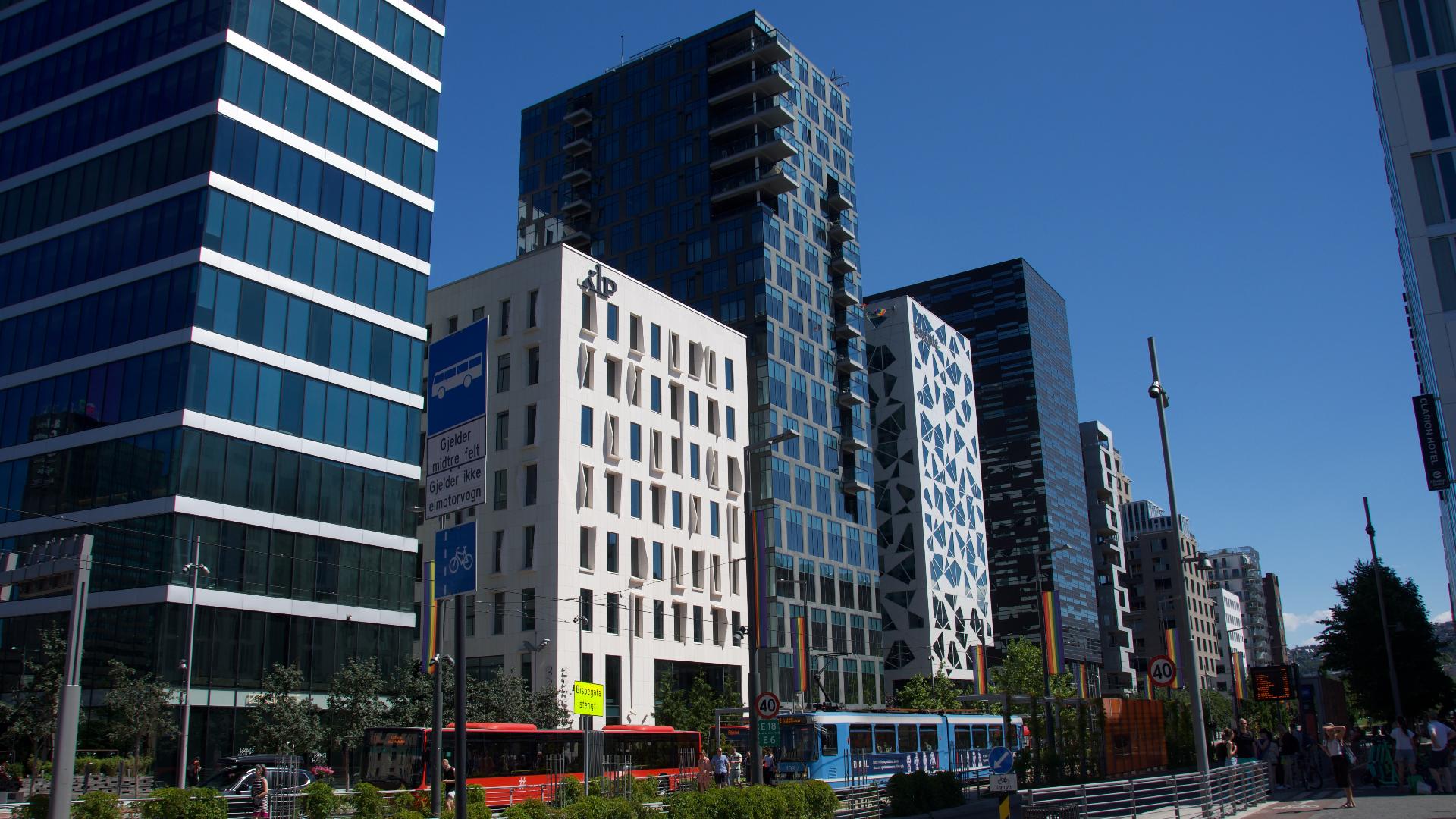
The Barcode is a row of high-rise buildings stretching along the waterfront in Bjørvika, between the Opera House and the old Oslo S railway tracks. Each building was designed by a different combination of European architecture firms, including MVRDV, a-lab and Dark Arkitekter. The buildings are deliberately different in height, width and facade style, but placed so close together that the narrow gaps between them create a pattern that, from a distance, resembles a barcode. The project was completed in 2016.
It was also one of the most protested developments in Oslo's history. When the plans were made public, a petition against the project gathered over 30,000 signatures. A 2007 poll by Aftenposten showed 71 percent of Oslo's population opposed it. Critics worried that the towers would block views from the old city towards the fjord, that the area would become a soulless office district, and that the entire Bjørvika waterfront was being turned into an enclave for the wealthy. The buildings were seen as completely out of scale with Oslo's traditionally low-rise character.
The debate has calmed down since the buildings went up. The gaps between the towers do let some light and views through, and the ground floors have gradually filled with restaurants, cafes and shops. But it remains a somewhat sterile area in the evenings, dominated by office workers during the day and relatively quiet after hours. Whether the Barcode improved or damaged the cityscape is still a matter of opinion, and many Norwegians remain firmly in the latter camp.
It was also one of the most protested developments in Oslo's history. When the plans were made public, a petition against the project gathered over 30,000 signatures. A 2007 poll by Aftenposten showed 71 percent of Oslo's population opposed it. Critics worried that the towers would block views from the old city towards the fjord, that the area would become a soulless office district, and that the entire Bjørvika waterfront was being turned into an enclave for the wealthy. The buildings were seen as completely out of scale with Oslo's traditionally low-rise character.
The debate has calmed down since the buildings went up. The gaps between the towers do let some light and views through, and the ground floors have gradually filled with restaurants, cafes and shops. But it remains a somewhat sterile area in the evenings, dominated by office workers during the day and relatively quiet after hours. Whether the Barcode improved or damaged the cityscape is still a matter of opinion, and many Norwegians remain firmly in the latter camp.