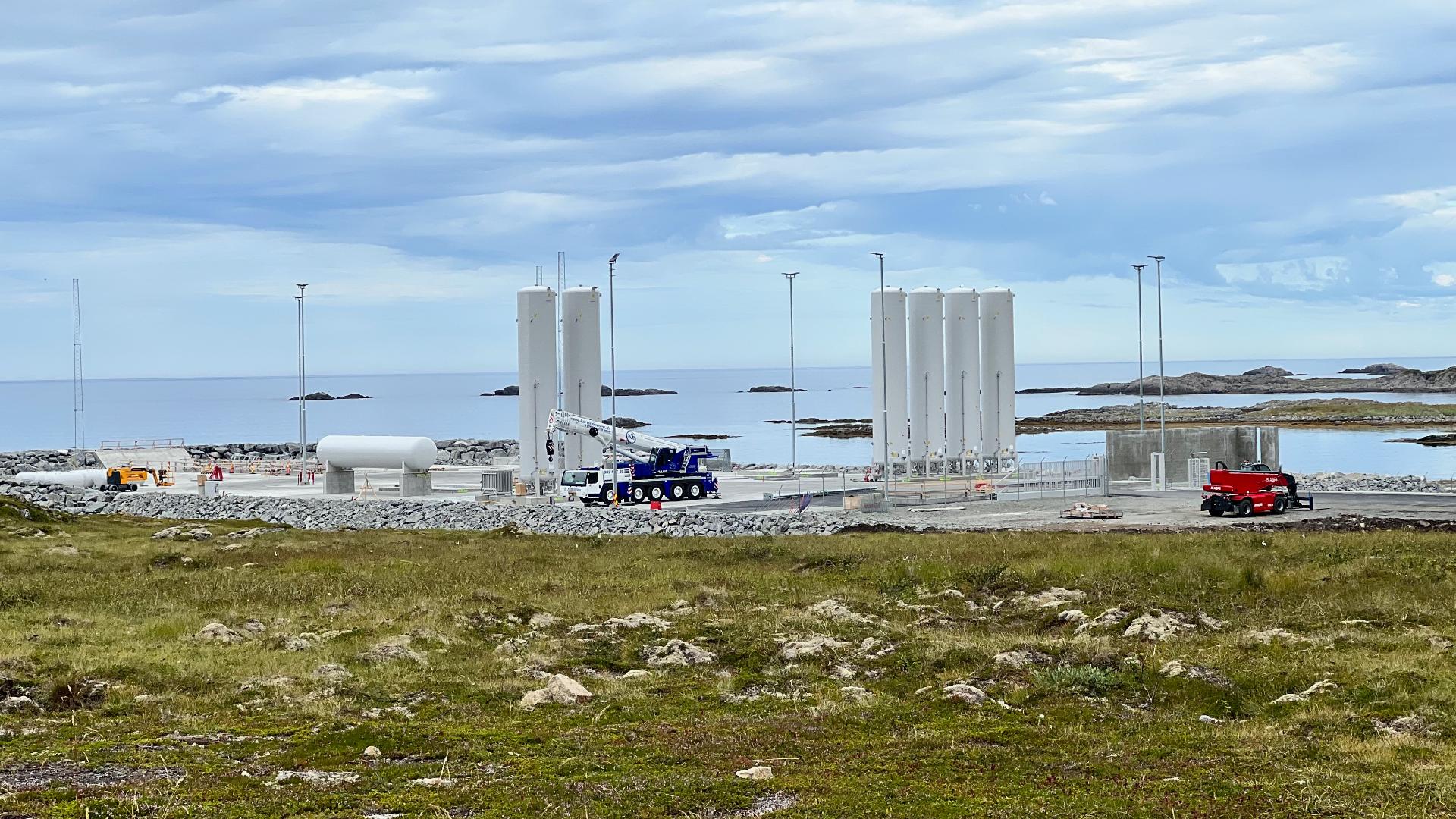
Andøya Spaceport is the orbital rocket launch facility on the west side of Andøya, between Berget and Nøss. It is separate from the older Andøya Space Centre near Andenes, which handles sounding rockets. This site was built for orbital launches and inaugurated in November 2023, making it the first launch site for orbital rockets in continental Europe.
The road runs straight through the complex. The integration building sits on one side and the launch pad and tank farm on the other. There are good vantage points on the mountains that form a semicircle around the site.
On 30 March 2025, the first orbital launch attempt took place here. German company Isar Aerospace tried to send their Spectrum rocket into orbit. The 28-metre rocket, powered by nine Aquila engines burning liquid oxygen and propane, lifted off successfully but lost attitude control about 30 seconds into the flight. The range safety system terminated the flight and the rocket crashed back to the ground. Nobody was hurt.
Five months later, on 5 September 2026, Isar Aerospace tried again with the mission named "Onward and Upward." This time, Spectrum reached orbit, deploying five small satellites and one experiment into a 500-kilometre orbit. Among the payloads was FramSat-1, a student-built satellite from NTNU in Trondheim, making it the first Norwegian satellite launched from Norwegian soil. It was also the first time satellites were sent into orbit from continental Europe.
The Norwegian government has committed nearly 650 million kroner to build a second launch pad, constructed by Forsvarsbygg and connected to the existing pad in Børvågen. American company Astrobotic has signed on to operate its Xodiac reusable rocket from the site, bringing Europe's first rocket landings. The facility holds a permit for up to 30 launches per year, a number that seemed ambitious when the first rocket crashed after half a minute, but considerably less so now that satellites are actually reaching orbit from here.